ℹ️ About Düren
Düren is a lively district town in the west of Germany's North Rhine Westphalia, set between the major cities of Cologne and Aachen on the northern edge of the Eifel hills. With around 90,000 inhabitants, it is the administrative heart of the Düren district and is often called the gateway to the Rur Eifel region. Visitors discover a town with more than 1,250 years of history, a remarkable heritage as one of Germany's great paper making towns, and one of the largest folk festivals in the Rhineland, the Annakirmes. Although its historic centre was almost entirely destroyed during the Second World War, Düren today offers engaging museums, striking postwar church architecture, generous parks and an excellent base for excursions to Lake Rursee, the Eifel National Park and the historic Hürtgen Forest. For travellers who want to experience the Rhineland away from the crowds of the big cities, Düren is a rewarding and authentic choice. It works perfectly as a day trip from Cologne or Aachen, yet it also makes a relaxed base for several days of combining culture, nature and genuine Rhineland hospitality. Thanks to its frequent rail connections, getting there is easy, and most sights in the town centre can comfortably be explored on foot.
History of Düren
Düren's story begins in the Frankish era. As early as the 8th century, a Carolingian royal palace stood here, recorded in sources as Villa Duria. In 748, Pepin the Short held an imperial assembly in Düren, and Charlemagne stayed at the palace several times, including in 775 and 779. This early role as a residence of Frankish rulers makes Düren one of the oldest documented settlements in the Rhineland.
During the High Middle Ages, Düren became a free imperial city, but in the 13th century it was pledged to the Counts of Jülich and remained part of their territory for centuries. The year 1543 brought disaster: during the war over the Duchy of Guelders, the troops of Emperor Charles V besieged and captured the town, causing severe destruction. Another event shaped Düren's identity even more deeply. In 1501, a precious relic, believed to be the head of Saint Anne, the mother of the Virgin Mary, was brought to Düren from Mainz. After a lengthy dispute, Pope Julius II ruled in 1506 that the relic could stay. Ever since, Düren has been an important place of pilgrimage, and the pilgrim celebrations gradually grew into the famous Annakirmes fair.
In the 18th and especially the 19th century, Düren rose to become one of the wealthiest industrial towns in Prussia. The clean waters of the Rur river were ideal for paper production, and entrepreneurial families such as the Hoesch, Schoeller and Schüll dynasties built fortunes on paper, cloth, carpets and metalworking. On 16 November 1944, a devastating air raid destroyed almost the entire town, placing Düren among the most heavily damaged cities in Germany. After the war, residents rebuilt it with enormous effort, and today Düren is a modern town whose long history lives on in its museums, churches and memorials.
Highlights of Düren
The town's most famous landmark is St. Anne's Church (Annakirche) on Annaplatz. The old Gothic church was destroyed in 1944, but the renowned church architect Rudolf Schwarz created a powerful new building in the 1950s, reusing stones from the ruins. Its austere yet moving design is regarded as a masterpiece of modern ecclesiastical architecture in Germany. Inside, the relic of Saint Anne is still venerated, drawing thousands of pilgrims every summer.
A cultural highlight is the Leopold Hoesch Museum, a splendid building from 1905 funded by the Hoesch industrial family. It presents art of the 19th and 20th centuries along with changing exhibitions of contemporary work. Directly connected to it is the Paper Museum Düren (Papiermuseum), which brings the region's long paper making tradition to life. Visitors learn how fibres turn into paper, why Düren's mills became known far beyond Germany, and how artists use paper as a creative medium today. Düren has also earned a reputation for its exhibitions of international paper art.
A completely different experience awaits at the Annakirmes, held every year in late July and early August around the feast day of Saint Anne on the large fairground near the town centre. It ranks among the biggest funfairs in the Rhineland, attracting hundreds of thousands of visitors with rides, beer tents, food stalls and fireworks. If you are in the area in summer, this tradition is well worth experiencing.
For a break from sightseeing, the town's green spaces are inviting, notably the Theodor Heuss Park and the Willy Brandt Park, where you can unwind between a museum visit and a stroll through the shops. The Düren Bathing Lake (Dürener Badesee) is a popular spot for swimming and sunbathing in summer. In the Niederau district, Burgau Castle is a charming moated castle now used for events, exhibitions and weddings. Around the market square and the town hall, you will find shops, cafés and restaurants, and on market days the area buzzes with life. Sports fans may also know Düren as the home of the SWD Powervolleys, who play in Germany's top volleyball league and create a fantastic atmosphere at home matches.
Opening Hours, Tickets & How to Get to Düren
Reaching Düren is easy thanks to its position on the main railway line between Cologne and Aachen. From Cologne Central Station, the RE1 and RE9 regional express trains take roughly 25 to 35 minutes, while the journey from Aachen takes about 20 to 30 minutes. Regional trains also link the town with surrounding communities, and the scenic Rurtalbahn line runs from Düren station through the Rur valley to Heimbach and north towards Linnich. Drivers can use the A4 motorway between Cologne and Aachen; the Düren and Merzenich exits lead straight into town, where several multistorey car parks are available.
St. Anne's Church is usually open during the day and free to enter, though visitors should be respectful during services. The Leopold Hoesch Museum and the Paper Museum are generally open from Tuesday to Sunday and closed on Mondays. Admission costs just a few euros, with reduced prices available and frequent special offers for children and young people. Because opening times and ticket prices may change during special exhibitions, it is wise to check the official museum website before your visit.
To explore the town centre, including St. Anne's Church, the market square and the museums, plan for half a day to a full day. If you want to add Lake Rursee or the Eifel, two or three days are ideal. The best time to visit is between May and September, when the parks are lush, the bathing lake is open and excursions into the Eifel are at their most enjoyable. Visiting during the Annakirmes is a special experience, but accommodation fills up quickly at that time, so book early. In December, the Christmas market in the town centre adds a festive touch.
Attractions Near Düren
The countryside around Düren is full of rewarding destinations. About 30 kilometres to the south lies Lake Rursee with the Schwammenauel Dam, one of the largest reservoirs in Germany. Here you can hike, cycle, swim or take a passenger boat across the water. The small town of Heimbach, with Hengebach Castle and its historic Art Nouveau hydroelectric power station, can be reached directly by the Rurtalbahn and serves as a gateway to the Eifel National Park.
Nideggen Castle sits dramatically on a red sandstone cliff above the Rur valley and houses a castle museum. North of Düren, the town of Jülich impresses with its Renaissance citadel and the green Brückenkopf Park. History enthusiasts will find memorials and a museum in the Hürtgen Forest around Vossenack, recalling the costly battles of 1944. An unusual stop is the Indemann near Inden, a walkable observation tower overlooking a vast open cast lignite mine. And if you want to add a big city to your trip, Cologne and Aachen are both less than an hour away, making it easy to pair Düren with a visit to Cologne Cathedral or Aachen Cathedral.
Things to Do in Düren 2026/2027
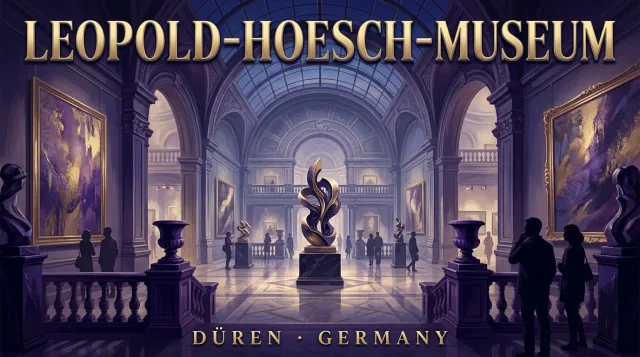
Leopold-Hoesch-Museum
The Leopold-Hoesch-Museum on Hoeschplatz in Düren presents major works of German Expressionism and international paper art inside a historic 1905 building with a modern extension.
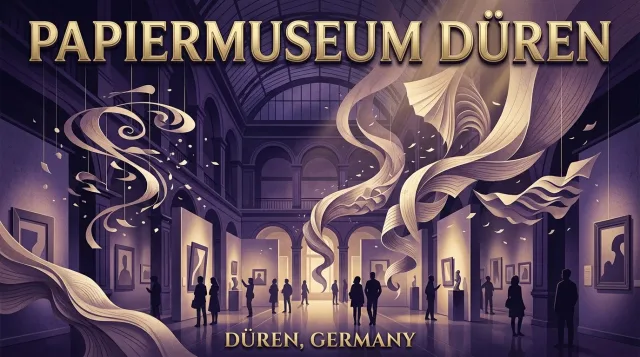
Papiermuseum Düren
An interactive museum celebrating Düren centuries-old papermaking tradition, featuring over 30,000 historic watermarked papers and hands-on workshops.
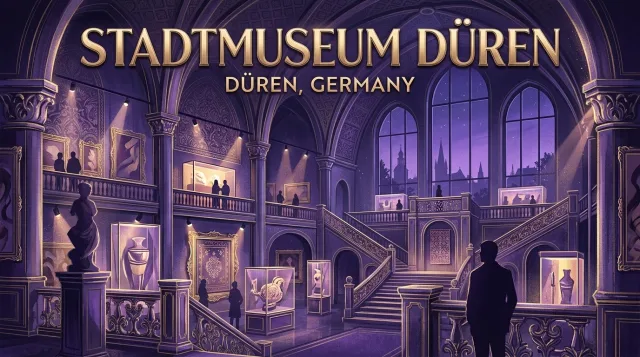
Stadtmuseum Düren
A volunteer-run city museum on Arnoldsweilerstraße that presents the history of Düren chronologically from the year 747 to the present day.
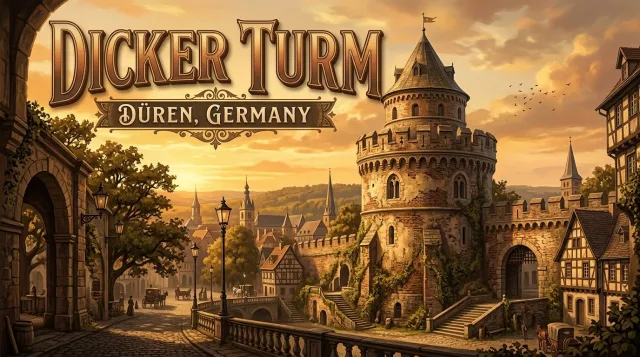
Dicker Turm
A round watchtower built in 1493 on the grounds of the Stiftisches Gymnasium, one of the last surviving parts of Düren medieval city wall.
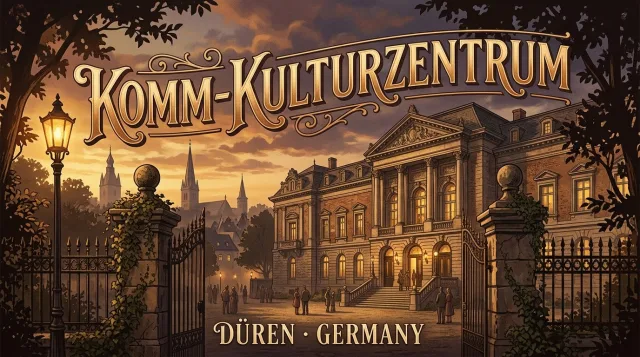
Komm-Kulturzentrum
A socio-cultural center housed in the historic Pleußmühle, documented since 1261, hosting concerts, comedy, and workshops since 1992.
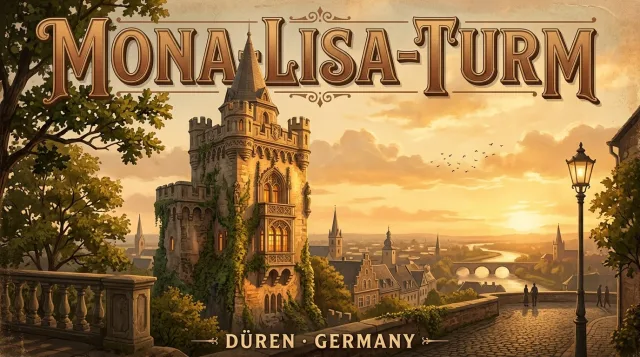
Mona-Lisa-Turm
A small brick tower in Schillingspark in Gürzenich, built in the 19th century using a sandstone lintel dated 1555 from the demolished Burg Gürzenich castle.
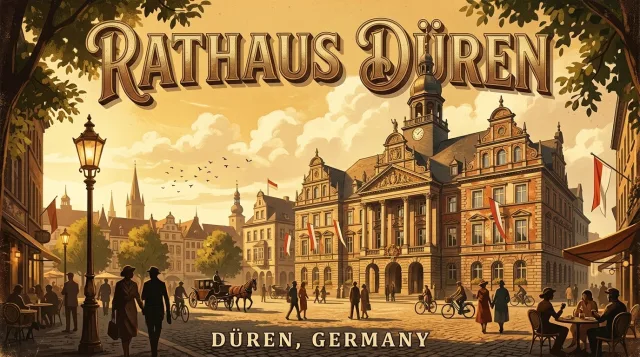
Rathaus Düren
A listed 1950s town hall with a distinctive clock tower and mosaic coat of arms, built after its historic predecessor was destroyed in 1944.
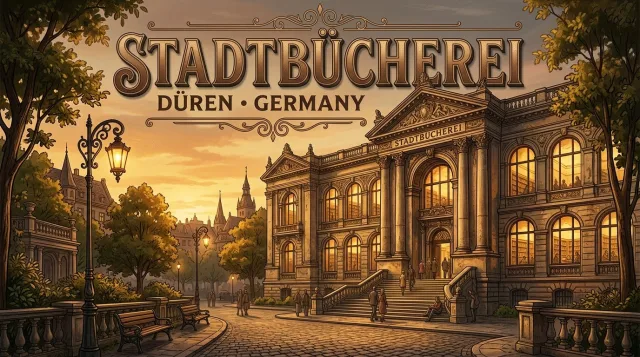
Stadtbücherei
The oldest city library in the Rhineland, founded in 1870, now housed in the Haus der Stadt built in 1991 with around 62,000 items and a modern lounge atmosphere.
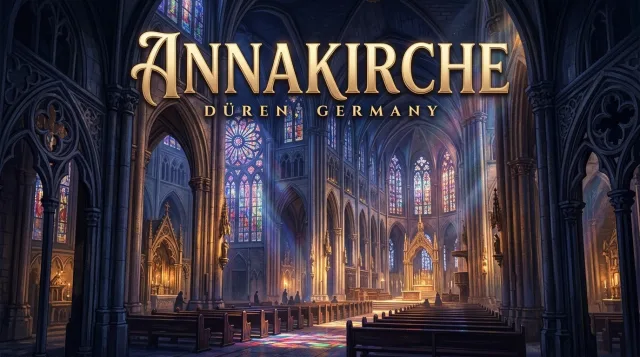
Annakirche
The Annakirche is Düren's important pilgrimage church of St. Anna, rebuilt in 1954–1956 to designs by Rudolf Schwarz and home to the relic of Saint Anna.
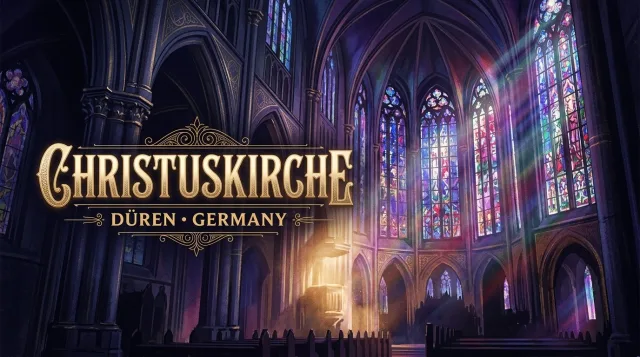
Christuskirche
The Christuskirche is Düren's most important Protestant church, built in 1953/54 to designs by Hentrich and Petschnigg and known for its once-tallest free-standing church tower in Germany.
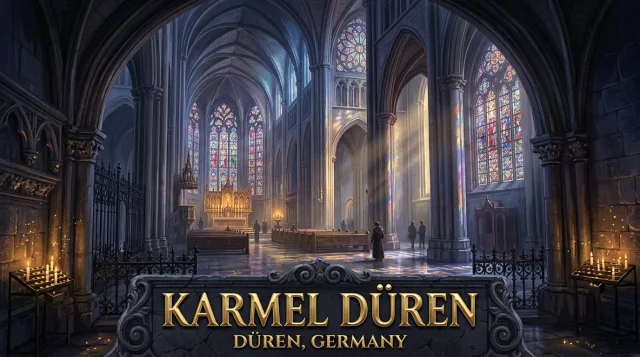
Karmel Düren
Karmel Düren is the monastery of the Discalced Carmelite nuns on Kölner Landstraße, established in 1903, known for its monastic bookbindery and the monastery church consecrated in 1913.
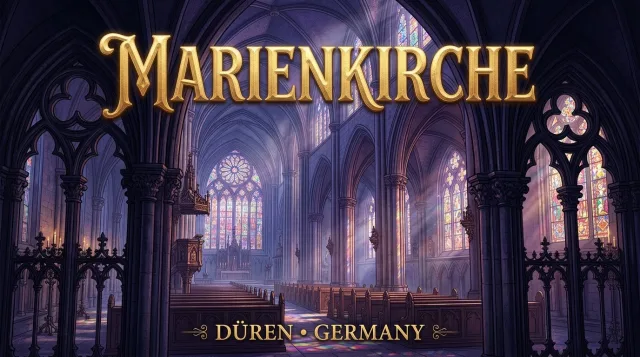
Marienkirche
The Marienkirche is the historic church of St. Marien on Hoeschplatz in Düren, rebuilt in 1949 after its destruction in 1944 and today a subsidiary church of the St. Lukas parish.
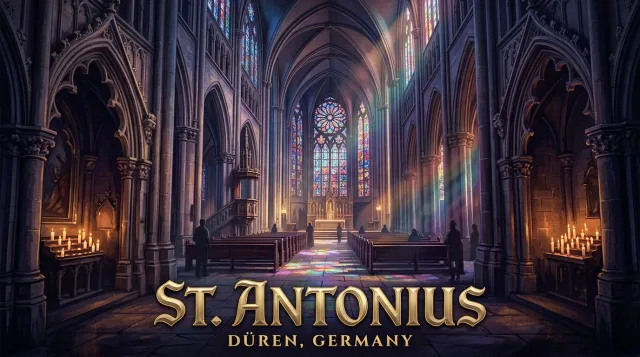
St. Antonius
St. Antonius is the Catholic church of the Grüngürtel district, rebuilt in 1973–1975 to designs by Matthias Kleuters and known for its stained-glass windows by Ludwig Schaffrath.
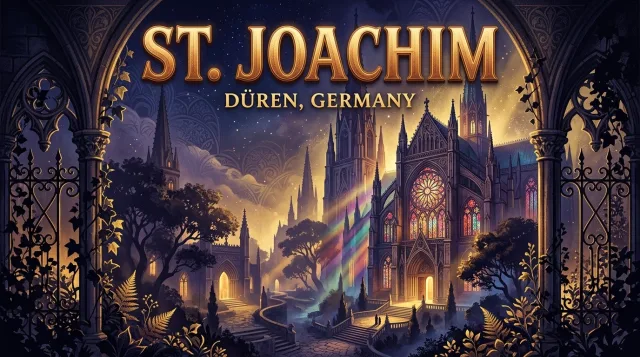
St. Joachim
St. Joachim is a Neoromanesque brick church built 1895–1897 in northern Düren, restored between 1976 and 1988 after wartime damage and still used today as a subsidiary church.
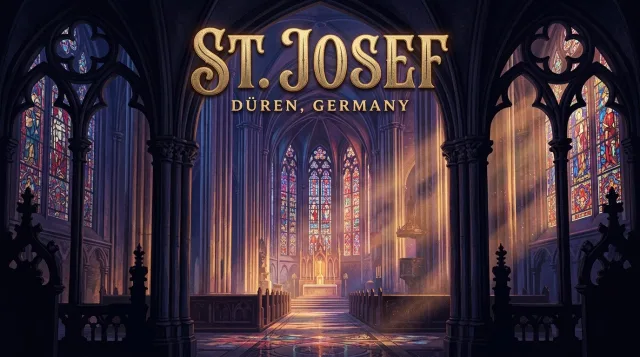
St. Josef
St. Josef is a brick church built in 1937/1938 in southern Düren, one of the few churches in the city to survive the Second World War unscathed with its original windows intact.
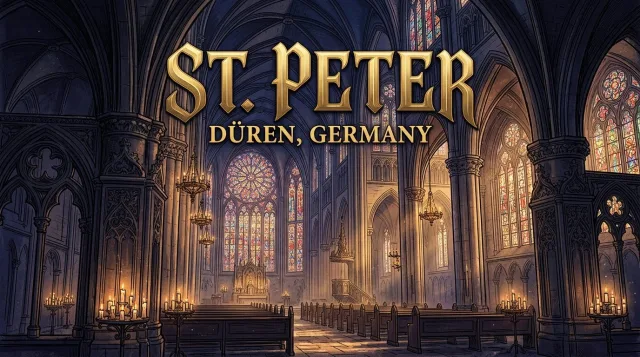
St. Peter
St. Peter in Birkesdorf is a parish church documented since 1308, built in neo-Gothic style by Vincenz Statz in 1853–1855, and the main church of the larger St. Franziskus/Düren parish since 2026.
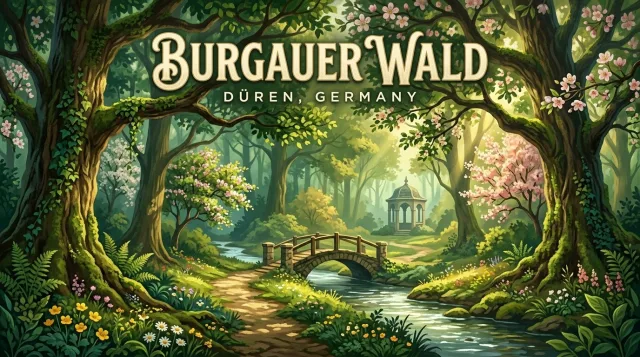
Burgauer Wald
Burgauer Wald is a natural woodland area surrounding the moated castle of Schloss Burgau, with marked hiking and educational trails for families and nature lovers.
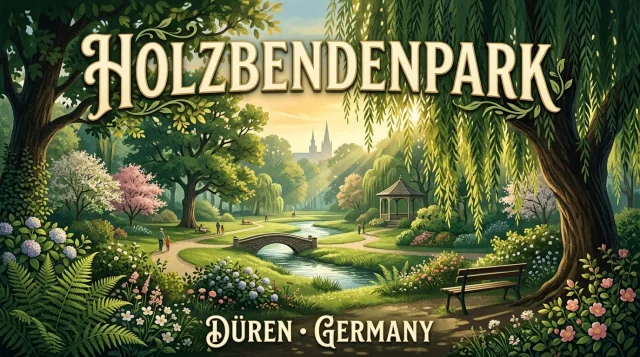
Holzbendenpark
Holzbendenpark is a family-friendly park in Düren near the Arena Kreis Düren, featuring a duck pond, playground and kickabout pitch.
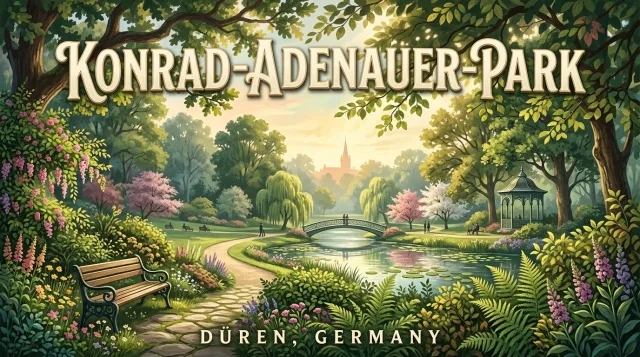
Konrad-Adenauer-Park
Konrad-Adenauer-Park is a centrally located neighbourhood park in Düren featuring a historic high cross, play areas, a kickabout pitch and outdoor fitness equipment.
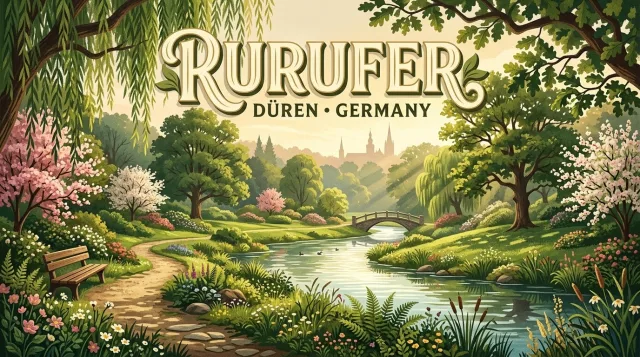
Rurufer
The Rurufer is a green ribbon of walking and cycling paths along the Rur river, showing Düren from a quieter side on foot or by bike.
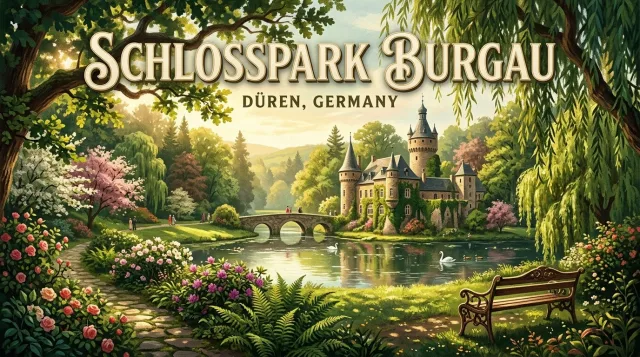
Schlosspark Burgau
Schlosspark Burgau surrounds the medieval moated castle of Schloss Burgau with mature trees, a moat and meadows on the edge of the Burgauer Wald forest.
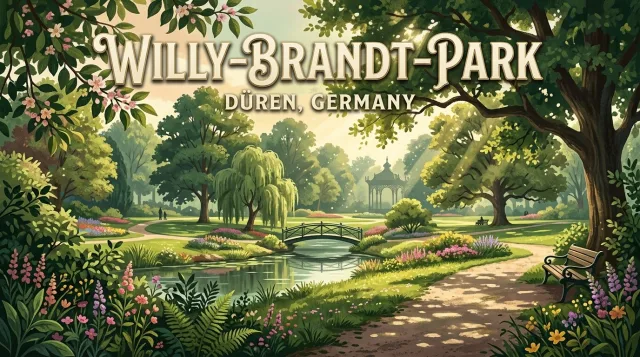
Willy-Brandt-Park
Willy-Brandt-Park is Düren's oldest and largest city park on the banks of the Rur, named after the former chancellor, featuring mature trees, a playground and a Chinese pavilion.
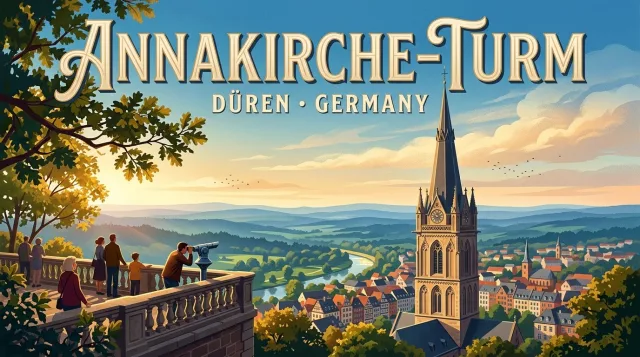
Annakirche Tower
The Annakirche tower is a far-visible landmark of Düren's city centre with a carillon, though its interior is not regularly open for visitor ascents.
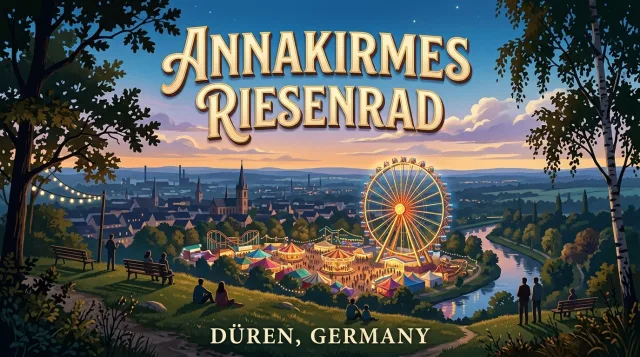
Annakirmes Riesenrad
The Annakirmes Riesenrad is a seasonal Ferris wheel that offers a panoramic view over Düren only during the nine-day Annakirmes festival in late summer.
Rurköpfe
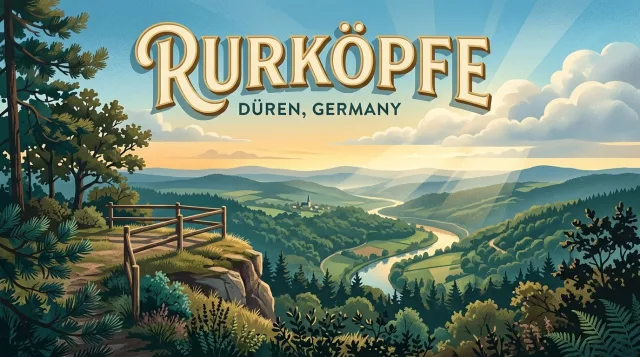
The Rurköpfe are quiet, slightly elevated riverbank sections along the Rur in Düren, with occasional benches and an understated view of the river.
Alte Stadtmauer
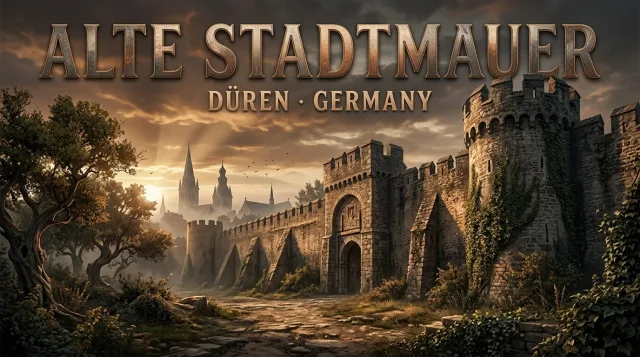
Begun around 1212, Düren's Alte Stadtmauer is one of the few structures that survived the 1944 air raid, so several towers and wall sections still remain throughout the city today.
Bismarckdenkmal
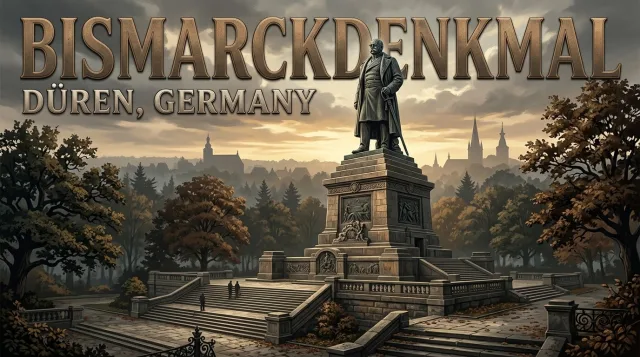
The Bismarckdenkmal in Theodor-Heuss-Park is a bronze statue of Chancellor Otto von Bismarck unveiled in 1892 that survived the 1944 air raid and still recalls Düren's pre-war history today.
Flammenengel
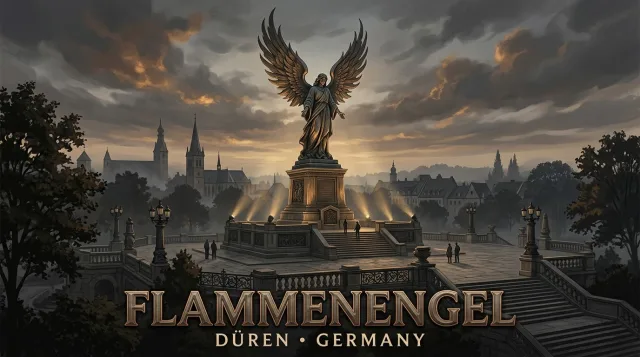
The Flammenengel is a bronze sculpture by Adolf Wamper from 1962, standing at the town hall steps on Kaiserplatz, commemorating the devastating air raid of November 16, 1944, and the victims of both World Wars.
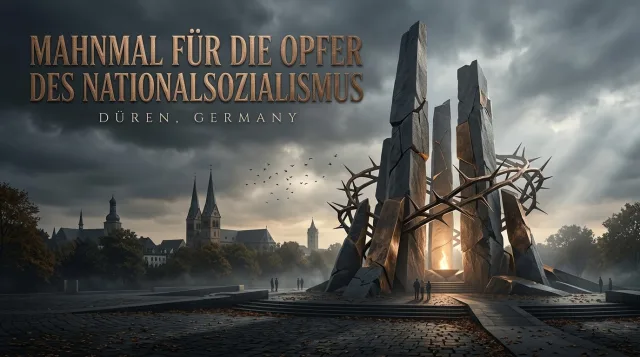
Mahnmal für die Opfer des Nationalsozialismus
The Mahnmal für die Opfer des Nationalsozialismus on Rückmüller-Platz is a quiet memorial in central Düren commemorating the persecution and murder of Jewish residents and other victims of National Socialism.
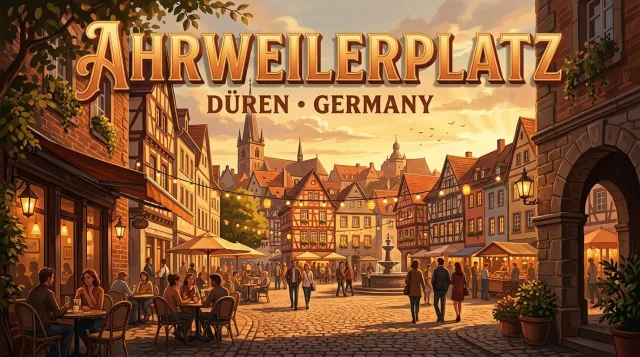
Ahrweilerplatz
Once a burial ground and poultry market, Ahrweilerplatz took its present name in 1881 and is today a lively meeting point with numerous restaurants beside the Annakirche.
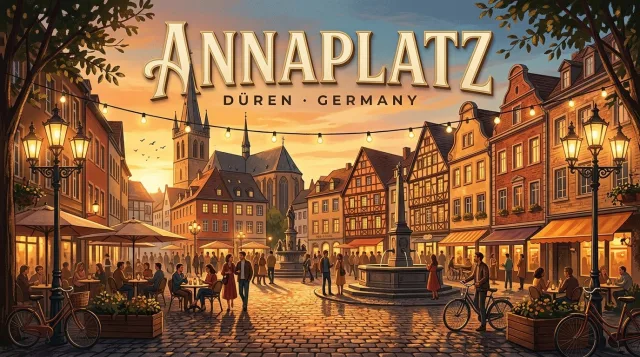
Annaplatz
Annaplatz, together with Ahrweilerplatz, surrounds the Annakirche, whose surviving Gothic south portal and post-war church consecrated in 1956 by architect Rudolf Schwarz still define the square today.
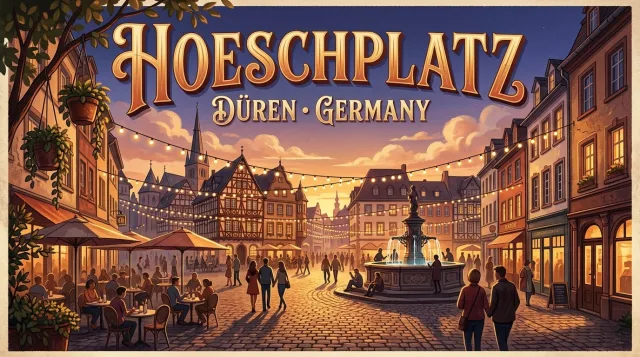
Hoeschplatz
Hoeschplatz is Düren's cultural square around the Leopold-Hoesch-Museum, opened in 1905, and the Papiermuseum, named after the Hoesch industrial family who funded both institutions.
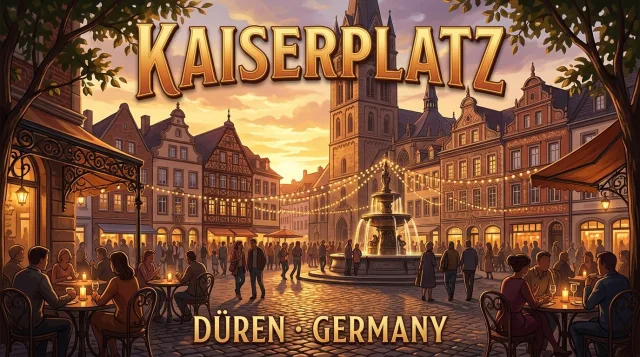
Kaiserplatz
Kaiserplatz is Düren's central square, home to the town hall opened in 1959, the 1962 Flammenengel memorial, and the city's main bus hub.
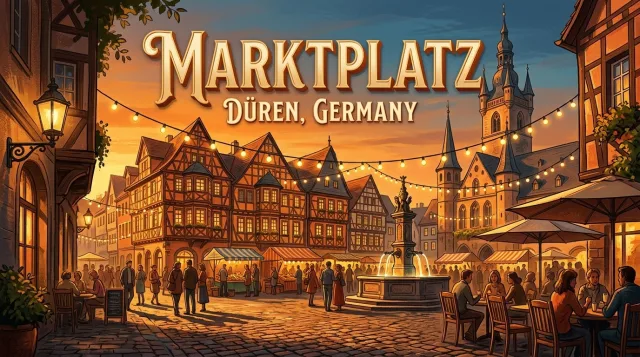
Marktplatz
The Marktplatz is Düren's historic heart, home to a grain market since 1361 and today a lively pedestrian square with the 1957 Mariensäule and a regular weekly market.
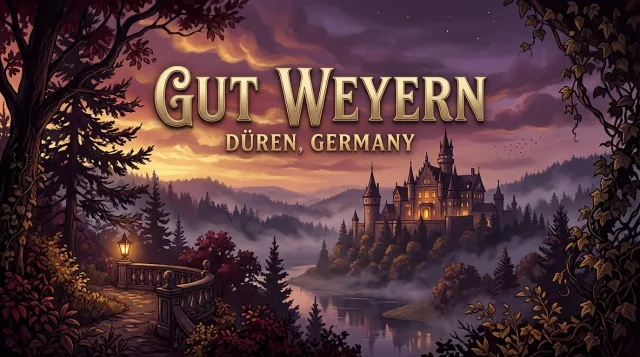
Gut Weyern
A protected early-18th-century manor estate in the Burgauer Wald near Düren, surrounded by a moat and historic outbuildings.
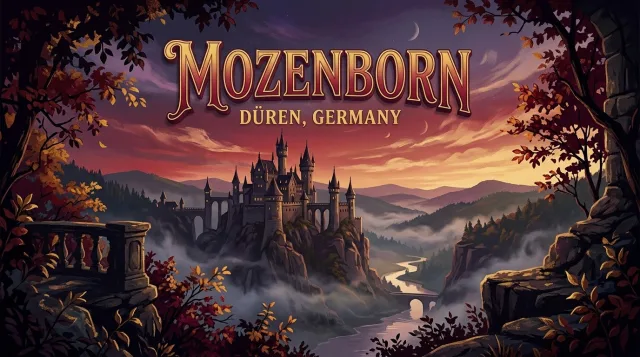
Mozenborn
A centuries-old noble estate in Düren's Birgel district, featuring an 1789 manor house and the remains of an older, moat-encircled fortified residence.
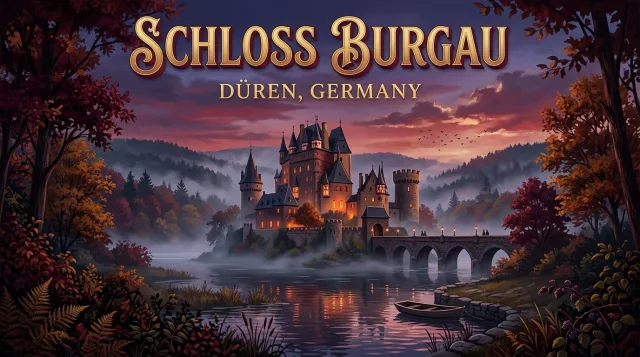
Schloss Burgau
A well-preserved medieval moated castle in the Burgauer Wald near Düren-Niederau, now used as an exhibition and events venue.
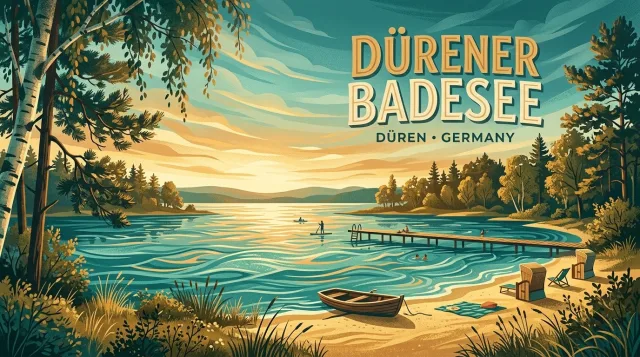
Dürener Badesee
A popular recreational lake between Gürzenich, Derichsweiler and Mariaweiler, featuring a fine sandy beach, a water-ski facility and a wide range of water sports.
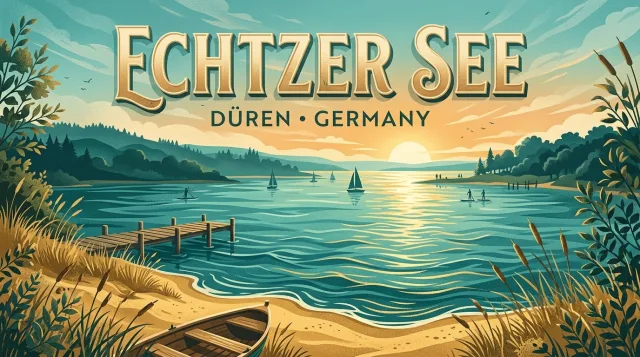
Echtzer See
A quiet, tree-lined recreational lake near Echtz with a campsite, dining options and a depth of up to 18 metres that is popular with divers.
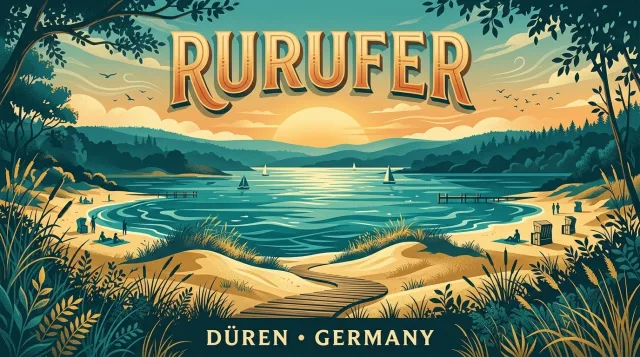
Rur Riverbank
Natural riverside stretches along the Rur right through Düren, ideal for walks, cycling tours and quiet recreation amid greenery.
Dürener Wochenmarkt
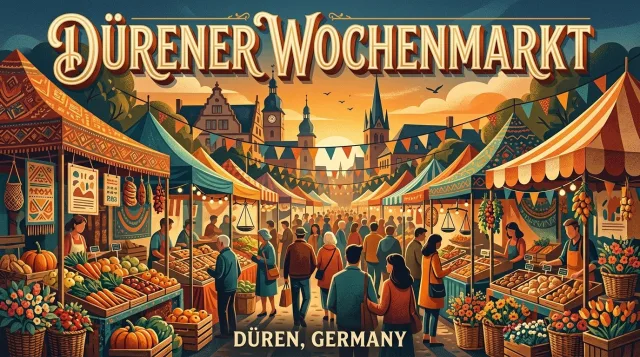
The traditional weekly market on Düren's market square, offering fresh fruit, vegetables, flowers and regional specialities three times a week.
Hirschgasse
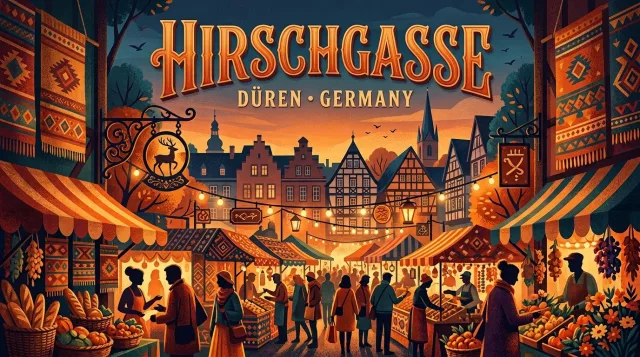
A short, historic alley between the market square and Wirtelstraße, home to individual boutiques and small specialty shops.
Kölnstraße
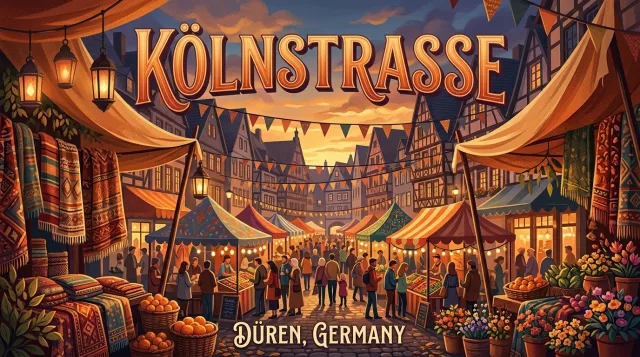
A historic shopping street running from Düren's market square to Am Pletzerturm, with boutiques, cafés, the Konrad-Adenauer-Park and the site of the former Kölntor gate.
Seasonal Markets
The major recurring festivals of Düren's city centre, from the Frühlingsfest and Annamarkt to the Herbstmarkt and Weihnachtsmarkt.
StadtCenter Düren
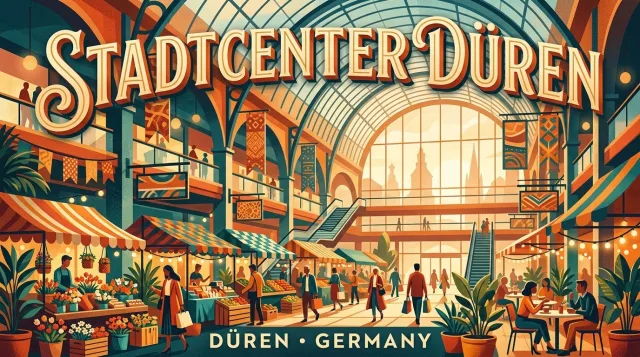
Düren's largest covered shopping centre near the central railway station, with over 50 shops including Saturn and H&M.
Wirtelstraße
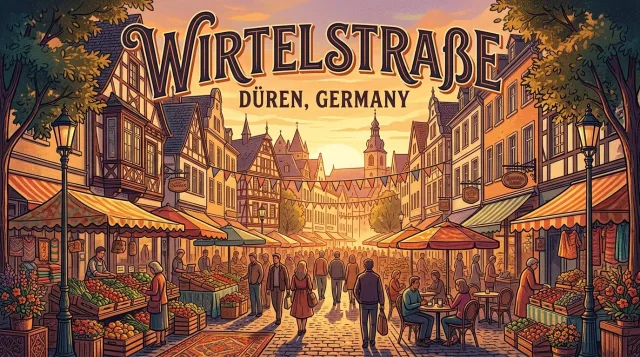
The central, car-free shopping street of Düren's city centre, lined with fashion chains, cafés and smaller shops.
🏛️ Museum in Düren 2026/2027
Leopold-Hoesch-Museum
The Leopold-Hoesch-Museum on Hoeschplatz in Düren presents major works of German Expressionism and international paper art inside a historic 1905 building with a modern extension.
Papiermuseum Düren
An interactive museum celebrating Düren centuries-old papermaking tradition, featuring over 30,000 historic watermarked papers and hands-on workshops.
Stadtmuseum Düren
A volunteer-run city museum on Arnoldsweilerstraße that presents the history of Düren chronologically from the year 747 to the present day.
🏛️ Historic Building in Düren 2026/2027
Dicker Turm
A round watchtower built in 1493 on the grounds of the Stiftisches Gymnasium, one of the last surviving parts of Düren medieval city wall.
Komm-Kulturzentrum
A socio-cultural center housed in the historic Pleußmühle, documented since 1261, hosting concerts, comedy, and workshops since 1992.
Mona-Lisa-Turm
A small brick tower in Schillingspark in Gürzenich, built in the 19th century using a sandstone lintel dated 1555 from the demolished Burg Gürzenich castle.
Rathaus Düren
A listed 1950s town hall with a distinctive clock tower and mosaic coat of arms, built after its historic predecessor was destroyed in 1944.
Stadtbücherei
The oldest city library in the Rhineland, founded in 1870, now housed in the Haus der Stadt built in 1991 with around 62,000 items and a modern lounge atmosphere.
⛪ Church & Cathedral in Düren 2026/2027
Annakirche
The Annakirche is Düren's important pilgrimage church of St. Anna, rebuilt in 1954–1956 to designs by Rudolf Schwarz and home to the relic of Saint Anna.
Christuskirche
The Christuskirche is Düren's most important Protestant church, built in 1953/54 to designs by Hentrich and Petschnigg and known for its once-tallest free-standing church tower in Germany.
Karmel Düren
Karmel Düren is the monastery of the Discalced Carmelite nuns on Kölner Landstraße, established in 1903, known for its monastic bookbindery and the monastery church consecrated in 1913.
Marienkirche
The Marienkirche is the historic church of St. Marien on Hoeschplatz in Düren, rebuilt in 1949 after its destruction in 1944 and today a subsidiary church of the St. Lukas parish.
St. Antonius
St. Antonius is the Catholic church of the Grüngürtel district, rebuilt in 1973–1975 to designs by Matthias Kleuters and known for its stained-glass windows by Ludwig Schaffrath.
St. Joachim
St. Joachim is a Neoromanesque brick church built 1895–1897 in northern Düren, restored between 1976 and 1988 after wartime damage and still used today as a subsidiary church.
St. Josef
St. Josef is a brick church built in 1937/1938 in southern Düren, one of the few churches in the city to survive the Second World War unscathed with its original windows intact.
St. Peter
St. Peter in Birkesdorf is a parish church documented since 1308, built in neo-Gothic style by Vincenz Statz in 1853–1855, and the main church of the larger St. Franziskus/Düren parish since 2026.
🌳 Park & Garden in Düren 2026/2027
Burgauer Wald
Burgauer Wald is a natural woodland area surrounding the moated castle of Schloss Burgau, with marked hiking and educational trails for families and nature lovers.
Holzbendenpark
Holzbendenpark is a family-friendly park in Düren near the Arena Kreis Düren, featuring a duck pond, playground and kickabout pitch.
Konrad-Adenauer-Park
Konrad-Adenauer-Park is a centrally located neighbourhood park in Düren featuring a historic high cross, play areas, a kickabout pitch and outdoor fitness equipment.
Rurufer
The Rurufer is a green ribbon of walking and cycling paths along the Rur river, showing Düren from a quieter side on foot or by bike.
Schlosspark Burgau
Schlosspark Burgau surrounds the medieval moated castle of Schloss Burgau with mature trees, a moat and meadows on the edge of the Burgauer Wald forest.
Willy-Brandt-Park
Willy-Brandt-Park is Düren's oldest and largest city park on the banks of the Rur, named after the former chancellor, featuring mature trees, a playground and a Chinese pavilion.
🔭 Viewpoint in Düren 2026/2027
Annakirche Tower
The Annakirche tower is a far-visible landmark of Düren's city centre with a carillon, though its interior is not regularly open for visitor ascents.
Annakirmes Riesenrad
The Annakirmes Riesenrad is a seasonal Ferris wheel that offers a panoramic view over Düren only during the nine-day Annakirmes festival in late summer.
Rurköpfe
The Rurköpfe are quiet, slightly elevated riverbank sections along the Rur in Düren, with occasional benches and an understated view of the river.
🗿 Monument & Statue in Düren 2026/2027
Alte Stadtmauer
Begun around 1212, Düren's Alte Stadtmauer is one of the few structures that survived the 1944 air raid, so several towers and wall sections still remain throughout the city today.
Bismarckdenkmal
The Bismarckdenkmal in Theodor-Heuss-Park is a bronze statue of Chancellor Otto von Bismarck unveiled in 1892 that survived the 1944 air raid and still recalls Düren's pre-war history today.
Flammenengel
The Flammenengel is a bronze sculpture by Adolf Wamper from 1962, standing at the town hall steps on Kaiserplatz, commemorating the devastating air raid of November 16, 1944, and the victims of both World Wars.
Mahnmal für die Opfer des Nationalsozialismus
The Mahnmal für die Opfer des Nationalsozialismus on Rückmüller-Platz is a quiet memorial in central Düren commemorating the persecution and murder of Jewish residents and other victims of National Socialism.
🏘️ Square & Old Town in Düren 2026/2027
Ahrweilerplatz
Once a burial ground and poultry market, Ahrweilerplatz took its present name in 1881 and is today a lively meeting point with numerous restaurants beside the Annakirche.
Annaplatz
Annaplatz, together with Ahrweilerplatz, surrounds the Annakirche, whose surviving Gothic south portal and post-war church consecrated in 1956 by architect Rudolf Schwarz still define the square today.
Hoeschplatz
Hoeschplatz is Düren's cultural square around the Leopold-Hoesch-Museum, opened in 1905, and the Papiermuseum, named after the Hoesch industrial family who funded both institutions.
Kaiserplatz
Kaiserplatz is Düren's central square, home to the town hall opened in 1959, the 1962 Flammenengel memorial, and the city's main bus hub.
Marktplatz
The Marktplatz is Düren's historic heart, home to a grain market since 1361 and today a lively pedestrian square with the 1957 Mariensäule and a regular weekly market.
🏰 Castle & Palace in Düren 2026/2027
Gut Weyern
A protected early-18th-century manor estate in the Burgauer Wald near Düren, surrounded by a moat and historic outbuildings.
Mozenborn
A centuries-old noble estate in Düren's Birgel district, featuring an 1789 manor house and the remains of an older, moat-encircled fortified residence.
Schloss Burgau
A well-preserved medieval moated castle in the Burgauer Wald near Düren-Niederau, now used as an exhibition and events venue.
🏖️ Beach & Coast in Düren 2026/2027
Dürener Badesee
A popular recreational lake between Gürzenich, Derichsweiler and Mariaweiler, featuring a fine sandy beach, a water-ski facility and a wide range of water sports.
Echtzer See
A quiet, tree-lined recreational lake near Echtz with a campsite, dining options and a depth of up to 18 metres that is popular with divers.
Rur Riverbank
Natural riverside stretches along the Rur right through Düren, ideal for walks, cycling tours and quiet recreation amid greenery.
🛍️ Market & Shopping in Düren 2026/2027
Dürener Wochenmarkt
The traditional weekly market on Düren's market square, offering fresh fruit, vegetables, flowers and regional specialities three times a week.
Hirschgasse
A short, historic alley between the market square and Wirtelstraße, home to individual boutiques and small specialty shops.
Kölnstraße
A historic shopping street running from Düren's market square to Am Pletzerturm, with boutiques, cafés, the Konrad-Adenauer-Park and the site of the former Kölntor gate.
Seasonal Markets
The major recurring festivals of Düren's city centre, from the Frühlingsfest and Annamarkt to the Herbstmarkt and Weihnachtsmarkt.
StadtCenter Düren
Düren's largest covered shopping centre near the central railway station, with over 50 shops including Saturn and H&M.
Wirtelstraße
The central, car-free shopping street of Düren's city centre, lined with fashion chains, cafés and smaller shops.
Where to stay in Düren, Germany
Compare current hotel prices and find the right place to stay.