Allerheiligen-Hofkirche
This Byzantine-Romanesque court church inside the Residenz was built by Leo von Klenze as King Ludwig I's private chapel.
Alter Peter (St. Peter's Church)
The oldest parish church in Munich's old town - its tower, affectionately called "Alter Peter", offers one of the city's finest panoramic views.
Annakirche
The Annakirche is Düren's important pilgrimage church of St. Anna, rebuilt in 1954–1956 to designs by Rudolf Schwarz and home to the relic of Saint Anna.
Antoniterkirche
Antoniterkirche, a Gothic church on Schildergasse, was Cologne's first Protestant church and houses Ernst Barlach's world-famous memorial sculpture "Der Schwebende".
Asam Church
A small but extraordinarily lavish Baroque church, built by the Asam brothers in the 18th century as their own private church.
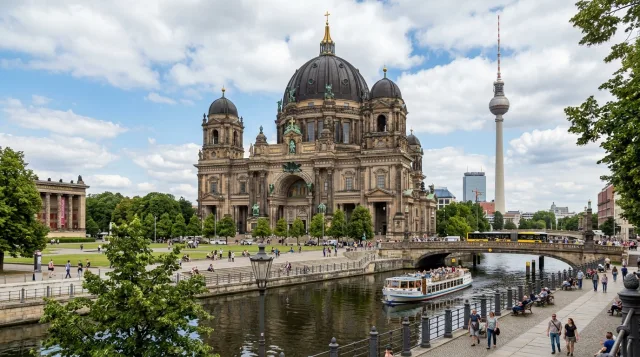
Berlin Cathedral
Germany's largest Protestant church, with an imposing dome standing right beside Museum Island.
Bürgersaalkirche
This two-level Baroque church on Neuhauser Straße consists of a festive upper hall and a simple lower prayer crypt.
Christuskirche
The Christuskirche is Düren's most important Protestant church, built in 1953/54 to designs by Hentrich and Petschnigg and known for its once-tallest free-standing church tower in Germany.
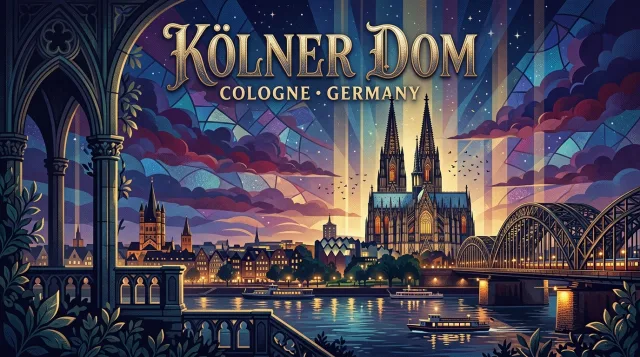
Cologne Cathedral
This Gothic cathedral on the Rhine, home to the Shrine of the Three Kings, is Cologne's UNESCO World Heritage landmark and one of Germany's most visited sights.
Deutscher Dom Berlin – Exhibition & History
The Deutscher Dom on Gendarmenmarkt in Berlin houses the Bundestag’s interactive exhibition on the history of parliamentary democracy and forms, together with the French Cathedral and the Konzerthaus, one of the city’s most beautiful ensembles.
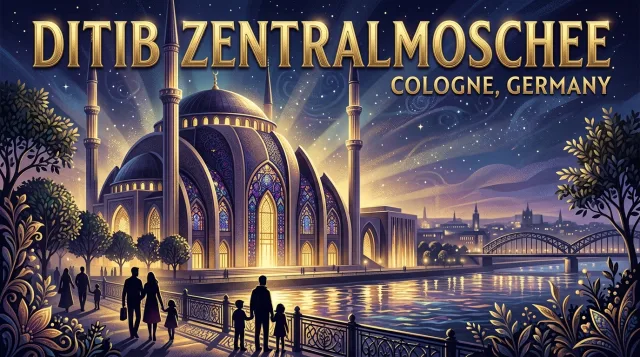
DITIB Zentralmoschee
The DITIB Zentralmoschee in Cologne's Ehrenfeld district impresses with its glass dome and two 55-meter minarets as one of Germany's largest mosques.
Emmauskirche Berlin – History, Visit & Tips
The Emmauskirche at Lausitzer Platz in Berlin-Kreuzberg combines a historic 1893 brick tower with a modern nave and serves today as a lively venue for services and concerts.
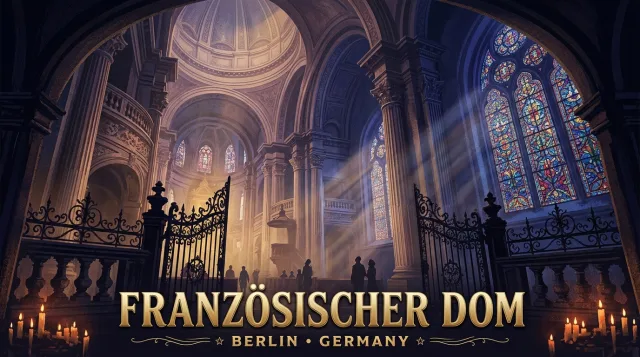
Französischer Dom, Berlin
The Französischer Dom on Gendarmenmarkt combines Huguenot history, the Huguenot Museum and a panorama platform about 40 metres above one of Berlin’s finest squares.
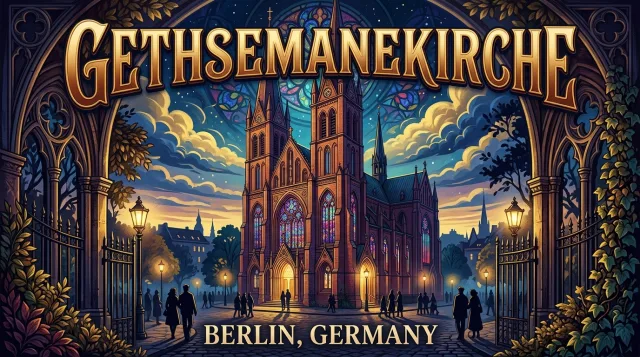
Gethsemanekirche
A neo-Gothic brick church from 1893 in Prenzlauer Berg, famous as the site of the 1989 peace prayers and a symbol of the Peaceful Revolution.
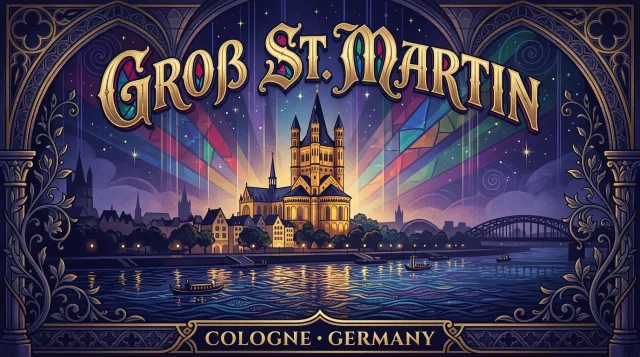
Groß St. Martin
This Romanesque church with its striking crossing tower shapes, together with Cologne Cathedral, the famous Rhine skyline of Cologne's old town.
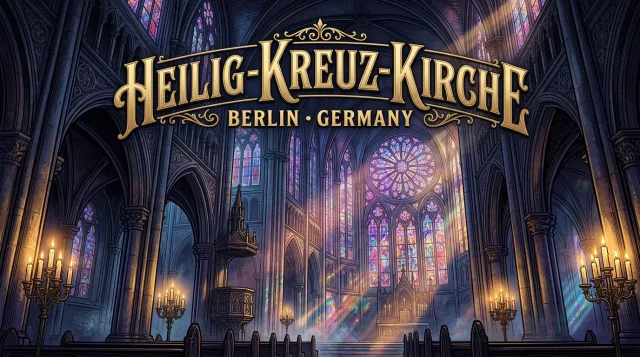
Heilig-Kreuz-Kirche
A neo-Gothic twin-tower church from 1888 in Kreuzberg, today a lively socio-cultural center known as Heilig-Kreuz-Passion on Blücherplatz.
Heiliggeistkirche
This church right by the Viktualienmarkt grew out of a medieval hospital and received a Baroque interior makeover in the 18th century.
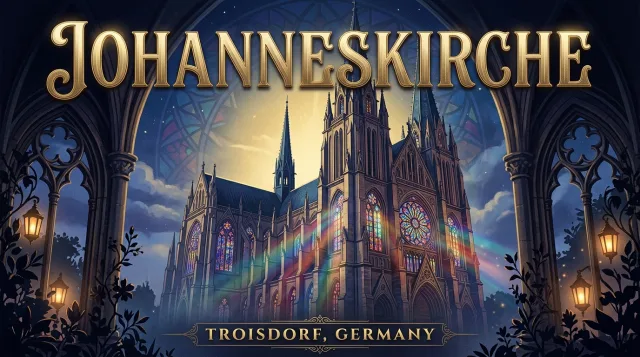
Johanneskirche
The Johanneskirche in Troisdorf-Mitte is the Protestant town church in neo-Romanesque style, remodelled into an open multifunctional church with a church café.
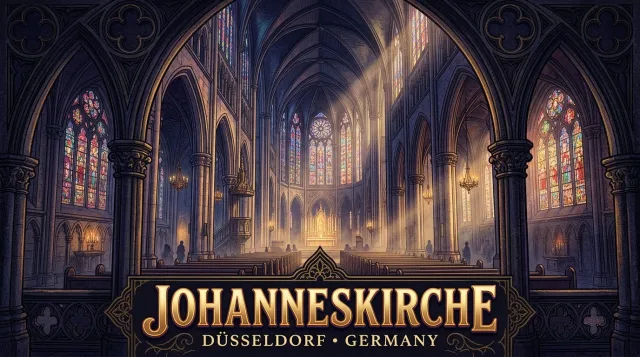
Johanneskirche
Düsseldorf's largest Protestant church on Martin-Luther-Platz blends Romanesque Revival architecture with modern Citykirche life and a café.
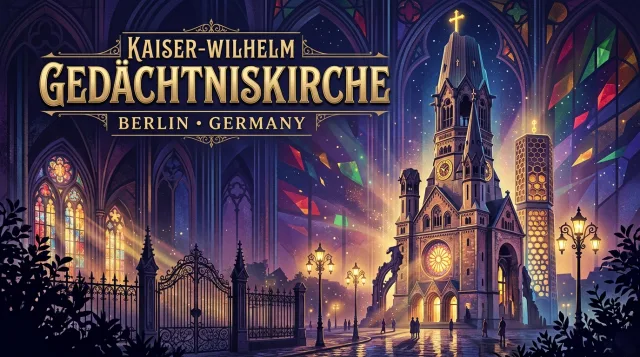
Kaiser-Wilhelm-Gedächtniskirche Berlin
The Kaiser-Wilhelm-Gedächtniskirche on Breitscheidplatz is Berlin’s most famous memorial against war and a place of reconciliation with striking architecture combining ruin and modern design.
Karmel Düren
Karmel Düren is the monastery of the Discalced Carmelite nuns on Kölner Landstraße, established in 1903, known for its monastic bookbindery and the monastery church consecrated in 1913.
Kirche St. Hippolytus
The Kirche St. Hippolytus in Troisdorf-Mitte is the Catholic parish church with a history of more than 1,000 years, a Romanesque baptismal font and a well-known root nativity.
Mariahilfplatz & Mariahilf Church
The central square of the Au district, home to the neo-Gothic Mariahilf Church and host of the traditional "Auer Dult" flea market.
Mariendom St. Marien
Completed in 1893 in St. Georg, this neo-Romanesque cathedral is Hamburg's Catholic Mariendom, notable for its rare underground columbarium.
Marienkirche
The Marienkirche is the historic church of St. Marien on Hoeschplatz in Düren, rebuilt in 1949 after its destruction in 1944 and today a subsidiary church of the St. Lukas parish.
Marienkirche Berlin – History, Highlights & Visitor Guide
Marienkirche at Alexanderplatz is Berlin’s oldest parish church still in use, featuring a medieval Dance of Death fresco, a Baroque pulpit and striking brick Gothic architecture right beside the TV Tower.
Maxkirche
The late Baroque Maxkirche in Carlstadt is famous for its outstanding acoustics and houses a faithfully reconstructed 18th-century organ.
Munich Frauenkirche
This Gothic brick cathedral with its distinctive onion domes is Munich's defining landmark, visible far beyond the old town for centuries.
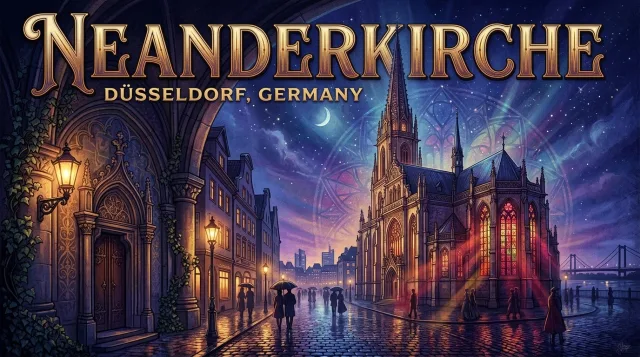
Neanderkirche
The Neanderkirche is a 17th-century Baroque courtyard church hidden in the heart of Düsseldorf's Altstadt, named after the hymn writer Joachim Neander.
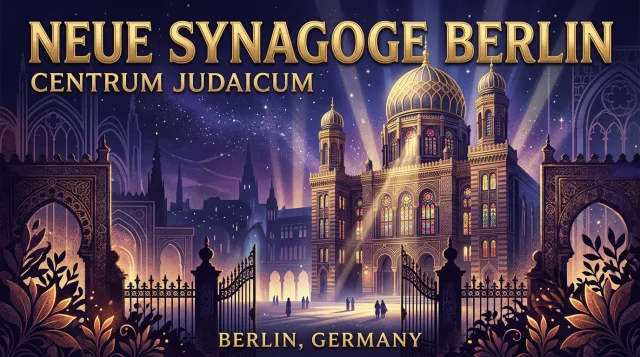
Neue Synagoge Berlin (Centrum Judaicum) – History & Visit
The Neue Synagoge Berlin (Centrum Judaicum) is an impressive testimony to Jewish history featuring a golden dome, permanent exhibition and central location in Berlin-Mitte.
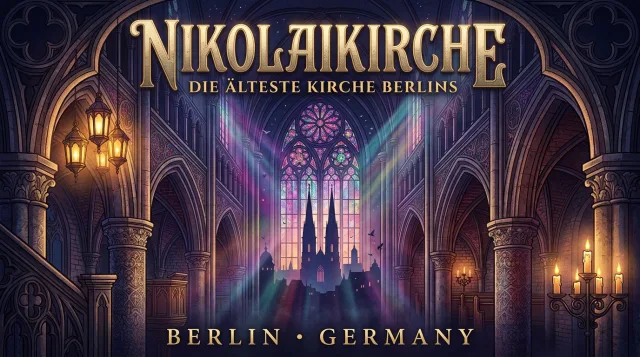
Nikolaikirche (die älteste Kirche Berlins) – Berlin’s Oldest Church
Nikolaikirche (die älteste Kirche Berlins) in the Nikolaiviertel is Berlin’s oldest surviving church building from the 13th century and today a museum dedicated to 800 years of city history.
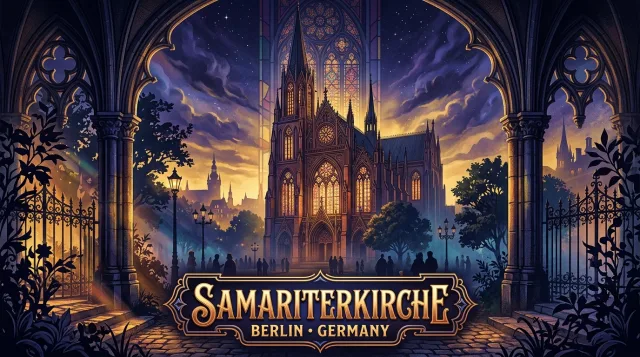
Samariterkirche Berlin – History & Visit Guide
The Samariterkirche in Berlin-Friedrichshain is a neo-Gothic brick church from 1894 with a rich resistance history and a central location in the Samariterviertel.
Sophienkirche Berlin – Baroque Tower & History
Sophienkirche in Berlin-Mitte is a Protestant Baroque church featuring the city’s only surviving Baroque church tower and welcomes visitors with free admission and a central location.
St. Andreas Dominikanerkirche
Behind a plain brick facade hides a magnificent Baroque church with rich stucco work, a princely mausoleum, and an active Dominican monastery.
St. Anna im Lehel
Munich's first Rococo church, in the Lehel district, was decorated by the Asam brothers with magnificent frescoes and stucco work.
St. Antonius
St. Antonius is the Catholic church of the Grüngürtel district, rebuilt in 1973–1975 to designs by Matthias Kleuters and known for its stained-glass windows by Ludwig Schaffrath.
St. Aposteln
St. Aposteln is one of Cologne's twelve great Romanesque churches on Neumarkt, known for its distinctive trefoil choir and roughly 67-metre west tower.
St. Georg (Altenrath)
The St. Georg (Altenrath) in Troisdorf is a Romanesque pillar basilica from the mid-12th century and one of the oldest places of worship in the region.
St. Gereon
St. Gereon is one of Cologne's twelve great Romanesque churches, famous for its unique 13th-century decagon built over a late antique oval core.
St. Jacobi Kirche
This Gothic church in Hamburg's old town is world-famous for its 1693 Arp Schnitger organ, the largest surviving Baroque organ in northern Europe.
St. Joachim
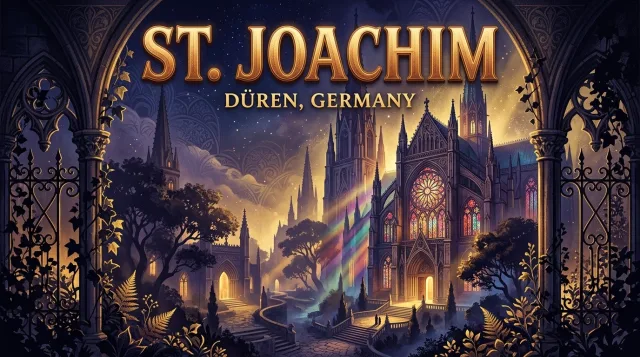
St. Joachim is a Neoromanesque brick church built 1895–1897 in northern Düren, restored between 1976 and 1988 after wartime damage and still used today as a subsidiary church.
St. Josef
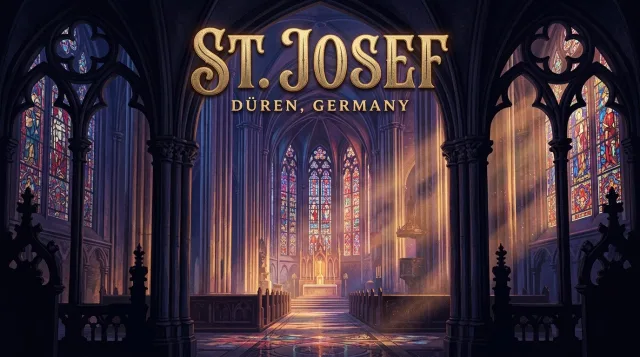
St. Josef is a brick church built in 1937/1938 in southern Düren, one of the few churches in the city to survive the Second World War unscathed with its original windows intact.
St. Katharinen Kirche
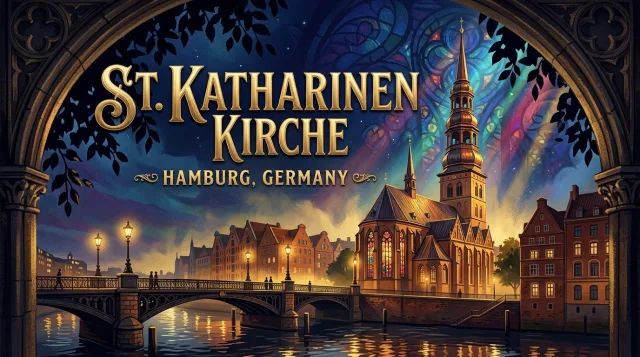
Known as the "sailors' church" opposite the Speicherstadt, this church features an iconic 1657 Baroque spire and an organ reconstructed in 2013.
St. Kunibert
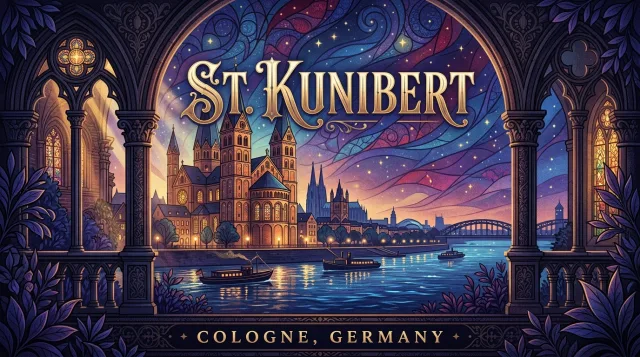
St. Kunibert is the youngest of Cologne's twelve great Romanesque churches, blending late Romanesque forms with early Gothic elements right on the bank of the Rhine in Altstadt-Nord.
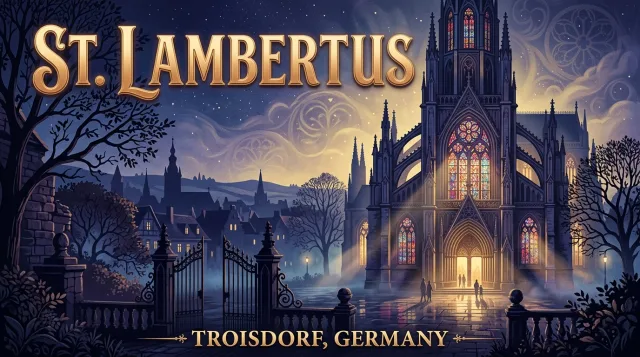
St. Lambertus
The St. Lambertus in Troisdorf-Bergheim is the neo-Gothic parish church from 1869–1872 with roots going back to the 8th century and a baptismal font from the early period.
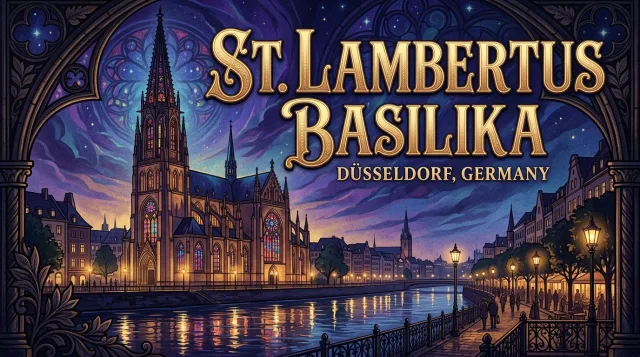
St. Lambertus Basilika
This Gothic basilica with its distinctive crooked tower is one of Düsseldorf's oldest churches and still defines the skyline of the Altstadt today.
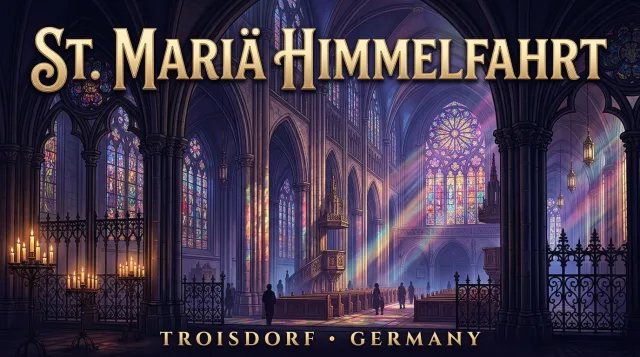
St. Mariä Himmelfahrt
The St. Mariä Himmelfahrt in Troisdorf-Spich is the neo-Gothic Catholic parish church from 1860 and the centre of the community in the Spich district.
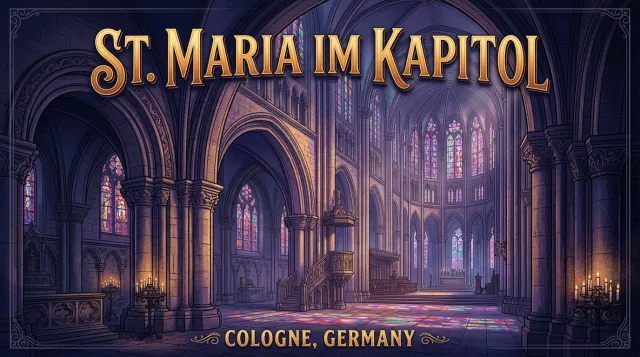
St. Maria im Kapitol
St. Maria im Kapitol is the largest of Cologne's twelve Romanesque churches, built over the remains of a Roman capitol temple and famed for its trefoil choir and thousand-year-old wooden door.
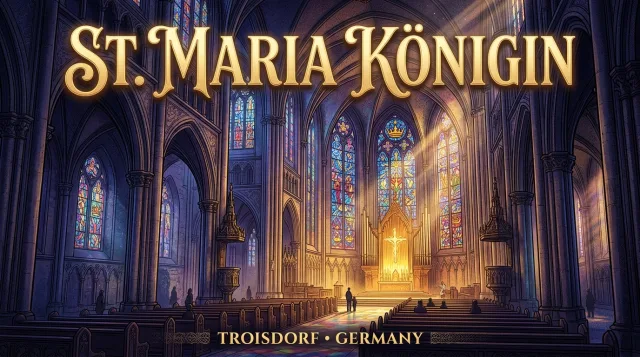
St. Maria Königin
The St. Maria Königin in Troisdorf-West is a modern tent church from 1960–62 (rebuilt 1974) with a striking glass façade by Ludwig Schaffrath.
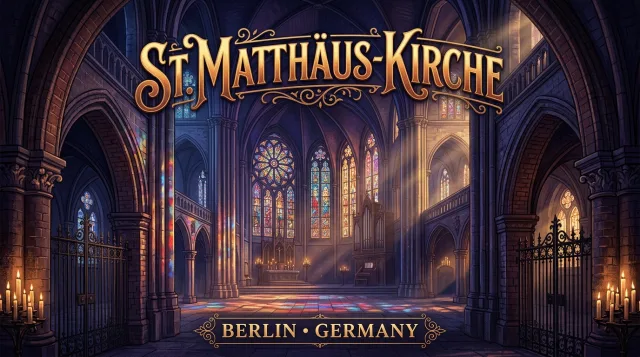
St. Matthäus-Kirche
A reddish-brown 1846 brick church in the heart of the Kulturforum, today serving as a place of worship, art space, and respected concert venue near the Philharmonie and Neue Nationalgalerie.
St. Michael's Church
The largest Renaissance church north of the Alps was built for the Jesuit order and its crypt holds the tomb of King Ludwig II.
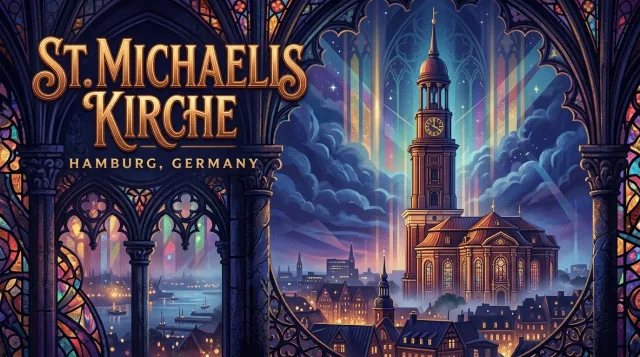
St. Michaelis Kirche
Known as the "Michel", this 132-metre-tall baroque church is Hamburg's iconic landmark, offering a spectacular panoramic view over the city and harbour.
St. Pantaleon
One of Cologne's oldest churches, featuring a tenth-century Ottonian westwork and the tomb of Byzantine empress Theophanu.
St. Peter
St. Peter in Birkesdorf is a parish church documented since 1308, built in neo-Gothic style by Vincenz Statz in 1853–1855, and the main church of the larger St. Franziskus/Düren parish since 2026.
St. Petri Kirche
Documented since 1195 as Hamburg's oldest church, St. Petri Kirche impresses with its 132-metre tower and the medieval lion-head door handle.
St. Severin
St. Severin in Cologne's Südstadt is one of the city's oldest Christian sites, built above a late Roman burial ground.
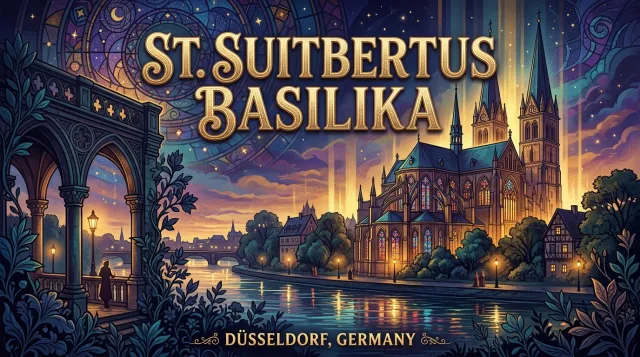
St. Suitbertus Basilika
This Romanesque-Gothic basilica in picturesque Kaiserswerth holds the relics of its patron saint and ranks among the oldest churches on the Lower Rhine.
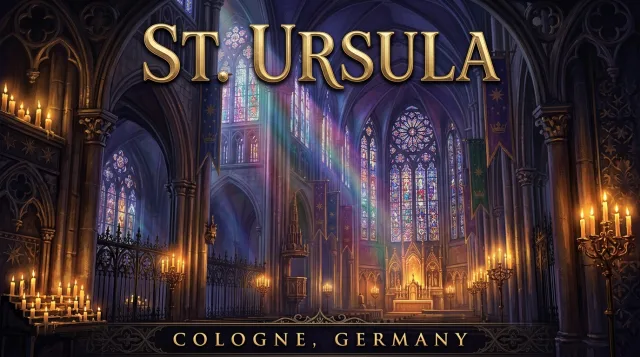
St. Ursula
St. Ursula is one of Cologne's twelve great Romanesque churches, famed for the Golden Chamber, a walk-in reliquary room whose walls are covered in human bones.
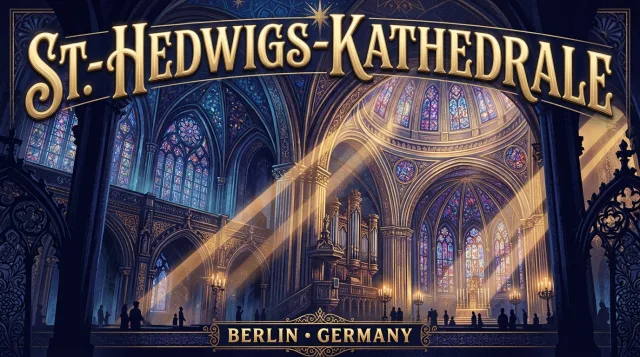
St.-Hedwigs-Kathedrale Berlin – History, Highlights & Visit
St.-Hedwigs-Kathedrale on Bebelplatz is the cathedral of the Archdiocese of Berlin and a landmark of religious tolerance. Reopened in 2024, it impresses with its modern interior and free admission.
Theatine Church
This Italian-style Baroque church, with its distinctive mustard-yellow façade and twin towers, has defined Odeonsplatz since the 17th century.
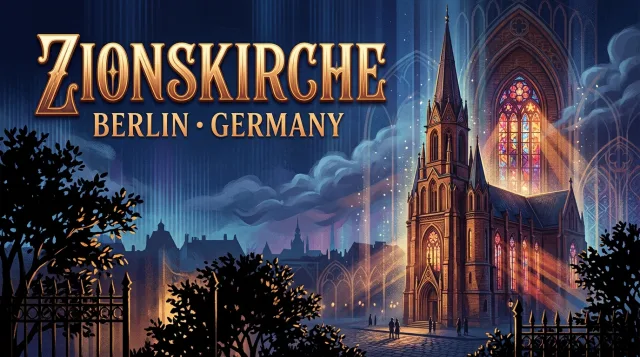
Zionskirche Berlin – History, Highlights & Visit
Zionskirche in Berlin is a neo-Romanesque church with a 67-metre tower, linked to Dietrich Bonhoeffer and GDR resistance. Free entry, tower climb available on Sundays.
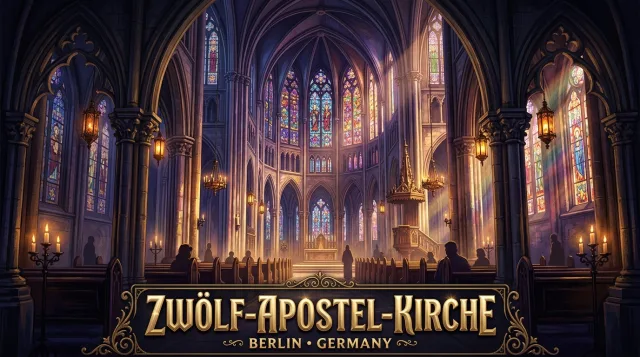
Zwölf-Apostel-Kirche
A Byzantine-inspired church from 1872 in Schöneberg's Bayerisches Viertel, known for its colorful wall paintings and octagonal domed crossing.