Cologne Cathedral
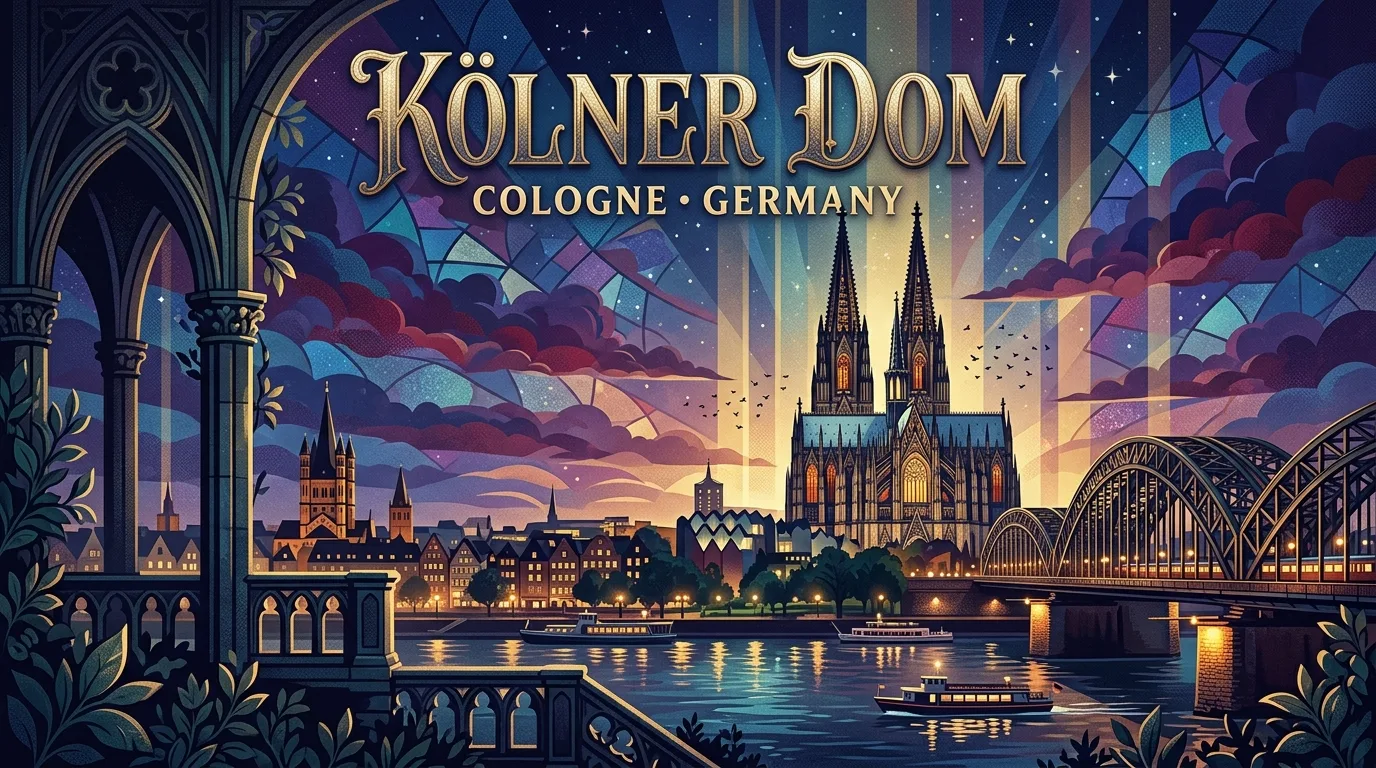
Cologne Cathedral, officially the Hohe Domkirche St. Petrus, is the seat of the Archdiocese of Cologne and one of the most important Gothic buildings in the world. Its two towering spires, reaching 157.38 meters into the sky, have dominated the skyline of this Rhine metropolis for more than 150 years and are, for countless travelers, the very first image that comes to mind when they think of Cologne. Standing directly beside the main railway station in the Altstadt-Nord district, the cathedral welcomes thousands of visitors every day who come to marvel at its colossal scale, its intricate stone carving, and the priceless treasures housed within. Since 1996 the building has been inscribed on the UNESCO World Heritage list, a recognition of its outstanding universal significance for the history of architecture and of Christianity in Europe. Inside, the Shrine of the Three Kings forms the largest reliquary in the Western world, a relic that turned the cathedral into one of medieval Europe's most important pilgrimage destinations. Anyone visiting Cologne will find it almost impossible to avoid this monumental building, which shapes not only the cityscape but the identity of the entire region.
History of Cologne Cathedral
The history of Cologne Cathedral stretches back to Roman times, when a baptismal church complex already stood on the site, later replaced in the 9th century by a Carolingian predecessor known as the "Hildebold Cathedral". After a devastating fire in 1248, Archbishop Konrad von Hochstaden laid the foundation stone for today's Gothic structure on 15 August of that year, modeling the design on the great French cathedrals of Amiens and Beauvais. The first master builder, Gerhard von Rile, pursued an ambitious plan intended to make it the largest church in Christendom. The choir was completed and solemnly consecrated in 1322, but construction increasingly stalled during the late Middle Ages. Work finally stopped altogether in 1473, leaving the unfinished south tower crowned by a famous wooden construction crane that stood as a symbol of a proverbially "eternally unfinished" Cologne for more than 300 years. It was only in the 19th century, fueled by Romantic enthusiasm and the rediscovery of the original medieval building plans, that completion began in 1842 with the support of King Friedrich Wilhelm IV and the Zentral-Dombau-Verein, a fundraising association founded that same year. On 14 August 1880, after 632 years of construction, the building was ceremonially completed in the presence of Emperor Wilhelm I, briefly making it the tallest structure in the world. During the Second World War the cathedral was struck by fourteen bombs and numerous shells, yet unlike much of Cologne's historic center it remained structurally intact and was extensively restored over the following decades. It was added to the UNESCO World Heritage list in 1996; between 2004 and 2006 it was even placed temporarily on the list of endangered World Heritage sites because of planned high-rise developments nearby, before the plans were revised. To this day, the Dombauhütte workshop employs numerous stonemasons, sculptors, and restorers who work continuously on preserving the structure, which is why scaffolding can almost always be spotted somewhere on the building.
Highlights of Cologne Cathedral
The most important artwork inside is the Shrine of the Three Kings in the choir area, created between roughly 1190 and 1225 by the goldsmith Nicholas of Verdun. Adorned with gold, silver, gemstones, and ancient cameos, the shrine is considered the largest and most elaborate reliquary of the Middle Ages and is said to hold the bones of the Three Magi, which Archbishop Rainald von Dassel brought to Cologne from Milan in 1164. Equally significant is the Gero Cross in the Cross Chapel, a monumental wooden crucifix created around 970 that is regarded as the oldest surviving large-scale crucifix north of the Alps. A striking contrast between centuries can be found in the Richter Window in the south transept: installed in 2007 to a design by the artist Gerhard Richter, it consists of roughly 11,500 square panes of glass in 72 colors, forming an abstract, randomly arranged counterpoint to the cathedral's historic windows. Also worth seeing is the Altar of the City Patrons, a late Gothic winged altarpiece painted around 1442 by Stefan Lochner in the Marienkapelle. The choir stalls dating from 1308 to 1311, with their 104 seats, rank among the largest surviving medieval choir stalls in Germany and are richly decorated with carvings. The Bavarian Windows in the south aisle, donated by King Ludwig I of Bavaria in the mid-19th century, depict biblical scenes in vivid colors. High up in the south tower hangs the bell nicknamed "Dicke Pitter" (Fat Peter), weighing 24 tons and ranking as the largest free-swinging church bell in the world, cast in 1923 in memory of earlier bells melted down during the war. Visitors who climb the tower's 533 steps are rewarded with a sweeping panoramic view over Cologne and the Rhine valley. The Milan Madonna, a statue of the Virgin dating from around 1290 and one of the cathedral's oldest Marian images, along with the crypt housing the tombs of numerous Cologne archbishops, round out a visit.
Opening Hours, Tickets & How to Get to Cologne Cathedral
Cologne Cathedral is generally open to visitors daily from around 6:00 to 20:00, and outside of service times the north transept near the main train station remains freely accessible for a brief moment of prayer. Importantly, since 1 July 2026 regular sightseeing visits to the cathedral have required a paid ticket, which can be purchased online through the official booking portal or on site; because this new system was only recently introduced, current general admission prices should be checked directly on the official website before visiting. Standard sightseeing hours for the nave are usually from around 10:00 to 17:45 on weekdays (last entry 17:30) and from around 13:30 to 16:30 on Sundays and religious holidays (last entry 16:15), always outside of ongoing services. The climb up the south tower is booked separately: from March to October the tower is open from 9:00 to 18:00, and from November to February from 9:00 to 16:00, with last entry always 30 minutes before closing. The standard tower ticket costs 8 euros, with a reduced rate of 4 euros, while a combination ticket covering the tower and the treasury costs 12 euros, or 6 euros at the reduced rate; children under 14, people with severe disabilities, and members of the Zentral-Dombau-Verein receive free admission to the tower. The Cathedral Treasury in the chapter house is open daily from 10:00 to 18:00, with last entry at 17:30. Short-term restrictions due to construction work, services, or special events are always possible and are kept up to date on the official website. The address is Domkloster 4, 50667 Köln; the cathedral stands immediately next to the main railway station at the "Dom/Hbf" stop, served by virtually every long-distance, regional, and suburban train line as well as several tram lines, which makes arriving by car largely unnecessary and, given the narrow streets of the old town, not particularly advisable.
Attractions Near Cologne Cathedral
The cathedral's central location makes it the perfect starting point for exploring Cologne's old town. Just a few steps away stands the Museum Ludwig, home to one of Europe's most significant collections of modern art, while the Romano-Germanic Museum directly to the south displays finds from the Roman city of Colonia Claudia Ara Agrippinensium, including the famous Dionysus Mosaic. Beneath the cathedral square lies the Cologne Philharmonic Hall, whose auditorium sits partly underground. Heading toward the Rhine, visitors reach the Hohenzollern Bridge, whose railings are covered in thousands of padlocks left by couples and which has become a popular photo spot, and from there continue on to the Cologne Cable Car and the river cruise piers. Walking along the Rhine promenade for about fifteen minutes brings you to the Romanesque church of Groß St. Martin, whose distinctive four-tower crossing forms, together with the cathedral, Cologne's most recognizable skyline. Chocolate lovers will find the Chocolate Museum at the Rheinauhafen harbor about 20 minutes away on foot. The lively pub quarter of the old town, with its traditional breweries serving the local top-fermented Kölsch beer, is also right nearby and makes an excellent way to round off a visit to the cathedral with a taste of Rhenish lifestyle.
Where to stay in Cologne, Germany
Compare current hotel prices and find the right place to stay.