Rurköpfe
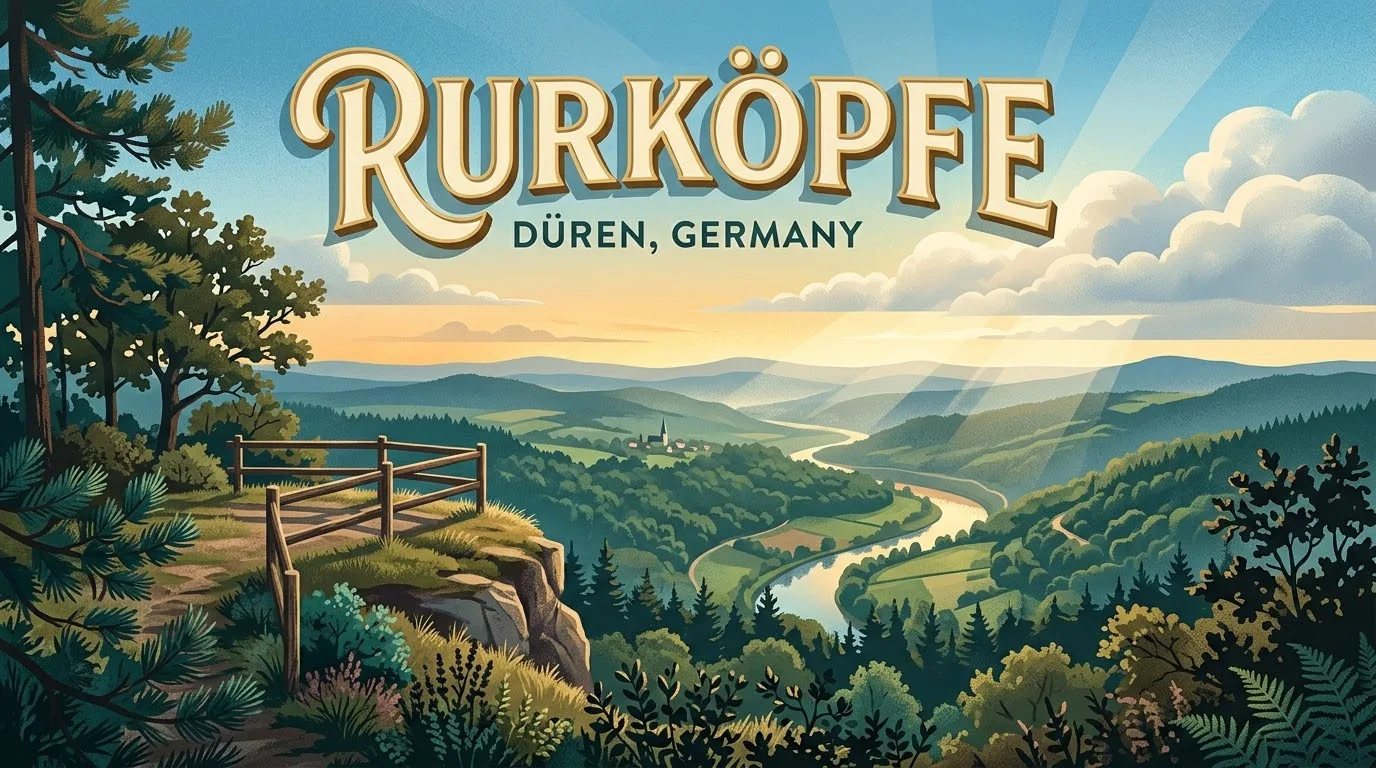
Along the course of the Rur, which winds its way through Düren's urban area, several slightly elevated riverbank sections have formed over time, traditionally known among locals as the Rurköpfe. Unlike the city's large, officially designated parks, the Rurköpfe are more of an informal spot, popular with those who know the city well: plain, slightly raised sections of riverbank with the occasional bench, offering a quiet, undisturbed view of the water and the opposite banks of the Rur. Anyone looking for a quiet moment by the river away from Düren's well-known main attractions will find exactly this kind of unassuming, authentic nature experience at the Rurköpfe, which rely less on spectacular distant views and more on close proximity to the flowing water and the calm of the riverside meadows.
History of Rurköpfe
The formation of the slightly elevated riverbank sections along the Rur that give the Rurköpfe their name is closely tied to the long history of the river's use, which served Düren for centuries as a source of power for mills and later for the paper and textile industries. In the course of this intensive economic use, weirs, mill channels and artificial bank reinforcements were repeatedly built along the Rur, and these still shape the topography of the river today, having led in several places to the characteristic, slightly raised riverbanks now known as the Rurköpfe. With the gradual decline of water-powered industry during the 20th century, many of these formerly functional riverbank sections lost their original economic purpose and were increasingly discovered by walkers and anglers as quiet vantage points along the river. Unlike Düren's large, representative parks such as Willy-Brandt-Park, the Rurköpfe were never deliberately developed as a tourist attraction or officially signposted, but rather established themselves more organically as an informal insider tip among local walkers, who prefer the calm and understated character of these spots to the busier sections of the Rurufer. Little has changed in this respect to this day: the city of Düren has deliberately refrained from upgrading the Rurköpfe with additional infrastructure such as lighting, large signs or catering facilities, and it is precisely this restraint that preserves the distinctive, natural character setting the Rurköpfe apart from the city's more elaborately designed green spaces.
Highlights of Rurköpfe
The particular appeal of the Rurköpfe lies precisely in their simplicity and understated character: anyone who finds one of the scattered benches here can quietly watch the Rur flow by, observe ducks and other waterfowl, or simply listen to the sound of the water, without being surrounded by large crowds of visitors. Depending on the exact location along the river, the Rurköpfe offer different views of the Rur, sometimes overlooking calm, almost still stretches of water behind an old weir, sometimes overlooking faster-flowing, gently rippling sections where the low afternoon sun is reflected particularly beautifully in the water in the late afternoon. Anglers often use the raised riverbank sections as a starting point for their hobby, while walkers and dog owners frequently incorporate the Rurköpfe into their daily route along the river. Photographers looking for quieter, more authentic perspectives on the city and its river, away from Düren's familiar postcard views, will also find interesting angles at the Rurköpfe, particularly in the early morning hours when mist lies over the water, or in autumn, when the colourful foliage of the riverside trees is reflected in the still water. Anyone wishing to combine the Rurköpfe with a longer walk can easily integrate them into a more extensive tour along the Rurufer, alternating between quieter, more natural sections like the Rurköpfe and livelier areas closer to the city centre. Particularly on weekdays, when the city's large parks are somewhat busier, the Rurköpfe reveal their quietest side, making it possible to find a moment of calm even in the middle of the day without having to travel far outside the city. For people who regularly jog or walk along the river, individual Rurköpfe sections also serve as reliable points of orientation along an otherwise fairly uniform stretch of riverbank, since the slightly raised position and scattered benches tend to stick in the memory.
Opening Hours, Tickets & How to Get to Rurköpfe
Since the Rurköpfe are freely accessible sections of the public riverbank rather than a commercial or officially managed facility, there are no fixed opening hours and no admission fee; the benches and riverbank sections are generally open year-round and at any time of day. Since the Rurköpfe are not uniformly signposted, first-time visitors are advised to follow the general course of the Rurufer walking and cycling path while keeping an eye out for slightly elevated, bench-equipped riverbank sections, which can be found at several points along the Rur within Düren's urban area. From Düren's city centre, the sections closest to downtown are generally reachable within ten to twenty minutes on foot or by bicycle. Sturdy footwear is advisable, since the more natural riverbank sections can become damp and occasionally slippery after rainfall, while the areas directly bordering the main cycle path are usually well paved and easy to walk even in wet weather.
Attractions Near Rurköpfe
Since the Rurköpfe are spread along the entire length of the Rurufer, practically all of the city's important green spaces and sights that also lie directly on the river are nearby. Willy-Brandt-Park, with its historic trees, and Holzbendenpark, with its duck pond, are reachable on foot within a short time from several sections of the Rurköpfe and make a good addition to a longer walk. Towards the city centre, the Annakirche with its striking tower and the Leopold-Hoesch-Museum are within a reasonable walking distance, while towards Niederau, the moated castle of Schloss Burgau with its Schlosspark and the surrounding Burgauer Wald make a rewarding destination for a nature-focused day trip. Anyone using the Rurköpfe as a quiet starting point can explore the entire Rurufer-Radweg from there, which runs from Heimbach am Rursee all the way to the Dutch border, making Düren a central stop along this long river route. Depending on the time available, a visit to the Rurköpfe can therefore be shaped either as a short, reflective stop on the way to other destinations or as the starting point for an entire day of parks, nature and river views along the Rur.
Where to stay in Düren, Germany
Compare current hotel prices and find the right place to stay.