Komm-Kulturzentrum
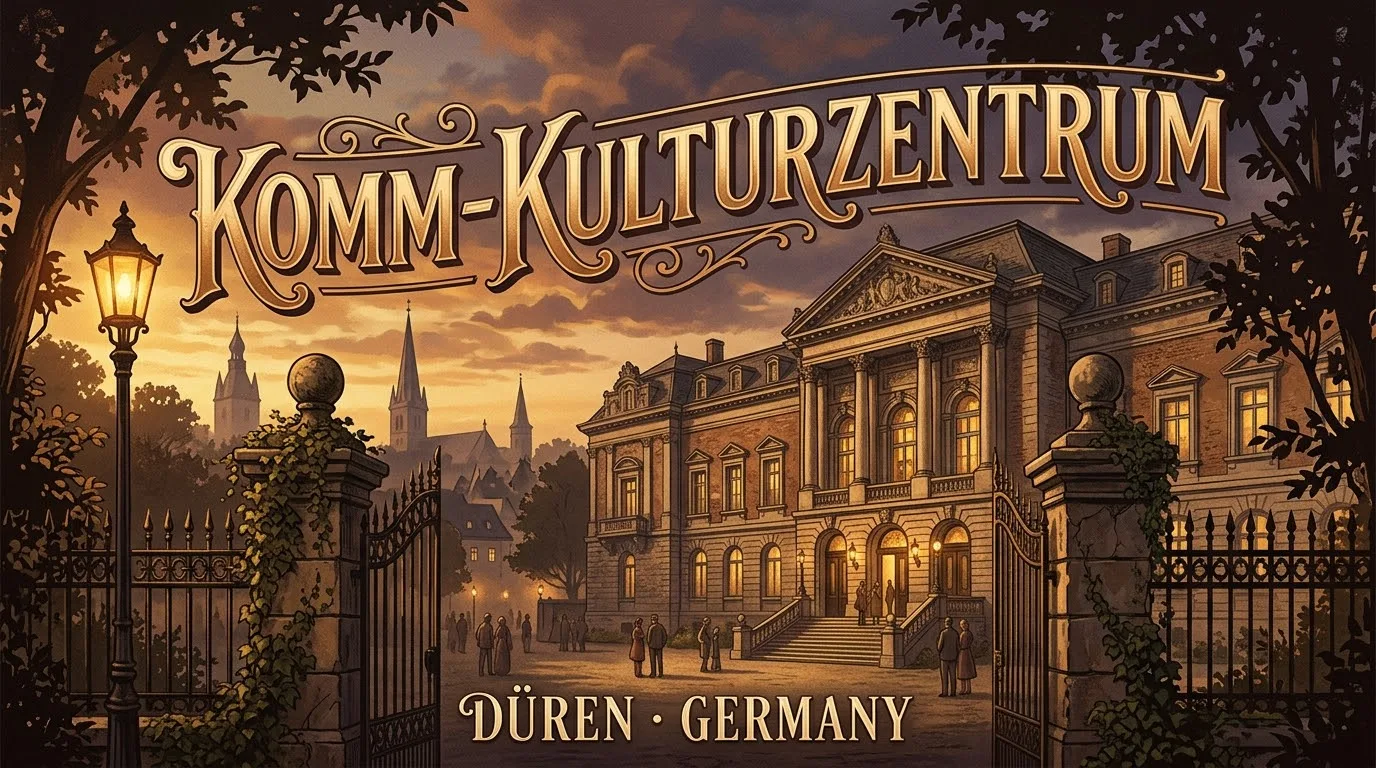
On August-Klotz-Straße, not far from the center of Düren, the walls of a former mill building hide one of the town's most vibrant socio-cultural venues: the Komm-Kulturzentrum. What today hosts concerts, comedy nights, theater, exhibitions, and workshops for all ages was for centuries a grain mill on the Rur, a building whose documented history reaches all the way back to 1261. This fusion of centuries-old building fabric and contemporary cultural programming makes the Komm one of Düren's most unusual venues, a place where industrial history and alternative youth culture literally share the same roof. For visitors looking to experience authentic, non-commercial cultural life beyond the town's classic museums, the Komm-Kulturzentrum is one of the most interesting addresses in Düren. Anyone interested in the broader history of occupied, later legalized cultural centers in Germany will also find in the Pleußmühle a vivid Rhineland example of how a grassroots citizens' initiative of the 1980s could grow into a lasting cultural institution supported by the city itself.
History of Komm-Kulturzentrum
The building that today houses the Komm-Kulturzentrum is known as the Pleußmühle and is first documented as a mill in August 1261, making it one of the oldest commercially used structures in the town. For centuries the mill was used for grinding grain, but it suffered several severe setbacks along the way: on October 4, 1889, a major fire destroyed large parts of the complex, and on November 16, 1944, the building was almost completely reduced to rubble during the devastating Allied air raid on Düren, leaving only ruins behind. After the war, milling operations resumed provisionally in a converted church building starting October 1, 1946, before the actual mill building was rebuilt and completed on December 1, 1950, allowing grain milling to resume in its original premises. Commercial milling operations finally ceased on August 31, 1969, and the building increasingly stood empty in the years that followed, eventually facing the threat of demolition. That threatened demolition was prevented in 1980 when young activists from Düren occupied the Pleußmühle, successfully generating public pressure; the city of Düren subsequently halted its demolition plans and renovated the building into a venue called "Kulturtreff Pleußmühle." The same year saw the founding of the association "Jugend- und Kulturzentrum Düren e.V.," which still runs the center today and initially operated out of provisional locations, then from Josef-Schregel-Straße 54 near the train station starting in 1987, while the Pleußmühle itself was gradually restored. On December 5, 1992, the renovated building was officially opened as the "Komm-Zentrum Düren," becoming the association's permanent home. The upper floors also housed the local radio station Radio Rur until 2020, and the site once featured a water wheel built by the Düren municipal utilities, fed by the mill pond, which at times even generated electricity before being decommissioned due to structural damage. This usage history, spanning more than seven centuries from a medieval mill through industrial expansion and wartime destruction to today's socio-cultural purpose, makes the Pleußmühle a rare example of a single building that mirrors almost the entire economic and social development of a town like Düren.
Highlights of Komm-Kulturzentrum
The Komm-Kulturzentrum explicitly defines itself as a socio-cultural center and accordingly offers a broad, deliberately accessible program: from concerts spanning a wide range of musical genres to comedy nights, quiz evenings, and acoustic jam sessions, all the way to dance parties, language and travel cafés, and courses and workshops for people of all ages, the lineup is regularly refreshed and gives a stage to both established and emerging local artists. Since 2020, the summer program "Komm in den Garten" has complemented the indoor offerings, transforming the building's rear garden into an open-air venue, ideal for concerts and readings on warm evenings. A particular draw for visitors is the deliberate preservation of the mill's industrial architecture, which gives the event spaces a distinctive, raw charm that stands in clear contrast to sterile, modern event halls. Since 2023, Marion Kaeseler and Rebekka Paas have led the venue as its new management team, further developing both the cultural program and the hospitality side of the Komm, including the in-house bar, which opens Thursday, Friday, and Saturday evenings for casual get-togethers with or without attending an event. The close connection to the history of the Pleußmühle is deliberately kept visible, for instance through preserved architectural details that recall the building's former use as a grain mill.
Opening Hours, Tickets & How to Get to Komm-Kulturzentrum
The Komm-Kulturzentrum on August-Klotz-Straße 21 runs a box office that is open Mondays from 2 to 6 p.m. and Thursdays from 10 a.m. to 3 p.m.; on evenings with events, the box office also opens one hour before the start of the show. The in-house bar is open Thursdays and Fridays from 7 p.m. and Saturdays from 8 p.m., likewise supplemented by an opening one hour before events on other days. Admission prices depend on the specific event and are listed individually on the website and at the evening box office; many of the center's low-barrier offerings, such as the language cafés, are either free or run on a donation basis. Getting to the Komm is easy, since August-Klotz-Straße lies only a short walk from Düren's main train station, which sits on the Cologne-Aachen rail line and is served every half hour by regional express and regional trains. Several Rurtalbus bus lines also stop nearby, and drivers will find public parking options in the surrounding area.
Attractions Near Komm-Kulturzentrum
From August-Klotz-Straße, Düren's city center and its main attractions are only a few minutes' walk away. Close by are remnants of Düren's historic city wall, documented on the very same street, as well as the Dicker Turm and the Grönjansturm on the grounds of the Stiftisches Gymnasium. The Rathaus Düren on Kaiserplatz, an example of 1950s postwar reconstruction architecture, is likewise within a short walking distance. Visitors with a cultural interest can easily combine their visit with the Leopold-Hoesch-Museum and the directly adjoining Papiermuseum Düren, both offering insight into the town's art and industrial history. The Stadtmuseum Düren on Arnoldsweilerstraße, with its chronological exhibition on the town's history, and the Stadtbücherei Düren, housed in an architecturally notable building, are also an easy walk from here and fit naturally into a tour of Düren's history-rich city center.
Where to stay in Düren, Germany
Compare current hotel prices and find the right place to stay.