ℹ️ About Troisdorf
Troisdorf is a city of around 78,000 inhabitants in the Rhein-Sieg district of North Rhine-Westphalia, situated between Cologne and Bonn on the right bank of the Rhine. Roughly 22 kilometres south of Cologne and 13 kilometres northeast of Bonn, it occupies a convenient position in the Cologne Bay, bordered by the foothills of the Bergisches Land to the north and the Sieg floodplains to the south. Visitors appreciate Troisdorf both as a self-contained destination and as a practical base for exploring the wider region. Its landmark is Burg Wissem, the brightly painted orange manor house that contains Europe’s only specialised picture-book museum. Beyond the castle, the Wahner Heide nature reserve and the Siegaue wetlands provide extensive green spaces for walking and cycling. The city combines industrial heritage with accessible nature, a lively pedestrian zone, museums and family-friendly facilities. Public transport links and ample parking make arrival and departure straightforward. Families, nature lovers and culture seekers find plenty to occupy a full day or a long weekend, away from the heavier tourist crowds of the neighbouring cities yet close enough to reach them easily when desired.
History of Troisdorf
The history of Troisdorf stretches back more than a thousand years. The earliest documented settlements in the present municipal area, Eschmar and Sieglar, appear in records from 832. Bergheim is mentioned in 987 in a charter of King Otto III confirming fishing rights at the mouth of the Sieg to the Vilich convent. Troisdorf itself is first recorded in 1064 as “Truhtesdorf” in a document of the Benedictine abbey of Michaelsberg in Siegburg. Burg Wissem, the city’s landmark, has origins reaching into the Merovingian period between the fifth and seventh centuries and once served as the ancestral seat of the lords of Troisdorf. The first written reference to the castle complex dates from 1474. For centuries the area remained largely rural until industrialisation began in the nineteenth century. In 1825 Johann Wilhelm Windgassen, formerly head of the mining office in Bonn, established an iron smelter on the mill ditch near the confluence of the Agger and the Sieg. This developed into the Friedrich-Wilhelms-Hütte, later known as the Mannstaedt works, which gave its name to the corresponding district. Industrial growth transformed daily life and established Troisdorf as a centre of iron production and, later, plastics and chemicals. After the Second World War the manor house of Burg Wissem functioned as the town hall from 1945 until 1981. Troisdorf received municipal rights in 1952. In the territorial reform of 1969 the city expanded by incorporating the municipality of Sieglar together with Altenrath and Friedrich-Wilhelms-Hütte, bringing the population to about 51,000 at the time. Today Troisdorf comprises twelve districts, among them Troisdorf-Mitte, Sieglar, Spich, Bergheim and Rotter See. The industrial past is documented in the Museum of Urban and Industrial History, while the Wahner Heide and Siegaue preserve traces of the older agricultural landscape. In 1972 Troisdorf established Germany’s first advisory council for foreign residents, reflecting a long-standing commitment to integration. The journey from early medieval settlement through industrial expansion to a modern city with substantial protected nature areas gives the history of Troisdorf a distinctive and tangible character for visitors.
Highlights of Troisdorf
The principal highlight of Troisdorf is Burg Wissem and its Picture Book Museum. The striking orange classical manor house, built around 1840, houses Europe’s only museum dedicated specifically to picture-book illustration and children’s literature. Permanent displays explore themes such as Little Red Riding Hood, ghosts and classic fairy-tale figures, while temporary exhibitions focus on individual illustrators and the history of the picture book. A reference library of approximately 3,000 volumes invites browsing, and the tower room offers views across the courtyard. Opposite stands the Museum of Urban and Industrial History, which presents the development of Troisdorf since 1800 through interactive exhibits. The Wahner Heide Portal displays a large aerial photograph of the nature reserve and archaeological finds spanning nearly two thousand years. The surrounding castle park contains a deer enclosure, adventure playground and sensory experience path, making the site especially appealing to families. Immediately adjacent lies the Wahner Heide, North Rhine-Westphalia’s second-largest and most species-rich nature reserve, home to more than 700 threatened plant and animal species and over 150 bird species. In late summer the heather blooms in vivid colours and draws walkers. The Siegaue, designated a nature reserve in 1986, offers open meadows, old fruit trees and paths for walking and cycling as far as the Rhine. A local speciality is the cable ferry St. Adelheit at Bergheim, which crosses to the Bonn side in under two minutes for fifty cents per person. In the city centre the pedestrian zone features the glass city gates designed by Joachim Bandau and Victor Bonato, the water steps on Kölner Platz and the sculpture “Dicker Mann” by Karl-Henning Seemann on Fischerplatz. The weekly market on Thursdays and the evening market on the first Friday of each month from May to October add further atmosphere. Rotter See and Sieglarer See provide pleasant lakeside walks; swimming is not permitted at Sieglarer See, where grey herons and cormorants nest on the islands. Families can also enjoy the Aggua leisure pool, numerous playgrounds and the forest and bird park. Combining the castle and museums with a heather walk or a ferry crossing fills a rewarding day. A visit to Burg Wissem alone typically takes two to three hours, and the surrounding nature areas easily extend the stay.
Opening Hours, Tickets & How to Get to Troisdorf
Reaching Troisdorf is straightforward. By car take the A 59 to the Troisdorf exit and follow signs for the centre and the Burg Wissem museums. Parking is available in Burgallee and on Römerstraße, some spaces limited to three hours with a parking disc. By train alight at Troisdorf station; bus lines 501, 503 and 508 towards Siegburg stop at Ursulaplatz after two stops, a short walk from the castle. Line 506 stops at Römerplatz, about five minutes on foot. The walk from the station itself takes roughly fifteen minutes. The Tourist Information office at Burgallee 3 is open Tuesday to Friday from 11:30 to 16:30 and Saturday, Sunday and public holidays from 10:00 to 18:00; it is closed on Mondays. The Picture Book Museum opens Tuesday to Friday from 11:00 to 17:00 and at weekends and on public holidays from 10:00 to 18:00. The Museum of Urban and Industrial History and the Wahner Heide Portal are open Tuesday to Friday from 11:30 to 16:30 and at weekends from 10:00 to 18:00. All museums are closed on Mondays; if a public holiday falls on a Monday they remain closed. Combined admission for the Picture Book Museum and MUSIT costs 5.00 euros for adults, 2.00 euros for children aged 3 to 14, 12.00 euros for a family ticket and 3.50 euros reduced. Entry is free on the first Sunday of each month when the museums are open. Guided tours for children cost a flat 50 euros plus reduced admission; adult tours cost 60 euros plus reduced admission. The best time to visit is from spring through autumn, especially August and September when the heather is in bloom. Allow two to three hours for the castle and museums and a further two to four hours for a walk in the Wahner Heide or along the Sieg. The sites are accessible, and the Tourist Information office supplies maps, walking routes and accommodation advice. Families particularly appreciate the combination of museum visits with the park and playground. Those planning to use the cable ferry should check local operating times and carry small change.
Attractions Near Troisdorf
Several worthwhile destinations lie close to Troisdorf and combine easily with a visit. The Siegaue and the cable ferry to Bonn-Beuel are only a short distance away, providing a direct link towards Bonn. Bonn itself, with its cathedral, Museum Koenig and former federal capital atmosphere, is about 13 kilometres distant and reachable in under thirty minutes. Cologne, dominated by its cathedral and the Rhine, lies roughly 22 kilometres to the north and is quickly accessible by train or car. South of Troisdorf the Siebengebirge hills offer walks to the Drachenfels, Löwenburg and Petersberg with views over the Rhine valley. The Wahner Heide extends well beyond the city limits and connects with the Königsforst. Towards Siegburg the Michaelsberg abbey is a short journey, and further paths follow the Agger and Sieg. Longer stays can include Rotter See for relaxation or the Aggua leisure pool. The proximity to Cologne and Bonn makes Troisdorf an excellent base for combined outings: morning at Burg Wissem and the Picture Book Museum, afternoon in the heather or on the ferry, evening in one of the larger cities. Good transport connections allow several of these attractions near Troisdorf to be experienced in a single day without lengthy travel times.
Things to Do in Troisdorf 2026/2027
Bilderbuchmuseum
The Bilderbuchmuseum in Burg Wissem, Troisdorf, is Europe’s only specialised museum for picture-book illustration, offering collections, temporary exhibitions and a large reference library to explore.
Fischereimuseum Bergheim an der Sieg
The Fischereimuseum Bergheim an der Sieg presents the more than 1,000-year history of the Fishing Brotherhood and the culture of inland fishing on the Sieg and in the Siegaue nature reserve.
Kunsthaus Troisdorf
The Kunsthaus Troisdorf is the centre of the independent art and music scene with studios, a municipal gallery, exhibitions and concerts.
MUSIT - Museum für Stadt- und Industriegeschichte
The MUSIT - Museum für Stadt- und Industriegeschichte in Troisdorf presents the city’s urban and industrial history since 1800 with a special focus on the plastics industry.
Portal Wahner Heide
The Portal Wahner Heide at Burg Wissem in Troisdorf is the free information centre for the species-rich Wahner Heide nature reserve with an interactive exhibition and direct access to the heath.
Ehemalige Dynamit Nobel Industrieanlagen
The Ehemalige Dynamit Nobel Industrieanlagen in Troisdorf are a historic industrial site with a long explosives and plastics tradition, today partly used as IndustrieStadtpark and not publicly accessible.
Gierfähre über die Sieg
The Gierfähre über die Sieg is one of the last one-man reaction ferries in Germany and connects Troisdorf-Bergheim with Bonn in the Siegaue.
Haus Broich
Haus Broich in Troisdorf-Spich is a listed late-Renaissance manor house with adjoining park that can be viewed from the outside and in the park.
Rotes Haus
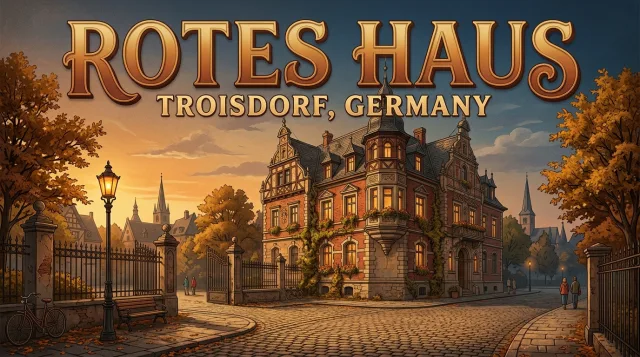
The Rotes Haus is not a publicly accessible museum in Troisdorf; the listed Rote Kolonie and other historic buildings of the city are worth seeing.
Stadttor Troisdorf
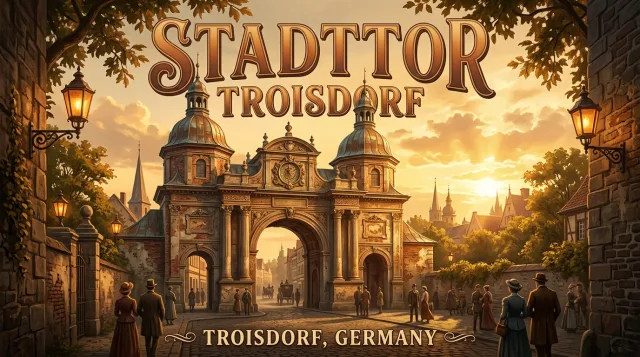
The Stadttor Troisdorf comprises the two modern art gates by Bandau and Bonato at the ends of the pedestrian zone and is freely accessible at any time.
Johanneskirche
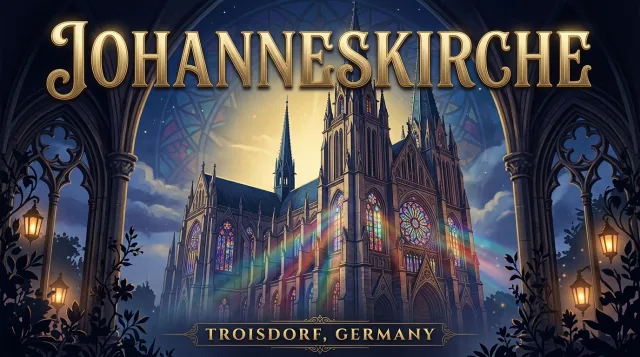
The Johanneskirche in Troisdorf-Mitte is the Protestant town church in neo-Romanesque style, remodelled into an open multifunctional church with a church café.
Kirche St. Hippolytus
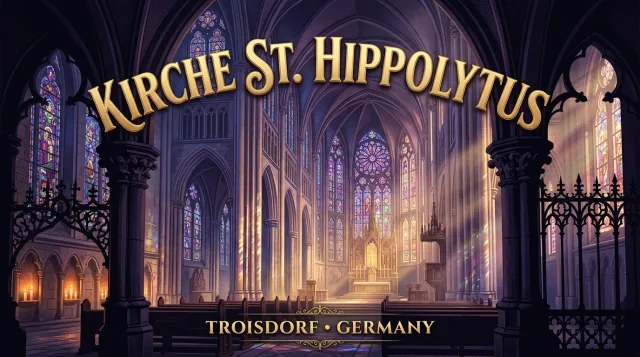
The Kirche St. Hippolytus in Troisdorf-Mitte is the Catholic parish church with a history of more than 1,000 years, a Romanesque baptismal font and a well-known root nativity.
St. Georg (Altenrath)
The St. Georg (Altenrath) in Troisdorf is a Romanesque pillar basilica from the mid-12th century and one of the oldest places of worship in the region.
St. Lambertus
The St. Lambertus in Troisdorf-Bergheim is the neo-Gothic parish church from 1869–1872 with roots going back to the 8th century and a baptismal font from the early period.
St. Mariä Himmelfahrt
The St. Mariä Himmelfahrt in Troisdorf-Spich is the neo-Gothic Catholic parish church from 1860 and the centre of the community in the Spich district.
St. Maria Königin
The St. Maria Königin in Troisdorf-West is a modern tent church from 1960–62 (rebuilt 1974) with a striking glass façade by Ludwig Schaffrath.
Aggerauen
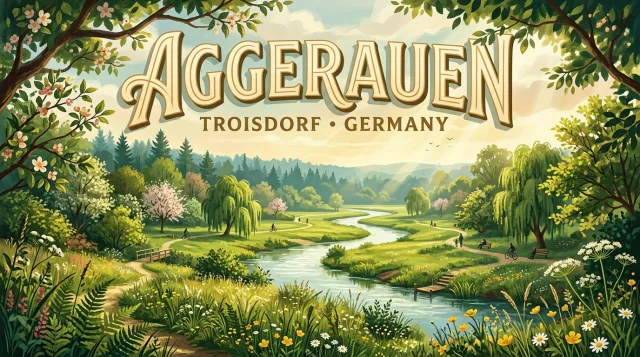
The Aggerauen in Troisdorf are a species-rich floodplain landscape along the Agger with dike paths, renatured river sections and connection to the Wahner Heide.
Erfahrungsfeld der Sinne
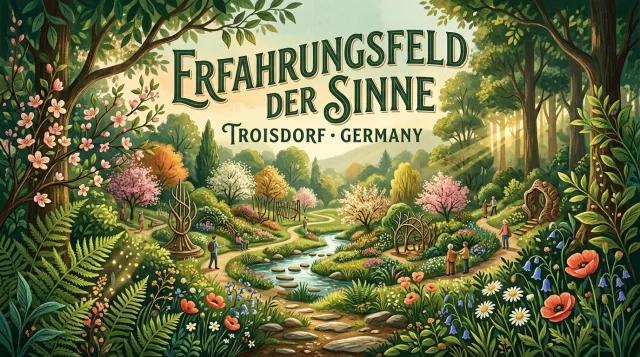
The Erfahrungsfeld der Sinne at Burg Wissem in Troisdorf is a free sensory park with stations for seeing, hearing, smelling and touching based on the ideas of Hugo Kükelhaus.
Park Burg Wissem und Hirschpark
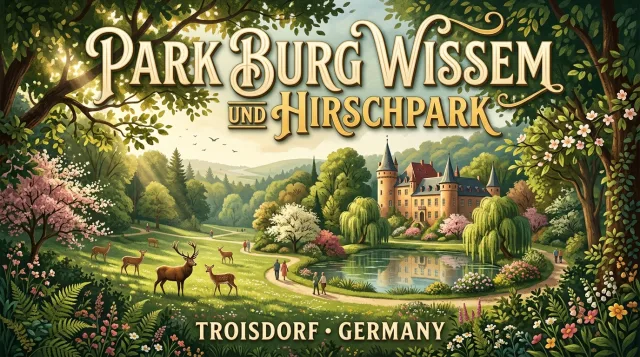
The Park Burg Wissem und Hirschpark in Troisdorf comprises the castle park with deer enclosures, red and sika deer and the transition to the Wahner Heide.
Siegaue
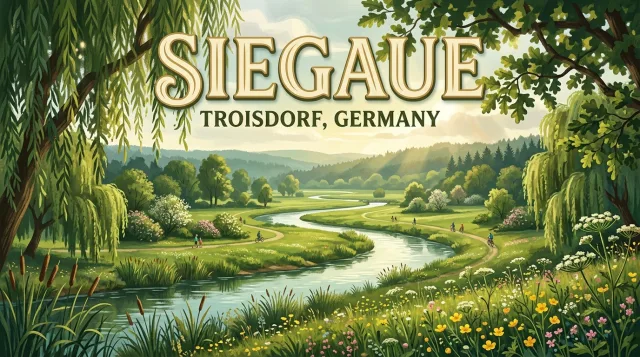
The Siegaue in Troisdorf is a species-rich floodplain landscape along the Sieg with around 249 bird species and a nature reserve since 1986.
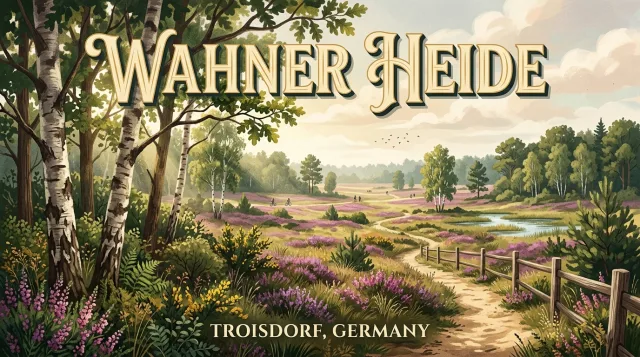
Wahner Heide
The Wahner Heide is the second-largest and most species-rich nature reserve in North Rhine-Westphalia with heaths, bogs and around 700 endangered species near Troisdorf.
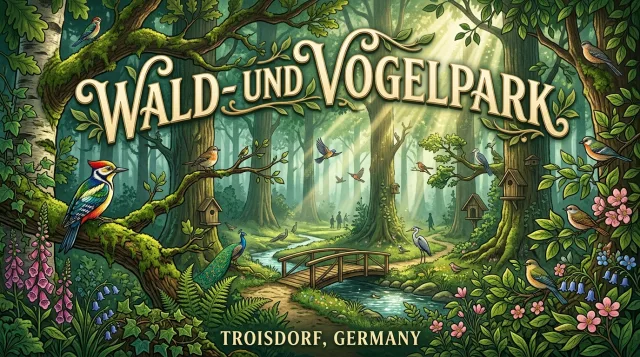
Wald- und Vogelpark
The Wald- und Vogelpark in Troisdorf is an approximately 21,000-square-metre park with aviaries, old chicken breeds, a pond landscape and an educational apiary near Burg Wissem.
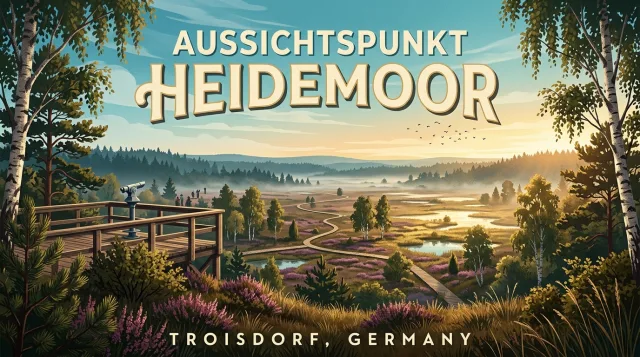
Aussichtspunkt Heidemoor
The Aussichtspunkt Heidemoor in Troisdorf offers a view of the town and the heath and moor landscape of the Wahner Heide.
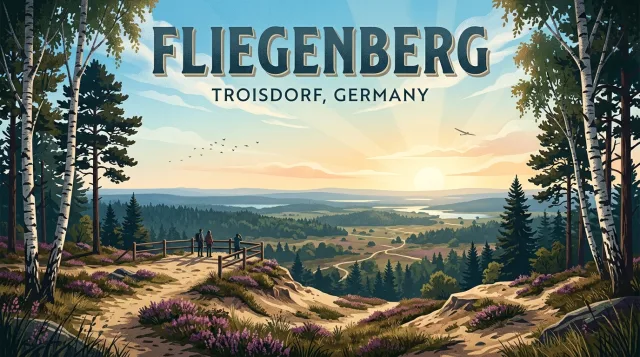
Fliegenberg
The Fliegenberg in Troisdorf is an elevation in the Wahner Heide with large Calluna heath areas, sandy soils and a view of the Sieg valley.
Leyenweiher
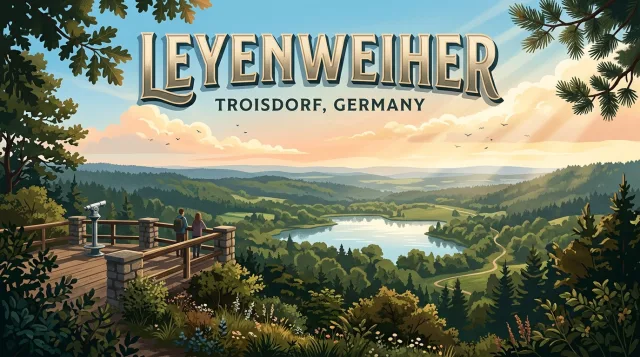
Leyenweiher in Troisdorf is one of the oldest cultural ponds in the Wahner Heide, dammed before 1845, with water lilies, water birds and dragonflies.
Ravensberg
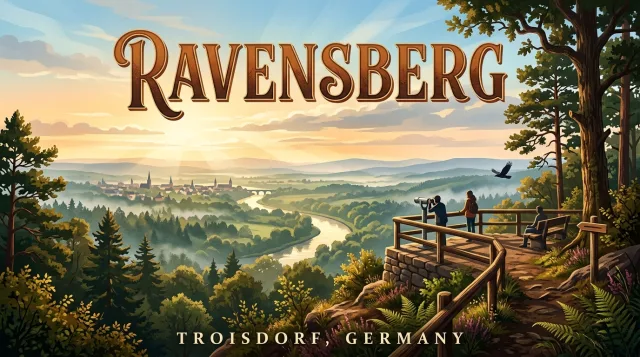
The Ravensberg in Troisdorf is an approximately 124-metre elevation in the Wahner Heide with Palaeolithic quartzite finds and the former Franciscan hermitage.
Telegraphenberg
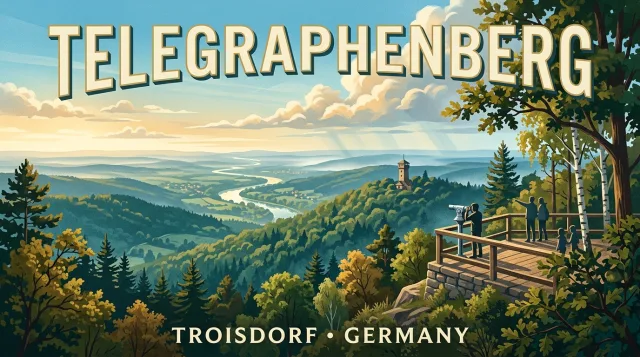
The Telegraphenberg in Troisdorf is, at about 134 metres, the highest elevation of the Wahner Heide and former site of a Prussian optical telegraph station.
Dicker Mann Skulpturu
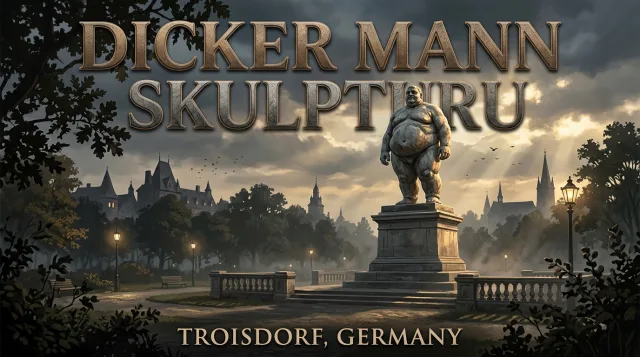
The Dicker Mann Skulpturu by Karl-Henning Seemann is the legendary bronze figure on Fischerplatz in Troisdorf – nude, corpulent and a firm landmark of the city since the 1980s.
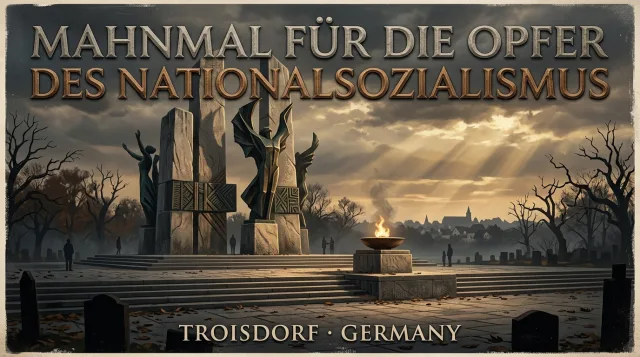
Mahnmal für die Opfer des Nationalsozialismus
The Mahnmal für die Opfer des Nationalsozialismus on Jahnplatz in Troisdorf commemorates the victims of National Socialist tyranny 1933–1945 and serves as the central site of the annual remembrance on 9 November.
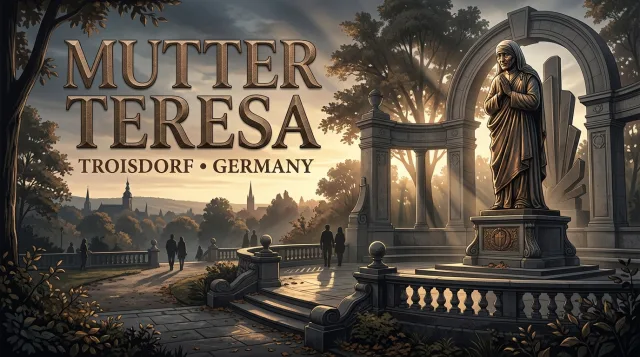
Mutter Teresa
The bronze statue Mutter Teresa in front of St. Mariä Himmelfahrt church in Troisdorf-Spich is a freely accessible symbol of compassion and intercultural connection, donated in 2025 by an Albanian family.
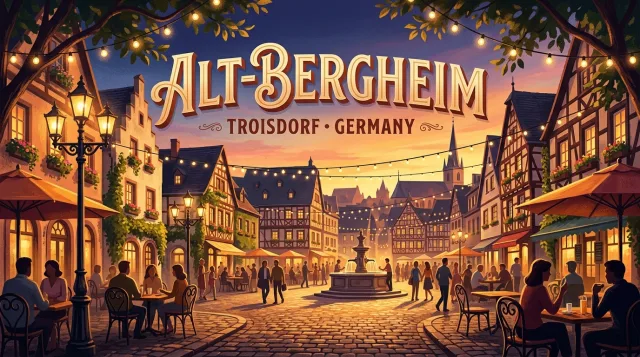
Alt-Bergheim
<strong>Alt-Bergheim</strong> in Troisdorf-Bergheim is a traditional inn with beer garden right next to St. Lambertus church, serving classic German cuisine in an authentic setting.
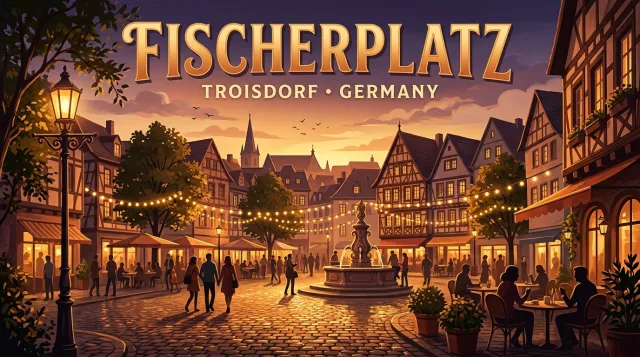
Fischerplatz
Fischerplatz in Troisdorf-Mitte is the central meeting point of the pedestrian zone featuring the famous Fat Man sculpture, weekly market and evening market.
Kölner Platz
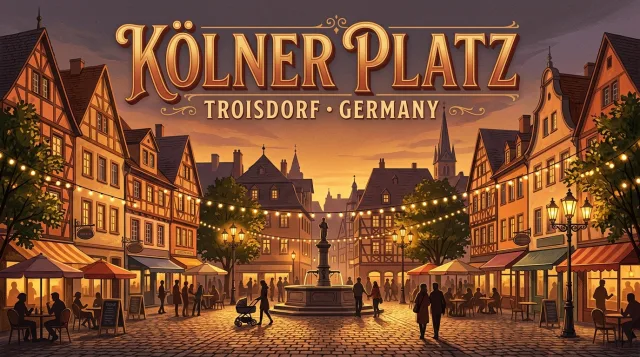
Kölner Platz in Troisdorf is a central meeting point in the pedestrian zone featuring outdoor dining, water steps and a historical information stele.
Ortskern Altenrath
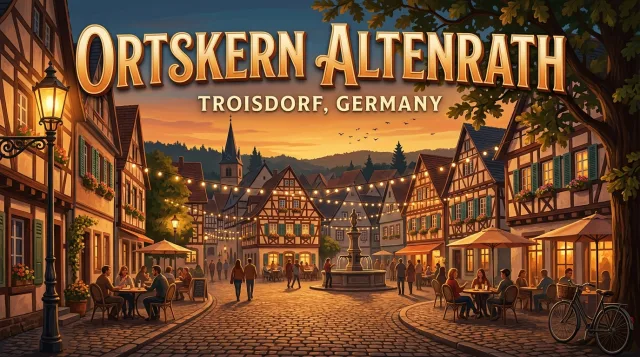
The Ortskern Altenrath in Troisdorf combines a Romanesque church, half-timbered houses and direct access to the Wahner Heide nature reserve into a quiet, history-rich destination.
Wilhelm-Hamacher-Platz
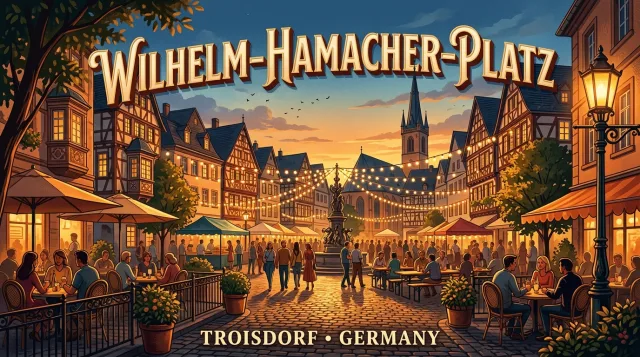
Wilhelm-Hamacher-Platz in Troisdorf-Mitte is a central square in the pedestrian zone right next to Galerie Troisdorf, named after the local mayor and first NRW Minister of Culture Dr. Wilhelm Hamacher.
Burg Spich
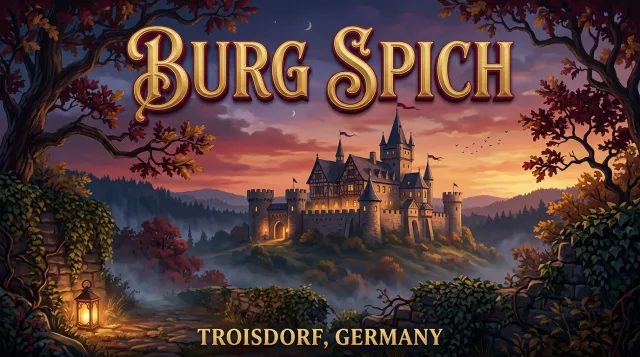
Burg Spich in Troisdorf-Spich is a listed manor house from 1866 with medieval roots and invites visitors to explore the local aristocratic history.
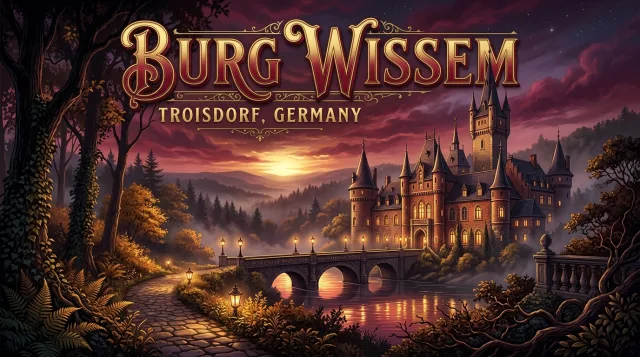
Burg Wissem
Burg Wissem in Troisdorf is the town’s landmark, combining a unique picture-book museum, a nature portal and a castle park into a family-friendly cultural and leisure destination on the edge of the Wahner Heide.
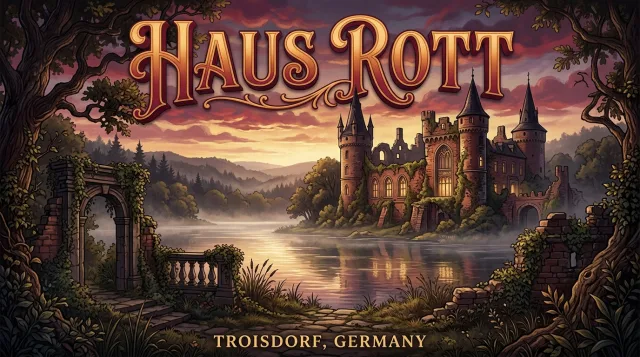
Haus Rott
Haus Rott in Troisdorf is a former manor house with medieval water-castle remains at Rotter See, combining history with present-day leisure use.
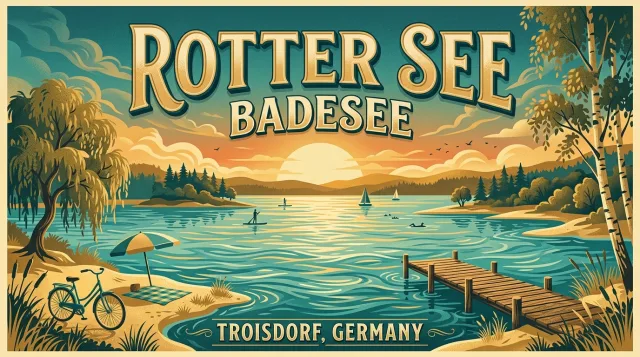
Rotter See Badesee
Rotter See Badesee in Troisdorf offers free swimming at a sandy beach with large lawns, DLRG supervision on weekends and excellent water quality.
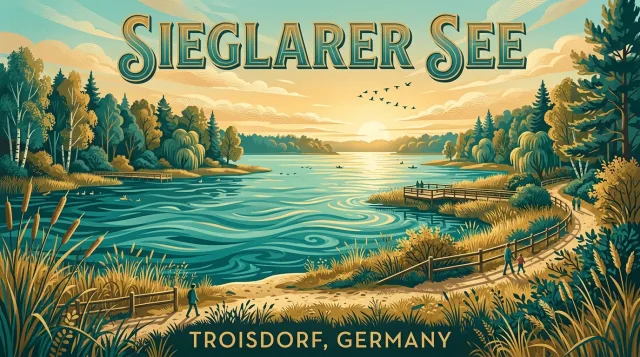
Sieglarer See
Sieglarer See in Troisdorf is a natural gravel-pit lake within the Siegaue protected area, featuring idyllic circular paths and rich bird breeding sites on two islands.
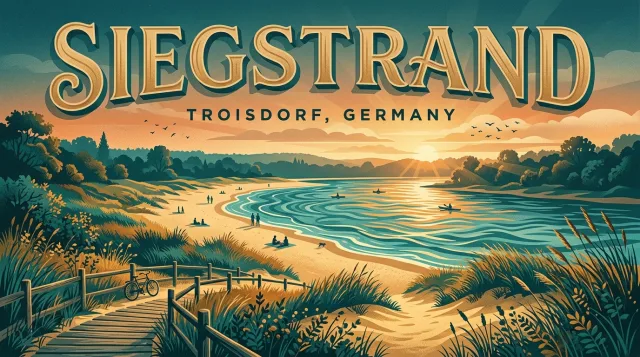
Siegstrand
Siegstrand in Troisdorf-Bergheim offers natural riverbanks along the Sieg for sunbathing and relaxing in the protected Siegaue nature reserve.
🏛️ Museum in Troisdorf 2026/2027
Bilderbuchmuseum
The Bilderbuchmuseum in Burg Wissem, Troisdorf, is Europe’s only specialised museum for picture-book illustration, offering collections, temporary exhibitions and a large reference library to explore.
Fischereimuseum Bergheim an der Sieg
The Fischereimuseum Bergheim an der Sieg presents the more than 1,000-year history of the Fishing Brotherhood and the culture of inland fishing on the Sieg and in the Siegaue nature reserve.
Kunsthaus Troisdorf
The Kunsthaus Troisdorf is the centre of the independent art and music scene with studios, a municipal gallery, exhibitions and concerts.
MUSIT - Museum für Stadt- und Industriegeschichte
The MUSIT - Museum für Stadt- und Industriegeschichte in Troisdorf presents the city’s urban and industrial history since 1800 with a special focus on the plastics industry.
Portal Wahner Heide
The Portal Wahner Heide at Burg Wissem in Troisdorf is the free information centre for the species-rich Wahner Heide nature reserve with an interactive exhibition and direct access to the heath.
🏛️ Historic Building in Troisdorf 2026/2027
Ehemalige Dynamit Nobel Industrieanlagen
The Ehemalige Dynamit Nobel Industrieanlagen in Troisdorf are a historic industrial site with a long explosives and plastics tradition, today partly used as IndustrieStadtpark and not publicly accessible.
Gierfähre über die Sieg
The Gierfähre über die Sieg is one of the last one-man reaction ferries in Germany and connects Troisdorf-Bergheim with Bonn in the Siegaue.
Haus Broich
Haus Broich in Troisdorf-Spich is a listed late-Renaissance manor house with adjoining park that can be viewed from the outside and in the park.
Rotes Haus
The Rotes Haus is not a publicly accessible museum in Troisdorf; the listed Rote Kolonie and other historic buildings of the city are worth seeing.
Stadttor Troisdorf
The Stadttor Troisdorf comprises the two modern art gates by Bandau and Bonato at the ends of the pedestrian zone and is freely accessible at any time.
⛪ Church & Cathedral in Troisdorf 2026/2027
Johanneskirche
The Johanneskirche in Troisdorf-Mitte is the Protestant town church in neo-Romanesque style, remodelled into an open multifunctional church with a church café.
Kirche St. Hippolytus
The Kirche St. Hippolytus in Troisdorf-Mitte is the Catholic parish church with a history of more than 1,000 years, a Romanesque baptismal font and a well-known root nativity.
St. Georg (Altenrath)
The St. Georg (Altenrath) in Troisdorf is a Romanesque pillar basilica from the mid-12th century and one of the oldest places of worship in the region.
St. Lambertus
The St. Lambertus in Troisdorf-Bergheim is the neo-Gothic parish church from 1869–1872 with roots going back to the 8th century and a baptismal font from the early period.
St. Mariä Himmelfahrt
The St. Mariä Himmelfahrt in Troisdorf-Spich is the neo-Gothic Catholic parish church from 1860 and the centre of the community in the Spich district.
St. Maria Königin
The St. Maria Königin in Troisdorf-West is a modern tent church from 1960–62 (rebuilt 1974) with a striking glass façade by Ludwig Schaffrath.
🌳 Park & Garden in Troisdorf 2026/2027
Aggerauen
The Aggerauen in Troisdorf are a species-rich floodplain landscape along the Agger with dike paths, renatured river sections and connection to the Wahner Heide.
Erfahrungsfeld der Sinne
The Erfahrungsfeld der Sinne at Burg Wissem in Troisdorf is a free sensory park with stations for seeing, hearing, smelling and touching based on the ideas of Hugo Kükelhaus.
Park Burg Wissem und Hirschpark
The Park Burg Wissem und Hirschpark in Troisdorf comprises the castle park with deer enclosures, red and sika deer and the transition to the Wahner Heide.
Siegaue
The Siegaue in Troisdorf is a species-rich floodplain landscape along the Sieg with around 249 bird species and a nature reserve since 1986.
Wahner Heide
The Wahner Heide is the second-largest and most species-rich nature reserve in North Rhine-Westphalia with heaths, bogs and around 700 endangered species near Troisdorf.
Wald- und Vogelpark
The Wald- und Vogelpark in Troisdorf is an approximately 21,000-square-metre park with aviaries, old chicken breeds, a pond landscape and an educational apiary near Burg Wissem.
🔭 Viewpoint in Troisdorf 2026/2027
Aussichtspunkt Heidemoor
The Aussichtspunkt Heidemoor in Troisdorf offers a view of the town and the heath and moor landscape of the Wahner Heide.
Fliegenberg
The Fliegenberg in Troisdorf is an elevation in the Wahner Heide with large Calluna heath areas, sandy soils and a view of the Sieg valley.
Leyenweiher
Leyenweiher in Troisdorf is one of the oldest cultural ponds in the Wahner Heide, dammed before 1845, with water lilies, water birds and dragonflies.
Ravensberg
The Ravensberg in Troisdorf is an approximately 124-metre elevation in the Wahner Heide with Palaeolithic quartzite finds and the former Franciscan hermitage.
Telegraphenberg
The Telegraphenberg in Troisdorf is, at about 134 metres, the highest elevation of the Wahner Heide and former site of a Prussian optical telegraph station.
🗿 Monument & Statue in Troisdorf 2026/2027
Dicker Mann Skulpturu
The Dicker Mann Skulpturu by Karl-Henning Seemann is the legendary bronze figure on Fischerplatz in Troisdorf – nude, corpulent and a firm landmark of the city since the 1980s.
Mahnmal für die Opfer des Nationalsozialismus
The Mahnmal für die Opfer des Nationalsozialismus on Jahnplatz in Troisdorf commemorates the victims of National Socialist tyranny 1933–1945 and serves as the central site of the annual remembrance on 9 November.
Mutter Teresa
The bronze statue Mutter Teresa in front of St. Mariä Himmelfahrt church in Troisdorf-Spich is a freely accessible symbol of compassion and intercultural connection, donated in 2025 by an Albanian family.
🏘️ Square & Old Town in Troisdorf 2026/2027
Alt-Bergheim
<strong>Alt-Bergheim</strong> in Troisdorf-Bergheim is a traditional inn with beer garden right next to St. Lambertus church, serving classic German cuisine in an authentic setting.
Fischerplatz
Fischerplatz in Troisdorf-Mitte is the central meeting point of the pedestrian zone featuring the famous Fat Man sculpture, weekly market and evening market.
Kölner Platz
Kölner Platz in Troisdorf is a central meeting point in the pedestrian zone featuring outdoor dining, water steps and a historical information stele.
Ortskern Altenrath
The Ortskern Altenrath in Troisdorf combines a Romanesque church, half-timbered houses and direct access to the Wahner Heide nature reserve into a quiet, history-rich destination.
Wilhelm-Hamacher-Platz
Wilhelm-Hamacher-Platz in Troisdorf-Mitte is a central square in the pedestrian zone right next to Galerie Troisdorf, named after the local mayor and first NRW Minister of Culture Dr. Wilhelm Hamacher.
🏰 Castle & Palace in Troisdorf 2026/2027
Burg Spich
Burg Spich in Troisdorf-Spich is a listed manor house from 1866 with medieval roots and invites visitors to explore the local aristocratic history.
Burg Wissem
Burg Wissem in Troisdorf is the town’s landmark, combining a unique picture-book museum, a nature portal and a castle park into a family-friendly cultural and leisure destination on the edge of the Wahner Heide.
Haus Rott
Haus Rott in Troisdorf is a former manor house with medieval water-castle remains at Rotter See, combining history with present-day leisure use.
🏖️ Beach & Coast in Troisdorf 2026/2027
Rotter See Badesee
Rotter See Badesee in Troisdorf offers free swimming at a sandy beach with large lawns, DLRG supervision on weekends and excellent water quality.
Sieglarer See
Sieglarer See in Troisdorf is a natural gravel-pit lake within the Siegaue protected area, featuring idyllic circular paths and rich bird breeding sites on two islands.
Siegstrand
Siegstrand in Troisdorf-Bergheim offers natural riverbanks along the Sieg for sunbathing and relaxing in the protected Siegaue nature reserve.
Where to stay in Troisdorf, Germany
Compare current hotel prices and find the right place to stay.