Siegaue
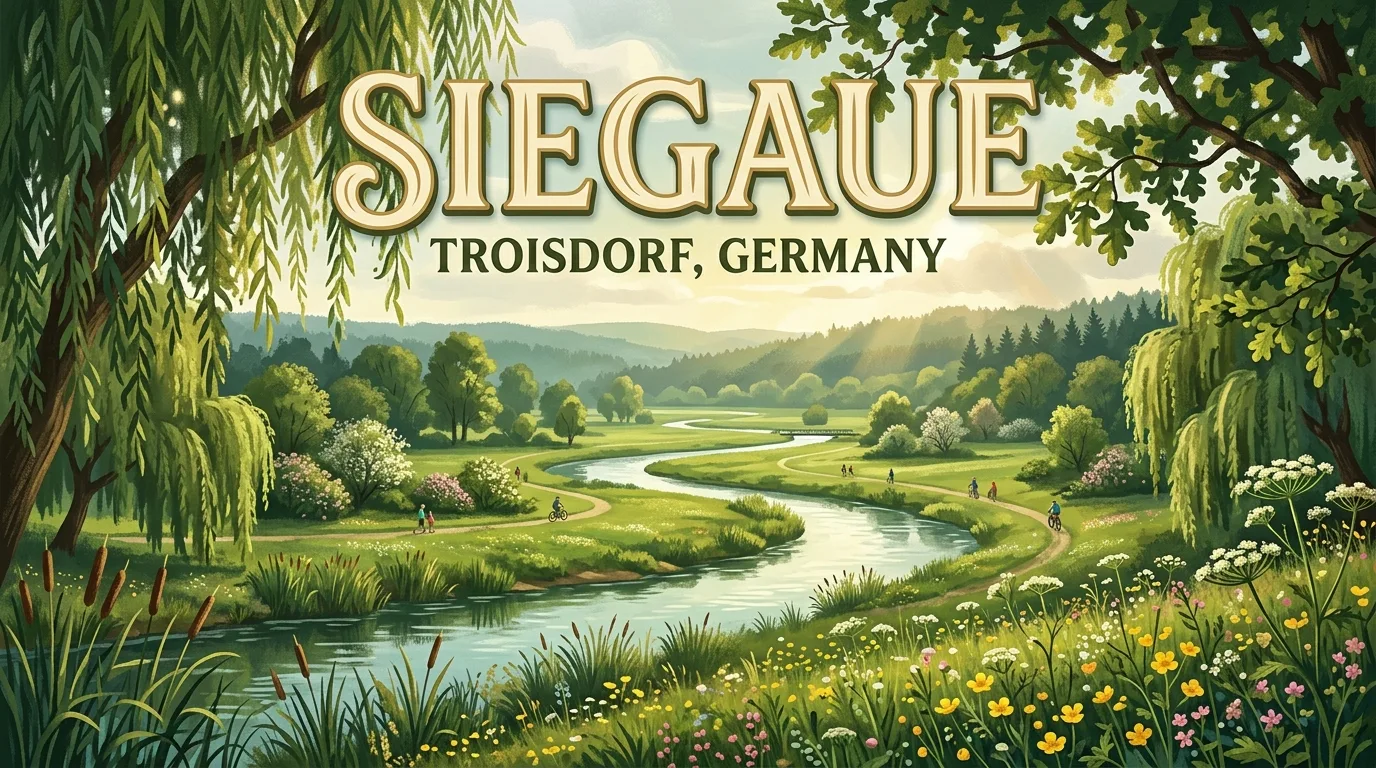
The Siegaue in Troisdorf is a species-rich floodplain landscape along the Sieg and forms one of the most important nature reserves in the region. Designated in 1986, the floodplain extends in the south-east of the town and provides habitat for around 249 bird species as well as numerous plants and fish. Wide meadows, oxbow lakes, remnants of alluvial forest and the Sieg dike characterise the scenery. During floods the landscape turns into an extensive water surface and relieves the surrounding settlements. Walking and cycling paths lead through the area and enable recreation close to the town. The Siegaue is part of the European Natura 2000 network and a popular destination for walkers, cyclists and nature lovers. Admission is free and the marked paths are accessible year-round.
History of Siegaue
The history of the Siegaue is closely linked to the river Sieg and human use. The Sieg flows into the Rhine after about 155 kilometres at Troisdorf-Bergheim. For centuries the floodplains served as inundation area and fishing grounds. The Bergheim fishermen’s brotherhood, one of the oldest guild-like communities in Germany, dates back to 987 and still holds fishing rights. The floodplain was used agriculturally and bounded by dikes. In 1986 the Siegaue was declared a nature reserve in order to preserve the structurally rich river floodplain landscape with oxbow lakes and remnants of alluvial forest. Since 2004 it has been registered as an SAC in the Natura 2000 network. Water quality has improved so that salmon could be reintroduced. The floodplain remains a dynamic habitat that is inundated during floods and at the same time offers local recreation.
Highlights of Siegaue
The highlights of the Siegaue lie in the diversity of habitats and the opportunities for observation. Wide grassland areas, oxbow lakes, gravel banks and remnants of alluvial forest characterise the landscape. About 249 bird species have been recorded here, including water and wading birds of statewide importance. The Sieglarer See lies embedded and can be circumnavigated; bathing is not permitted for nature conservation reasons. On the Sieg dike run cycling and walking paths with views of the river. The reaction ferry at Bergheim connects Troisdorf with Bonn-Geislar and is one of the last single-person ferries. The Fishing Museum in Bergheim conveys the long tradition of inland fishing. Nutrient-poor grassland on the flood dike provides habitat for grasshoppers and butterflies. The combination of nature, history and well-developed paths makes the floodplain a varied experience for all age groups.
Opening Hours, Tickets & How to Get to Siegaue
The Siegaue is accessible year-round and free of charge. The marked paths and the Sieg dike may be used; leaving the paths is prohibited to protect nature. Dogs must be kept on a lead. By car reach access points via the A 59 and follow the signs to Sieglar or Bergheim. Parking is available at Meindorfer Allee and near the Sieg ferry. By public transport travel to Troisdorf or Sieglar station and use bus lines towards Bergheim or Sieglar. The walk to the paths is short. The reaction ferry operates seasonally, generally from Easter to early October. Rules of conduct and information boards must be observed to ensure nature conservation. The floodplain is suitable for walks, cycle tours and observation at any time of year.
Attractions Near Siegaue
In the immediate vicinity of the Siegaue are Bergheim with the Church of St Lambertus, the Fishing Museum and the Sieg ferry. The Sieglarer See and the Eschmarer Mühle are easily reachable. The centre of Troisdorf with Burg Wissem, the Picture Book Museum and MUSIT lies a short distance away. Bonn and the Rhine banks are accessible via the ferry or the cycle path. The Wahner Heide complements the nature offer. In this way a visit to the floodplain can easily be combined with a ferry crossing, a museum visit and an exploration of the surrounding places.
Where to stay in Troisdorf, Germany
Compare current hotel prices and find the right place to stay.