Siegstrand
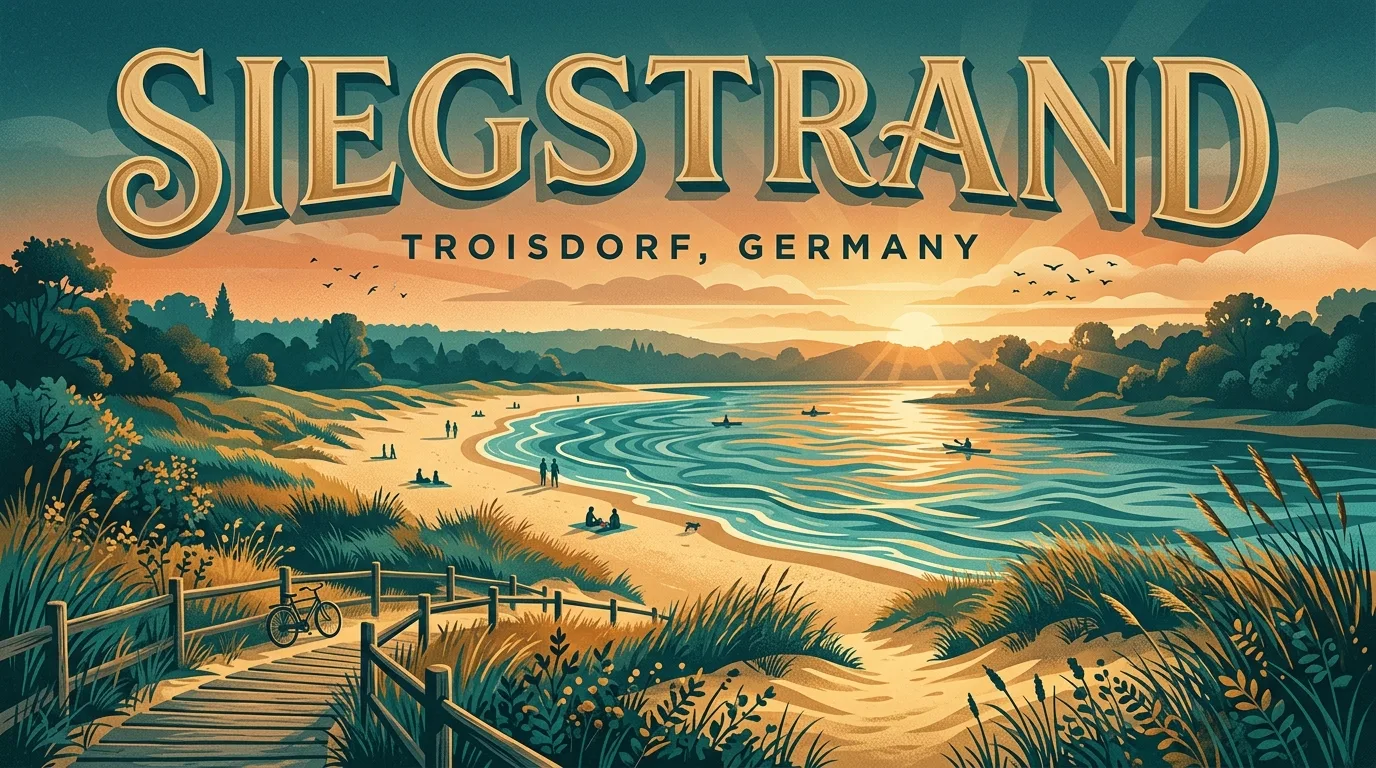
Siegstrand in Troisdorf is one of the most pleasant natural spots along the River Sieg. Between the districts of Bergheim and Menden, flat riverbanks and gravelly stretches invite visitors to sunbathe and relax on warm days. Here you enjoy the quiet of the Siegaue, one of the most important nature reserves in the region. The landscape of meadows, oxbow lakes and the calmly flowing river creates an atmosphere that feels far removed from city life. Many people come here to escape everyday stress, watch birds or simply soak up the sun by the water. Siegstrand is not a classic beach with loungers and kiosks, but an authentic natural riverside area that impresses with its unspoiled character. Especially in summer, the open banks attract families, walkers and nature lovers. Its proximity to Cologne and Bonn makes it an ideal day-trip destination. Exploring the Siegaue means experiencing a varied river landscape that has been protected for decades yet remains accessible. Siegstrand stands for relaxed hours by the water in the middle of a living floodplain landscape.
History of Siegstrand
The history of Siegstrand is closely linked to the development of the Siegaue and the settlements along the river. The name Sieg itself is of Celtic origin and means “fast-flowing”. The riverbanks were already used in the early Middle Ages. Bergheim, one of the oldest districts of Troisdorf, was first mentioned in documents in the 11th century and developed as a farming and fishing village. The Bergheim fishermen’s brotherhood on the Sieg is one of the oldest of its kind in Germany and has held fishing rights at the Sieg mouth since 987. This long tradition still shapes the area today. Over the centuries the banks were used for agriculture and fishing. With industrialisation and the construction of dikes in the 19th and 20th centuries the landscape changed. The Sieg dike now protects the neighbouring districts from flooding and at the same time serves as a popular cycle and walking path. In 1986 the Siegaue was officially designated a nature reserve. Since then the floodplains, meadows and riverbanks have enjoyed special protection. Rare bird species, including many migratory birds, find a habitat here. The water quality of the Sieg has improved significantly in recent decades. Salmon and other migratory fish have returned. Siegstrand itself developed organically as a natural meeting place for people seeking recreation. Unlike artificially created beaches it remained largely untouched. The surrounding municipalities of Troisdorf, Sankt Augustin and Bonn work within the “Grünes C” project on the preservation and careful development of the landscape. In this way the character of Siegstrand as a near-natural recreation area is maintained while the historical connection to river fishing and floodplain farming remains tangible.
Highlights of Siegstrand
The special appeal of Siegstrand lies in its naturalness. Flat gravel and sand banks invite sunbathing while the view sweeps across the river and the meadows opposite. On warm summer days small groups of visitors spread out blankets and enjoy the sun. The quiet atmosphere clearly distinguishes the place from busy outdoor pools. Birdwatching is one of the highlights: grey herons, cormorants and many other species are regularly seen. The nearby Sieglarer See, created during the construction of the motorway in the 1970s, complements the offer. Birds breed undisturbed on its islands, though bathing is prohibited there. Along the Sieg dike well-developed cycle and walking paths run for several kilometres. Those who wish can cycle as far as the Sieg mouth near Mondorf or take the short crossing with the historic Sieg ferry St. Adelheit. The reaction ferry operates in the summer months and takes passengers to the Bonn side in a few minutes. Near the Agger weir there is a stone beach that invites lingering, even though bathing is forbidden for reasons of fish protection. The floodplain landscape changes its face with the seasons: meadows bloom in spring, green areas dominate in summer and autumn brings glowing colours. Siegstrand is ideal for picnics, walks and relaxed hours by the water. Children find space to play on the banks while adults enjoy the quiet. The combination of open riverbank, protected nature and good accessibility makes the place one of the most attractive local recreation destinations in the Rhein-Sieg district.
Opening Hours, Tickets & How to Get to Siegstrand
Siegstrand as a natural riverbank area is freely accessible at all times. There are no fixed opening hours and no entrance fee. Visitors can come throughout the year, although the summer months from May to September are the most popular. During high water some bank areas may be inaccessible, so checking current water levels is advisable. Parking is available in Bergheim and along the access roads. By car the area is reached via the A59 and the exits towards Troisdorf or Bergheim. Public transport takes travellers to the bus stops in Bergheim or Sieglar. From there it is only a few minutes’ walk to the dike and the riverbanks. Cyclists use the well-signposted cycle path along the Sieg. The Sieg ferry offers an additional arrival option from the Bonn side in season. Toilets and dining options are found in the nearby districts, for example in Bergheim at the restaurant Zur Siegfähre or near the fishing museum. A visit requires no preparation beyond weather-appropriate clothing and possibly a blanket. Dogs are generally welcome but should be kept on a lead to protect nature. Siegstrand remains an uncomplicated place: you arrive, enjoy and leave again without a ticket or reservation.
Attractions Near Siegstrand
In the immediate vicinity of Siegstrand a visit to the Bergheim Fishing Museum is worthwhile. It documents more than a thousand years of fishing tradition on the Sieg and displays exhibits as well as the historic eel boat. The Sieg ferry St. Adelheit is another highlight and one of the last reaction ferries in Germany. The Sieglarer See offers quiet walking paths and observation opportunities for water birds. Further north lies Burg Wissem with the Picture Book Museum and the Museum of Urban and Industrial History of Troisdorf. The Wahner Heide with its heathland and forests is only a few kilometres away and ideal for longer hikes. The Agger weir and the stone beach behind it complete the river landscape. Those who cycle further reach the Sieg mouth into the Rhine at Mondorf. The historic old town of Siegburg and the Michaelsberg Abbey are also within easy reach. In this way a visit to Siegstrand combines a nature experience with cultural and historical stops in the region.
Where to stay in Troisdorf, Germany
Compare current hotel prices and find the right place to stay.