Spicher See & Eschmarer See
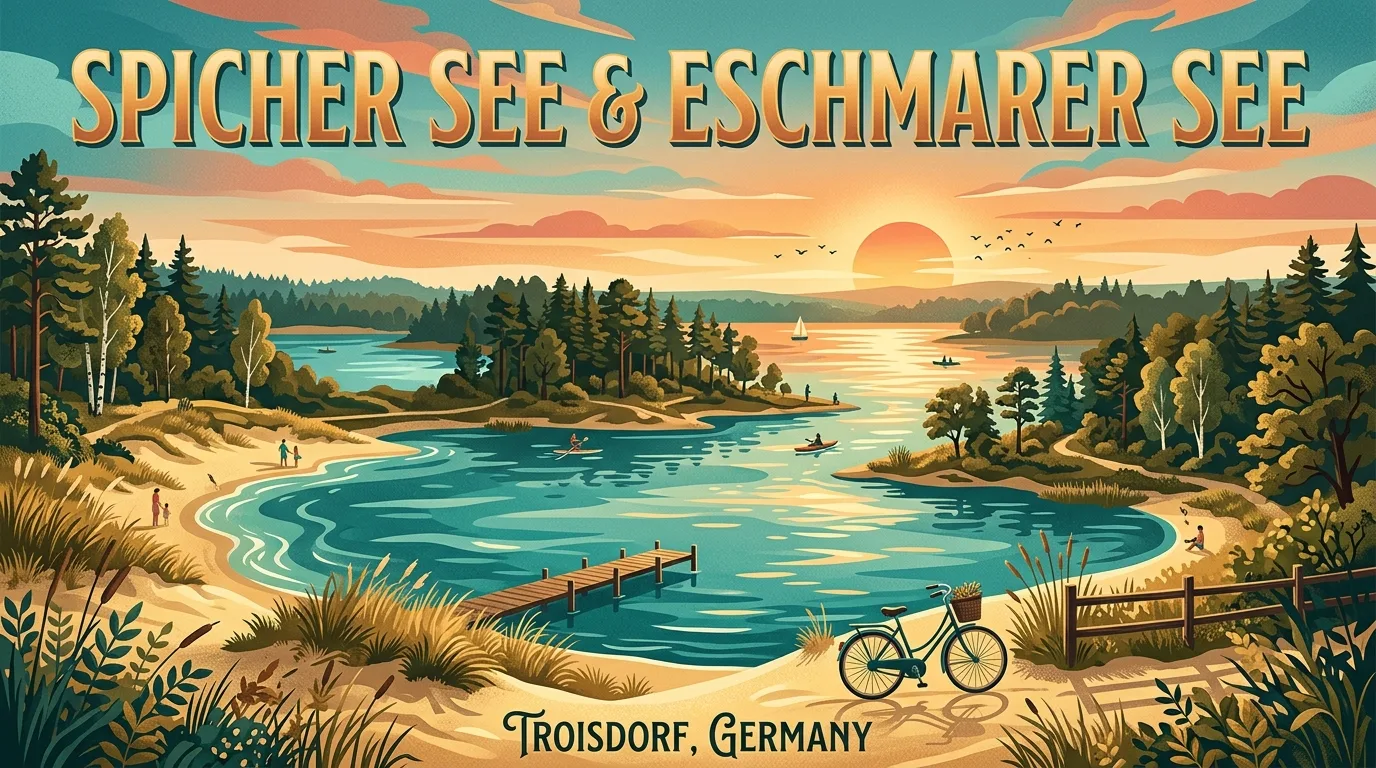
The Spicher See & Eschmarer See are characteristic gravel-pit lakes in the city of Troisdorf in the Rhine-Sieg district. Formed by decades of gravel extraction, they shape the landscape west of Spich and in the Eschmar area. Together with neighbouring lakes they form an important biotope network of outstanding significance for local flora and fauna. While direct access to the shores is largely restricted, the calm water surfaces and surrounding green structures attract nature lovers, cyclists and especially birdwatchers. The lakes lie in a region where industrial history and nature conservation are closely interwoven. Visitors to the Spicher See & Eschmarer See experience a landscape of steep banks, reed belts and dense woodland edges that simultaneously serves as a refuge for rare amphibians, reptiles and birds. Proximity to Cologne and Bonn makes the waters a rewarding destination for day trips focused on quiet observation.
History of Spicher See & Eschmarer See
The creation of the Spicher See & Eschmarer See is closely linked to intensive gravel and sand extraction in the Cologne Bight after the Second World War. From the 1950s onwards, large areas west of Spich were released for wet gravel extraction. Demand for building materials for reconstruction and road construction was enormous, and the Rhine lower terraces offered rich deposits. Over the following decades several gravel-pit lakes appeared, including the Spicher See (also known as Grüner See), the Schilfsee, the Schwalbensee and the Krötenweiher on Troisdorf municipal territory. Further waters such as Libursee, Storchensee and Molchweiher extend partly into Cologne city territory. Extraction fundamentally reshaped the surface and left steep underwater banks as well as isolated shallow-water zones.
The Eschmarer See also originated as a former gravel pit west of Eschmar. It measures around 800 metres in length and 400 metres in width and reaches a maximum depth of approximately 14 metres. Extraction later ceased and the lake developed into a biotope network area with high potential for amphibians, reptiles, insects and birds. Around the Eschmarer See the company ESKA GmbH still operates a sand and gravel pit, illustrating the transition from active resource extraction to nature conservation. In the 1960s and 1970s many of the Spicher lakes were recultivated and leased to local angling clubs. The city of Troisdorf later designated the area as a biotope network of outstanding importance and prepared landscape management concepts to guide ecological development. Today the protection of rare species and the preservation of habitats take priority, while public access remains deliberately limited.
Highlights of Spicher See & Eschmarer See
The special appeal of the Spicher See & Eschmarer See lies in their ecological diversity and the quiet atmosphere away from the larger recreational lakes. The Spicher See and neighbouring waters host reed beds in which reed warblers and reed buntings breed. Sun-exposed banks are home to sand lizards, and steep walls provide nesting sites for kingfishers. The larger Eschmarer See offers important resting and wintering places for water birds and possesses high development potential for amphibians and insects. The steep shores and dense woodland edges create varied habitats used by great crested grebes, moorhens and other species.
For birdwatchers the lakes are particularly interesting because they can be observed from surrounding paths and the A 59 without entering the sensitive shore areas. Cyclists use the well-developed routes in the Spich and Eschmar region to circle the lake landscape and experience the transitions between industry, agriculture and nature conservation. Proximity to the motorway and railway line makes the contrast between industrial past and present tranquillity especially tangible. In spring and autumn the waters are important stopover sites for migrating birds, while in summer vegetation and insect diversity come to the fore. The combination of still water surfaces, reed belts and open gravel areas makes the Spicher See & Eschmarer See a valuable observation area for nature enthusiasts who focus on undisturbed habitats.
Opening Hours, Tickets & How to Get to Spicher See & Eschmarer See
The Spicher See & Eschmarer See are not classic recreational waters with fixed opening hours or admission fees. Most of the Spicher lakes are accessible only to local angling clubs and are not open to the public. The Eschmarer See is completely fenced and may be entered only with special permission. Swimming, diving or navigating the waters is prohibited in order to protect the sensitive biotopes. Occasionally police, DLRG, THW and the DRK water rescue service use the Eschmarer See for large-scale exercises. Visitors can enjoy views from the surrounding paths and cycle routes. No entrance fee is charged because these are nature-conservation and biotope areas.
Arrival is easiest by car via the A 59 or B 8. In Spich and Eschmar parking is available in residential and commercial areas, from which short footpaths lead to viewpoints. Public transport users reach Troisdorf station or the Spich stop and continue by bus or bicycle. The region is well connected to the cycle network, so arrival by bike from Cologne, Bonn or neighbouring towns is straightforward. Visitors should wear sturdy shoes and bring binoculars, and stay on the designated paths. The best times for observation are early morning and late afternoon, when birds are active and light conditions favourable.
Attractions Near Spicher See & Eschmarer See
In the immediate vicinity of the Spicher See & Eschmarer See further interesting destinations await. Rotter See is the best-known bathing lake in the region and offers lawns, a sandy beach and extensive cycle and walking paths. Only a few kilometres away lies Sieglarer See in the Siegaue nature reserve, where grey herons and cormorants breed on two islands and a quiet circular path is available. The Wahner Heide with its heathland and historic pits lies to the east and invites longer walks. In Eschmar itself a detour to the historic Eschmarer Mill and the dyke paths along the Sieg is worthwhile. Troisdorf centre with its town park and proximity to the Rhine-Sieg cycle route completes the options for a varied day trip. The combination of protected gravel-pit lakes and publicly accessible recreational areas makes the region especially attractive.
Where to stay in Troisdorf, Germany
Compare current hotel prices and find the right place to stay.