Ehrenstraße
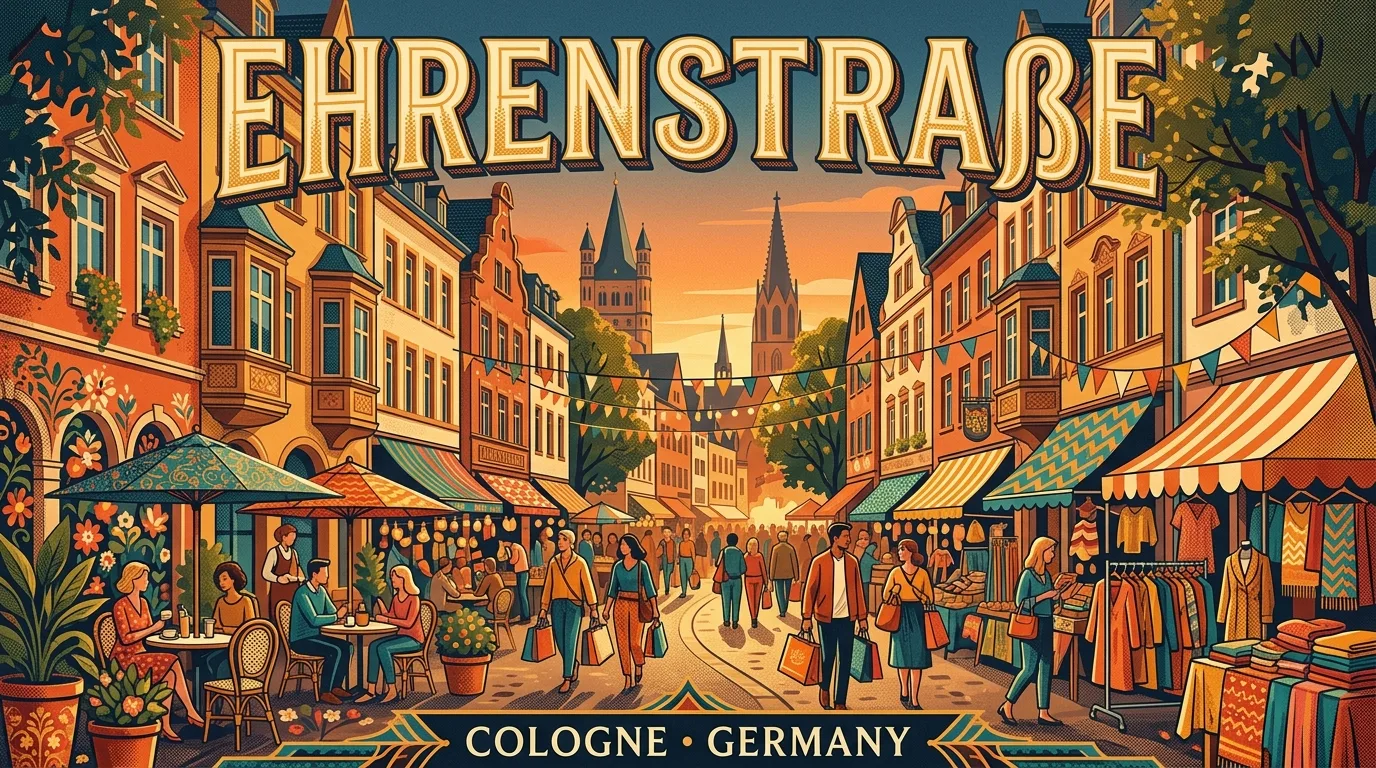
While Schildergasse and Hohe Straße represent the classic shopping experience dominated by major chains, Ehrenstraße in Cologne's Belgian Quarter has established itself as the trend-conscious alternative. The street lies in the Neustadt-Nord district, just a few minutes' walk from Rudolfplatz, and connects the lively area around Brüsseler Platz with the city centre. Independently owned boutiques, concept stores, vintage shops, streetwear outlets and small designer fashion stores line the street in close succession, interspersed with countless cafés, bars and scene hangouts inviting visitors to linger. Ehrenstraße therefore offers a completely different shopping experience from the big department-store streets downtown: more individual, more independent, and strongly shaped by Cologne's creative, urban scene. Anyone searching for independent labels, unusual second-hand finds, or simply a relaxed afternoon among boutiques and coffee houses will find one of the liveliest streets in the city here.
History of Ehrenstraße
To understand the history of Ehrenstraße, it helps to look at the development of the wider Belgian Quarter of which it forms part. Well into the nineteenth century, the area outside the medieval city walls remained largely open farmland. It was only after the demolition of Cologne's fortifications in 1881 that the terrain was released for large-scale urban expansion. On 6 March 1884, Cologne's city council decided to name the new streets after Belgian and Dutch cities and provinces, including Antwerp, Ghent, Brussels, Liège, Brabant, Limburg, Maastricht, Venlo and Utrecht, symbolically gathering "all of Holland and Belgium" within this new quarter. During this so-called Gründerzeit, numerous grand residential buildings in the historicist and early Art Nouveau styles went up along Ehrenstraße and the surrounding streets, many featuring elaborate façades, marble staircases and wrought-iron balconies, some of which still define the streetscape today. Allied bombing raids in 1944 damaged parts of the quarter, yet a remarkable stock of historic buildings survived intact. In the postwar decades, the Belgian Quarter initially developed into a rather quiet residential area favoured by students and artists thanks to its affordable rents. From the 1990s and especially the 2000s onward, a sweeping wave of gentrification set in: creatives, restaurateurs and independent fashion retailers discovered the quarter, and Ehrenstraße in particular, as an ideal location, which drove up rents considerably but also produced the distinctive mix of boutiques, cafés and bars seen today. In 2010, the magazine Prinz named the Belgian Quarter the most liveable district in Cologne, a status the area around Ehrenstraße has defended ever since.
Highlights of Ehrenstraße
The special charm of Ehrenstraße stems from the sheer density of independent, owner-run shops, a concentration barely matched by any other street in Cologne. Fashion lovers will discover concept stores presenting carefully curated collections from international niche labels alongside local Cologne designers, complemented by streetwear boutiques, sneaker stores and vintage or second-hand shops where patient browsers can find real treasures. Concept stores for home accessories, jewellery-design studios and small galleries also contribute to the street's creative character. The architecture itself is a highlight in its own right: the Gründerzeit façades with their stucco ornamentation, bay windows and wrought-iron details give the street a completely different charm from the functional postwar buildings found on the city centre's major shopping streets. Between the shops, numerous cafés, bistros and bars invite a break, many with outdoor seating that spills onto the pavement in fine weather, lending the street an almost Mediterranean lightness. At the western end of Ehrenstraße lies Brüsseler Platz, the unofficial heart of the Belgian Quarter, overlooked by the historic church of St. Michael, which becomes a popular gathering spot on warm evenings as locals and visitors sit on its steps with a glass of wine. Strolling along the street, one quickly notices its seasonal shifts: pop-up stores, temporary exhibitions and ever-changing shop-window displays ensure that Ehrenstraße reveals a slightly different face with every visit. This mix of permanence and constant change makes the street a favourite destination for anyone looking for genuine discoveries beyond the major brands.
Opening Hours, Tickets & How to Get to Ehrenstraße
Ehrenstraße is a publicly accessible street with no admission charge and can be walked at any time of day. The opening hours of the individual boutiques, cafés and shops naturally vary more widely than on the large shopping streets, since most businesses here are independently owned. As a rough guide, most shops open Monday to Saturday between 11am and 7pm, with many smaller boutiques opening only later in the morning, while cafés and bars often stay open well into the evening. Most shops are closed on Sundays, though the food and drink venues operate seven days a week, making the street a pleasant destination for a relaxed walk at the weekend too. For getting there, Cologne's light-rail network is the best option: the Rudolfplatz stop, served by several KVB lines, lies just a short walk from the eastern end of Ehrenstraße. Alternatively, the quarter can be reached on foot in about 15 to 20 minutes from Cologne's main railway station or from Neumarkt. Parking within the Belgian Quarter itself is limited and largely reserved for residents, so using a nearby car park, for instance at Rudolfplatz, is more advisable than searching for a street parking spot. The street is mostly flat and easy to walk, although the historic pavements are in places narrower than the modern pedestrian zones of the city centre.
Attractions Near Ehrenstraße
From Ehrenstraße, numerous further destinations in the Belgian Quarter and the adjoining city centre can be comfortably reached on foot. The aforementioned Brüsseler Platz with the church of St. Michael forms the lively centre of the quarter and draws crowds even on an ordinary evening. Just a few streets away lies the Markthalle in the Belgian Quarter, a popular culinary gathering spot offering regional and international specialities. The synagogue on Roonstraße, an important historic and religious building, is also close by and well worth a short detour. Heading east, Rudolfplatz with its striking Hahnentor gate tower, a surviving remnant of the medieval city fortifications, can be reached in around ten minutes, leading onward to the Kölner Ringe with their abundance of bars and restaurants. Continuing further toward the centre, visitors reach Schildergasse and Hohe Straße in roughly 15 to 20 minutes, making a visit to Ehrenstraße an ideal complement to a classic shopping trip in downtown Cologne.
Where to stay in Cologne, Germany
Compare current hotel prices and find the right place to stay.