Schloss Kalkum
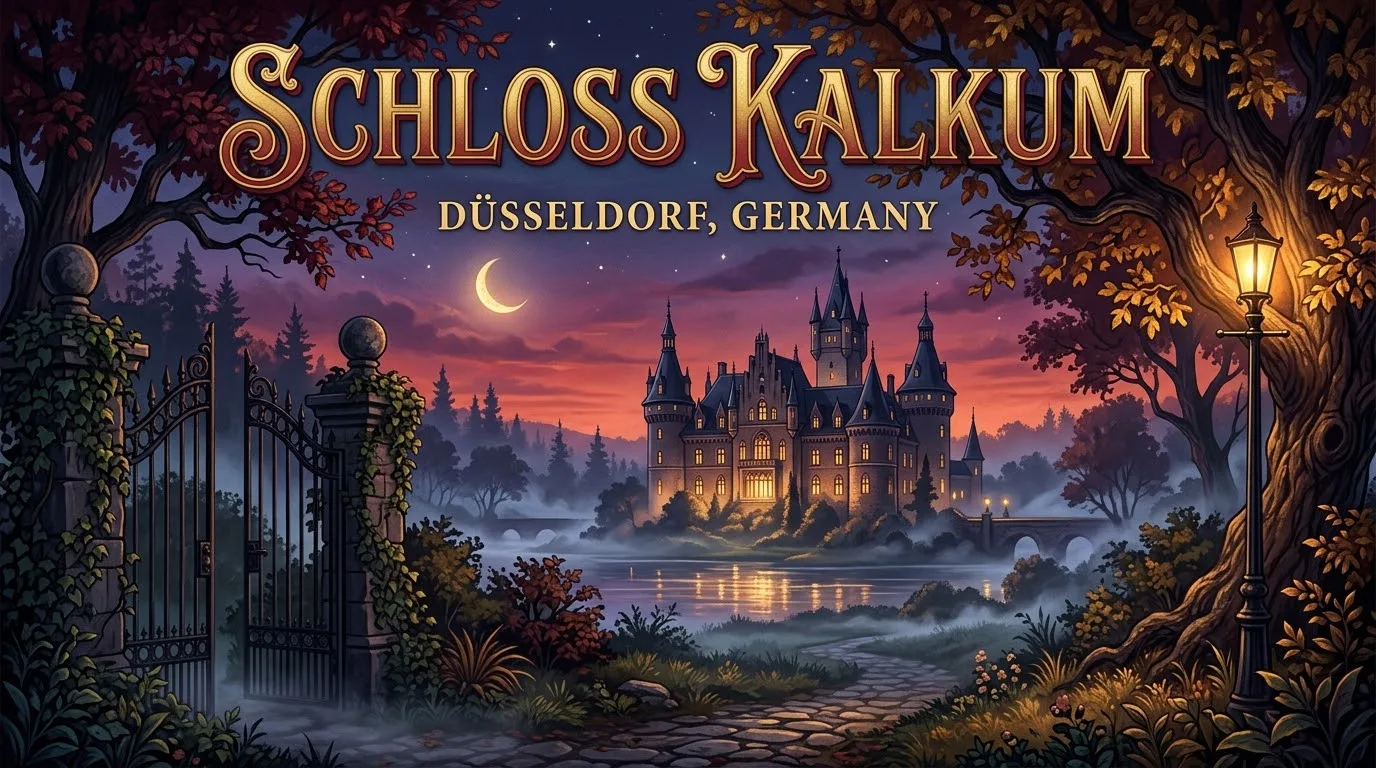
In Düsseldorf's northern district of Kalkum, just about two kilometres northeast of Kaiserswerth, stands one of the most atmospheric moated castles in the Düsseldorf area. Schloss Kalkum impresses with its classic four-wing layout, two striking corner towers topped with curved Baroque cupolas, and a water moat that encircles the entire building, giving it the true character of a Wasserschloss. With around 6,500 square metres of usable floor space, Schloss Kalkum ranks among the larger historic palace complexes on the Lower Rhine, while the surrounding 19-hectare English-style landscape park lends the grounds a particularly natural yet well-tended atmosphere. The complex's roots reach back to the Middle Ages, though its present Neoclassical form dates only from a comprehensive renovation at the start of the 19th century. For anyone interested in aristocratic history, Neoclassical architecture and carefully maintained landscape parks, Schloss Kalkum ranks among the most fascinating, yet also one of the quietest, destinations in the Düsseldorf area.
History of Schloss Kalkum
The history of Schloss Kalkum begins with a medieval knight's seat belonging to the von Kalkum family, who gave the estate the name it still carries today. Over the course of the Middle Ages, ownership changed hands several times: in the mid-15th century the estate passed to the von Winkelhausen family, before being inherited in 1739 by the Counts von Hatzfeldt, one of the most prominent noble families of the Rhineland. The transformation that still defines the building today took place between 1808 and 1814 under the direction of the Krefeld master builder Georg Peter Leydel, commissioned by Maria Anna von Kortenbach, widow of Edmund Gottfried von Hatzfeldt, who oversaw a Neoclassical conversion of the older structure. The result is considered one of the outstanding examples of Neoclassical palace architecture in the Rhineland.
Alongside the architectural transformation of the castle, the extensive landscape park was laid out between 1807 and 1825 by the renowned landscape architect Maximilian Friedrich Weyhe in the English style, the same Weyhe responsible for the gardens of several other important Düsseldorf palaces. In 1946 the newly founded state of North Rhine-Westphalia acquired the complex and put it to public use. For decades, Schloss Kalkum served as the seat of the North Rhine-Westphalia State Archive, until its holdings relocated to Duisburg at the end of 2014. Since then, the castle building has largely stood vacant, while the park has remained accessible to the public. The building's future was the subject of protracted legal disputes in recent years between the state of North Rhine-Westphalia and a private investor who had originally pursued plans for cultural use; this dispute was only finally resolved in 2023 by a top-court ruling.
Highlights of Schloss Kalkum
The most distinctive feature of Schloss Kalkum is undoubtedly its classic four-wing layout, arranged around a central courtyard and flanked by two symmetrically placed corner towers with curved Baroque cupolas, an architectural detail that creates an appealing contrast to the otherwise strictly Neoclassical design language of the building. The moat surrounding the entire structure means the castle reflects beautifully in the water depending on the light and season, producing particularly atmospheric views in the early morning or at dusk. The clear, symmetrical façade composition, with tall windows and restrained decorative detailing, underscores the Neoclassical character of the 1808–1814 renovation.
Particularly appealing is the adjoining roughly 19-hectare English-style landscape park, designed by Maximilian Friedrich Weyhe, with mature trees, winding paths and open meadows inviting long walks. The park is freely accessible, offering the chance to view the castle from different angles without needing to enter the building itself. Classical concerts and other cultural events are occasionally held inside the castle, giving visitors a rare glimpse of the historic interior; such events are usually advertised locally and vary from year to year. For fans of Neoclassical architecture and English landscape gardens, the combination of an imposing structure, a moat and an expansive park is an experience unique within the Düsseldorf city area.
Opening Hours, Tickets & How to Get to Schloss Kalkum
Schloss Kalkum is located on Kalkumer Schloßallee in the district of the same name, roughly two kilometres northeast of Kaiserswerth. Since the State Archive moved out at the end of 2014, the castle has largely stood vacant, and the building's interior is not regularly open to the general public. Tours are generally possible only in connection with occasional concerts or cultural events, which are advertised locally. The surrounding roughly 19-hectare landscape park, however, is freely accessible during daylight hours year-round and can be visited without an admission fee, making Schloss Kalkum a worthwhile destination for a quiet walk in 2026 or 2027 even if the building itself can only be admired from outside.
The easiest way to get there by public transport is by bus from Kaiserswerth or central Düsseldorf; from the nearest stop, it is usually just a short walk to the park. By car, Kalkum is easily reached via the B8n motorway and several side roads, with parking available along the street near the park. Since the area has a rural character and many visitors arrive by bicycle, it's worth combining a visit with a cycling trip along the Rhine, for example toward Kaiserswerth or further on to Duisburg.
Attractions Near Schloss Kalkum
Just a few kilometres southwest lies the ruin of the Kaiserpfalz Kaiserswerth, another significant historic riverside monument that pairs well with a visit to Schloss Kalkum. The historic old town of Kaiserswerth, with its half-timbered houses, cafés and restaurants, makes a good stop for a break after walking through the Kalkum palace park. Well-developed cycling and walking paths run along the Rhine, connecting Kalkum both with Kaiserswerth and with the more northerly districts of Düsseldorf, making it ideal for longer bicycle excursions. Those wishing to immerse themselves further in the region's nature will find several green spaces and protected landscape areas along the Rhine in the wider vicinity, which together with the Kalkum palace park form a connected green network in northern Düsseldorf. Central Düsseldorf and its main sights are reachable by car or public transport in roughly 30 to 40 minutes.
Where to stay in Dusseldorf, Germany
Compare current hotel prices and find the right place to stay.