Museum Kunstpalast
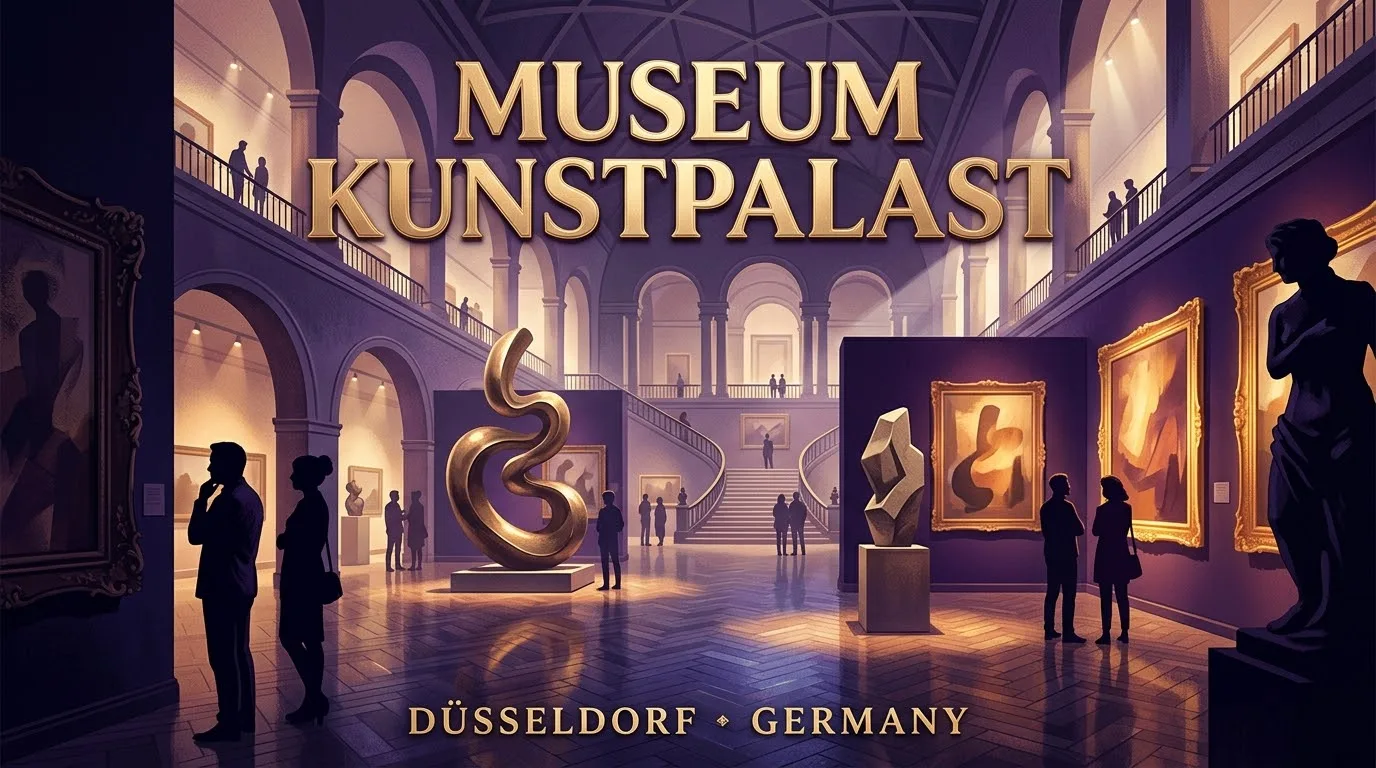
Museum Kunstpalast is one of the most historic and at the same time most wide-ranging art museums in Germany, housed in the grand Ehrenhof building ensemble on the banks of the Rhine in the Pempelfort district. Under one roof, Museum Kunstpalast brings together old master paintings, one of the most important glass collections in the world, an extensive collection of prints and drawings, and modern and contemporary art, so that a single visit leads through several centuries of European art history. The museum's roots reach back to the art-loving Elector Johann Wilhelm II, even though the present building only dates from the mid-1920s. Anyone interested in painting from Rubens to the present day, in decorative glass art, or in the history of the famous Düsseldorf School of painting will find Museum Kunstpalast one of the most rewarding museums in the Rhineland.
History of Museum Kunstpalast
The history of Museum Kunstpalast begins in the late seventeenth century, when Elector Johann Wilhelm II, known as Jan Wellem, built up a significant painting gallery at his residence, laying the foundation for Düsseldorf's reputation as a city of the arts. This electoral collection was moved to Munich in 1805 and 1806, when the Bavarian electors inherited the Palatinate lands, and it still forms a core part of the Alte Pinakothek in Munich today. As a result, Düsseldorf had to largely rebuild its art collections during the nineteenth century, a task driven above all by the Düsseldorf School of painting, which grew out of the Art Academy and gained international influence under directors such as Wilhelm von Schadow. In 1902 a dedicated exhibition palace for art and industry was built on the riverbank, which gave the Kunstpalast its name. The present building on the Ehrenhof was erected in 1925 and 1926 to designs by the architect Wilhelm Kreis for the large GeSoLei exhibition, which presented public health, social welfare and physical exercise in one monumental building complex. The ensemble was badly damaged during the Second World War and had to be rebuilt in the postwar years. For decades, the Kunstmuseum Düsseldorf with its painting collection and the Kunstpalast with its glass and graphic collections existed as separate institutions, before they were merged in 2001, following a comprehensive renovation led by architect Oswald Mathias Ungers, into today's Museum Kunstpalast.
Highlights of Museum Kunstpalast
A tour of the painting galleries at Museum Kunstpalast begins with the old masters: works by Peter Paul Rubens, Jan Brueghel the Elder and other leading figures of seventeenth century Flemish and Dutch painting bear witness to the former electoral collection. A dedicated focus is the nineteenth century Düsseldorf School of painting, with atmospheric landscapes by Andreas Achenbach and numerous other graduates of the Art Academy, which made Düsseldorf one of the most important centres for painting instruction in Europe. World famous is the so-called Sammlung Hentrich, one of the most extensive glass collections anywhere: it ranges from ancient Roman glass through Art Nouveau vases by Émile Gallé and Favrile glass by Louis Comfort Tiffany to contemporary studio glass, showcasing the material's creative range in striking fashion. The graphic arts collection comprises thousands of drawings and prints, including works by Rembrandt and Francisco de Goya, presented in rotating thematic cabinet displays. Modern and contemporary art includes works by Max Ernst as well as by Jörg Immendorff, who taught in Düsseldorf and whose politically charged painting shaped German art of the 1980s. During the 2026/2027 season, Museum Kunstpalast presents several major temporary exhibitions: "Niki de Saint Phalle. Dream Machine" explores the colourful work of the French-American artist from September 2026 to February 2027, a retrospective examines the work of Jörg Immendorff from September 2026 to January 2027, and an exhibition of works by Winfred Gaul from the Kemp Collection runs from October 2026 to February 2027. The programme is rounded off by the permanent display "From Aldi to Rubens", which deliberately places everyday objects alongside works of art, drawing surprising connections between fine art and consumer culture.
Opening Hours, Tickets & How to Get to Museum Kunstpalast
Museum Kunstpalast, at Ehrenhof 4-5, 40479 Düsseldorf, is open Tuesday to Sunday from 11am to 6pm, and even until 9pm on Thursdays; the museum is closed on Mondays. Standard admission costs 17 euros, with a reduced rate of 13 euros, while children and teenagers under 18 and members of the museum's Friends association enter free of charge. Prices may differ for individual temporary exhibitions, so it is worth checking the current price list before visiting. Tickets are available both at the box office and online through the museum's website. Getting there by public transport is simple: several Rheinbahn tram and bus lines stop near the Ehrenhof, from where the museum is only a short walk away, and there are direct connections from both the main railway station and the old town to the riverbank. Visitors arriving by car will find parking nearby, including a multi-storey car park close to the Ehrenhof. The riverside location makes a stroll along the Rhine embankment promenade before or after the museum visit especially appealing. For groups, school classes and families, Museum Kunstpalast also offers an extensive education programme of guided tours and workshops, which depend on the current exhibition schedule and are best booked in advance.
Attractions Near Museum Kunstpalast
The Ehrenhof ensemble, home to Museum Kunstpalast, sits directly on the Rhine and is itself an attractive starting point for a walk along the river promenade toward the old town. The same historic building complex also houses the Tonhalle, a popular concert hall set inside a former planetarium dome, and the NRW-Forum, with rotating exhibitions on photography, pop culture and digital art, making it easy to plan a culturally rich afternoon. Just a few minutes' walk away lies the Nordpark, with its Japanese Garden and the Aquazoo Löbbecke Museum, which combines a zoo with a natural history museum. Toward the city centre, it is a short trip to Düsseldorf's old town with its traditional Altbier breweries, as well as to both sites of the Kunstsammlung Nordrhein-Westfalen, K20 on Grabbeplatz and K21 in the Ständehaus, which combine well with a visit to Museum Kunstpalast for a full day of museums.
Where to stay in Dusseldorf, Germany
Compare current hotel prices and find the right place to stay.