Hetjens-Museum / Deutsches Keramikmuseum
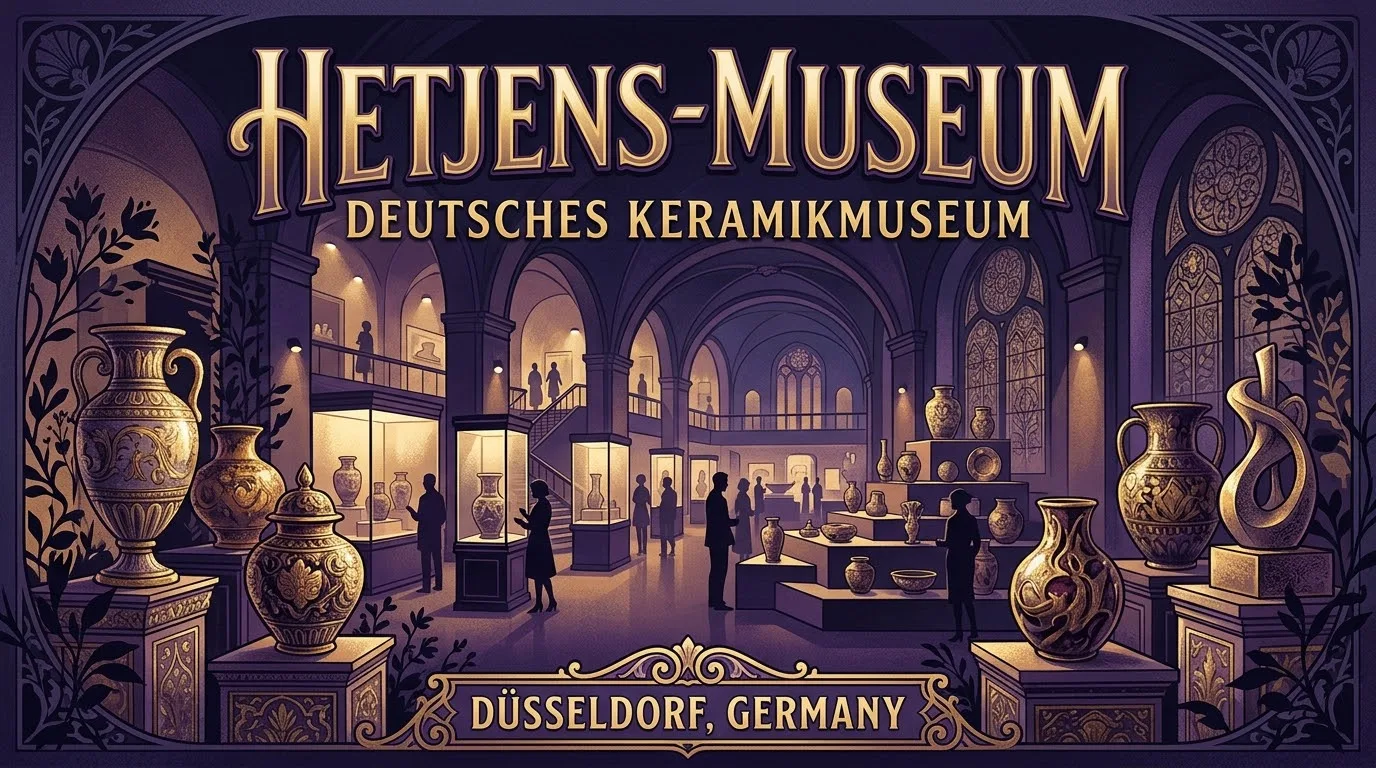
In the quiet Carlstadt district, just a short walk from the Rhine embankment and Burgplatz, sits one of Düsseldorf's most unusual specialist museums: the Hetjens-Museum / Deutsches Keramikmuseum. Housed in the baroque Palais Nesselrode, one of the most beautiful historic buildings in the old town, the museum is devoted entirely to the art and cultural history of ceramics - from the earliest clay vessels of prehistoric cultures to works by contemporary artists. With a collection spanning up to 8,000 years and encompassing pieces from virtually every continent, the Hetjens-Museum ranks among the most comprehensive institutions of its kind anywhere in the world. Visitors wander through halls where Chinese porcelain stands beside European faience tableware, African everyday pottery beside contemporary studio ceramics, experiencing firsthand how differently people across eras and cultures have worked the very same material - clay. The grand staircase and stucco-adorned halls of the palais itself are reason enough for a visit, offering a rare glimpse of eighteenth-century architecture right in the heart of the Carlstadt. Anyone interested in craftsmanship, design or international cultural history will find the Hetjens-Museum full of connections that go well beyond what one might initially expect from a "ceramics museum."
History of Hetjens-Museum
The Hetjens-Museum was founded on 9 May 1909 in Düsseldorf and takes its name from the collector Laurenz Heinrich Hetjens (1830-1906). Hetjens began his working life as an upholsterer's and saddler's apprentice before rising to become technical director of a glass factory in Aachen. After marrying the wealthy widow Maria Catharina Regnier, he devoted himself increasingly to his true passion: the systematic collecting of ceramics from around the world. In his will, Hetjens stipulated that 150,000 gold marks be set aside to establish a dedicated museum where his collection would be permanently accessible to the public - a generous and, for its time, unusual act of civic patronage. The museum was initially built and opened in 1907/1908 in its own building near the Kunstausstellungspalast. As the collection kept growing and the original building soon proved too small, the Hetjens-Museum relocated in 1969 to the considerably larger Palais Nesselrode in the Carlstadt, where it remains to this day. A modern extension followed in 1994, adding further exhibition space and also housing the neighboring Filmmuseum. Today the institution covers roughly 8,500 square meters of exhibition space spread across the historic palais rooms and the modern extension. Since 2025, the museum has also been undergoing a larger renovation phase, including plans for a new museum café accessible via the courtyard, which may cause temporary restrictions in individual areas over the coming years.
Highlights of Hetjens-Museum
The heart of the collection lies in the enormous range of ceramic cultures the museum brings together under one roof: East Asian porcelain, including fine Chinese and Japanese pieces, sits alongside European stoneware and faience tableware spanning the medieval period to Art Nouveau, while dedicated sections on African ceramics and contemporary studio pottery extend the story into the present day. A notable addition to the collection is the VAN MEETEREN porcelain collection, comprising around 100 Meissen pieces, set to go on display in its own presentation from December 2026 onward - a highlight for admirers of the finest European porcelain craftsmanship. Alongside the permanent collection, the Hetjens-Museum regularly stages special exhibitions that spotlight particular regions, periods or contemporary ceramic artists, keeping the museum worth repeat visits. For families and hands-on visitors, the museum's own pottery workshop offers regular courses for adults and children, group programs and pottery-themed birthday celebrations, giving participants a direct sense of how the objects on display might have been made. The museum is also set up for an international audience, offering information materials in more than ten languages. A specialized library focused on ceramics and applied arts, together with a museum shop selling ceramic-related products, round out the offering, and the historic rooms of the palais can also be booked for weddings and private events.
Opening Hours, Tickets & How to Get to Hetjens-Museum
The Hetjens-Museum / Deutsches Keramikmuseum is located at Schulstraße 4 in Düsseldorf's Carlstadt district and is open Wednesdays from 12 to 9 pm and Thursdays through Sundays from 12 to 6 pm; the museum is closed on Mondays and Tuesdays. Due to the ongoing renovation work, a "pay what you wish" model currently applies, allowing visitors to set their own admission price. Free admission is generally granted to children and young people under 21, as well as to holders of the Düsselpass or DüsselCard; visitors with a disability rating of 80 percent or more are admitted free of charge together with one companion. The museum is wheelchair accessible, though the pottery workshop may require staff assistance due to a steep ramp (rated up to 400 kilograms, 90 centimeters wide). By public transport, the museum is reached via U-Bahn lines U71, U72, U73 and U83 to the Benrather Straße stop, about a five-minute walk away, or via bus line 726 to the Maxplatz stop, just one minute's walk from the entrance. The museum's specialist library is accessible Wednesdays and Thursdays from 10 am to 4 pm by prior appointment. Given the ongoing construction, visitors should check the museum's website for current notices about any areas with restricted access.
Attractions Near Hetjens-Museum
The Carlstadt is one of Düsseldorf's architecturally richest neighborhoods and offers several further cultural destinations right around the Hetjens-Museum. Immediately nearby is the Filmmuseum, housed in the same extension building as the Hetjens-Museum and dedicated to the history of film and film technology, making it easy to visit both institutions in a single afternoon. Just a short walk away is the Heinrich-Heine-Institut on Bilker Straße, devoted to the life and work of Düsseldorf's famous poet. Heading north, visitors quickly reach Burgplatz with its historic Schlossturm and the Düsseldorf Altstadt with its dense cluster of traditional pubs, while to the south, the picturesque Rheinuferpromenade invites a riverside stroll. The Königsallee, with its well-known shopping options, is also within easy walking distance. The combination of the Carlstadt's quiet, historic streets and its closeness to the city's main tourist attractions makes the area around the Hetjens-Museum an ideal starting point for a culture-focused day in Düsseldorf.
Where to stay in Dusseldorf, Germany
Compare current hotel prices and find the right place to stay.