Filmmuseum Düsseldorf
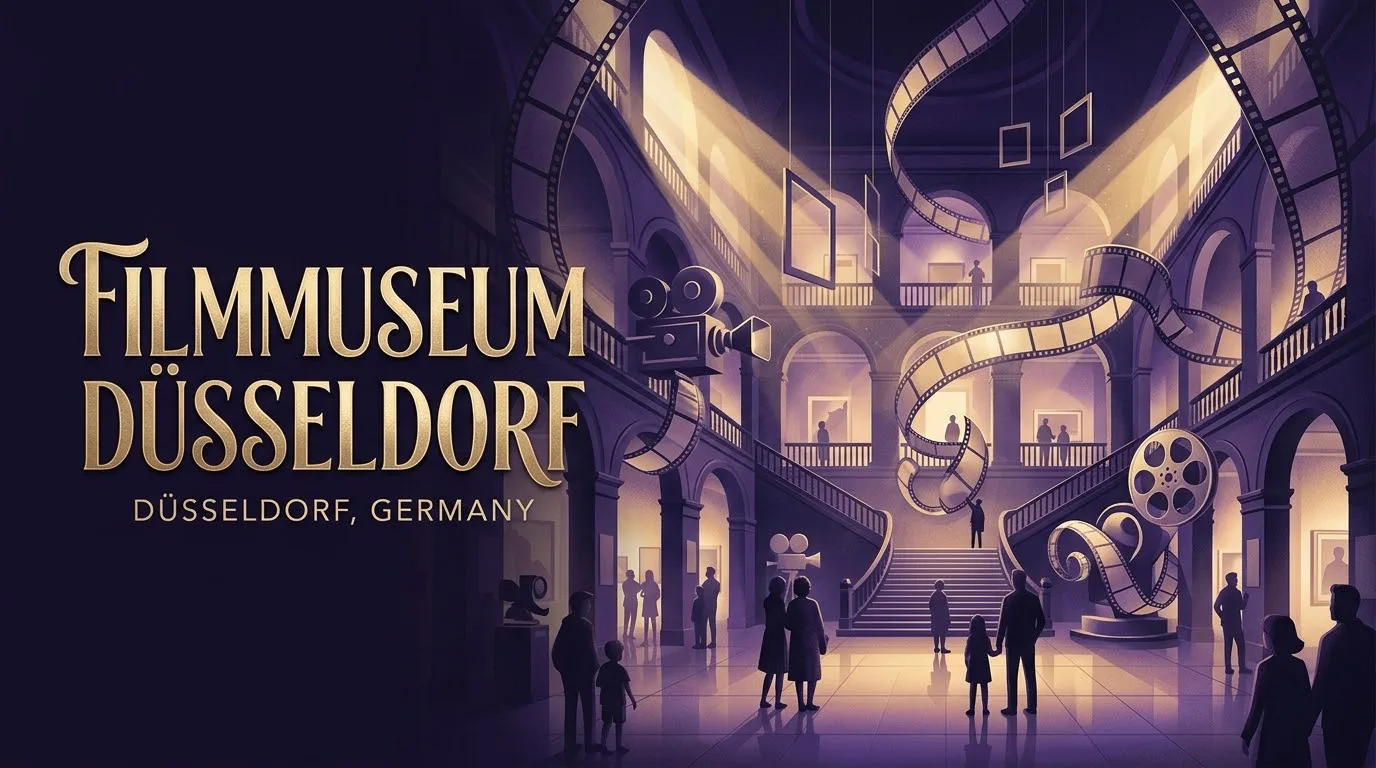
Filmmuseum Düsseldorf is one of the few museums in Germany devoted entirely to the history of the moving image, and at the same time the only regional film archive in North Rhine-Westphalia. Housed in the historic Palais Wittgenstein in Düsseldorf's old town, its roughly 2,200 square metre permanent exhibition traces a path from the optical precursors of cinema through the invention of cinematography to the digital special effects of today. The museum is also home to the Black Box, its own arthouse cinema with a daily changing programme, as well as an extensive archive holding more than 30,000 film copies. Anyone curious about how mechanical peepshows developed into the art form of film, and what role North Rhine-Westphalia has played in German film history, will find an unusually lively and interactive answer at Filmmuseum Düsseldorf. Despite its focus on the technical history of cinema, the museum deliberately aims at a broad audience: low admission prices, numerous hands-on stations and a dedicated education programme for school groups make Filmmuseum Düsseldorf a rewarding destination for families and film novices alike.
History of Filmmuseum Düsseldorf
Filmmuseum Düsseldorf opened in 1993, created out of the city's wish to systematically collect, preserve and communicate the technical and cultural history of film to a broad public. The museum found its home in the Palais Wittgenstein on Schulstraße, a baroque building from the early eighteenth century in Düsseldorf's old town that still houses several municipal cultural institutions today. From the outset, the museum understood itself not merely as a conventional exhibition space but also as an active archive: together with the Filmstiftung NRW, the regional film and media foundation, Filmmuseum Düsseldorf took on the mandatory deposit of numerous films produced in North Rhine-Westphalia, so that the depot on Benzenbergstraße now holds more than 30,000 film copies, ranging from silent film classics to contemporary productions. Alongside the collection, the Black Box developed into its own arthouse cinema, conceived from the start as a place for retrospectives, themed film series and rediscoveries outside the commercial mainstream. Over the years the permanent exhibition has been reworked several times and expanded with interactive stations and a reconstructed film studio, making the technology and magic of cinema accessible to younger visitors as well. Today, Filmmuseum Düsseldorf is considered one of the most distinctive film institutions in the Rhineland and works closely with schools, filmmakers and other archives.
Highlights of Filmmuseum Düsseldorf
The tour through the permanent exhibition at Filmmuseum Düsseldorf begins with the optical toys and devices that preceded cinema itself: the magic lantern, the phenakistoscope, the zoetrope and the thaumatrope show how people tried to simulate movement through still images long before film was invented. From there, the exhibition moves on to the actual invention of cinematography at the end of the nineteenth century, with historic cameras, projectors and accessories that trace the technical shift from silent film to sound and later to colour. A reconstructed film studio illustrates how sets, lighting and camera angles work together, while a dedicated section on special effects explains trick techniques from analogue model-making to early digital methods. The museum places particular emphasis on the film history of North Rhine-Westphalia: original props, costumes and documents recall productions made in the region and Düsseldorf's role as a centre for film production and funding. Many stations are interactive, allowing visitors to try simple trick shots themselves or set historic devices in motion with a hand crank, which makes the museum especially appealing to families with children. The permanent exhibition is complemented by changing temporary exhibitions on individual filmmakers, genres or technical themes. Directly attached is the Black Box, the museum's own cinema, which screens classics, director retrospectives and curated film series every day, extending the museum experience with a lively, curated film programme. A small but carefully curated section is also devoted to early curiosities such as peep-show boxes and panorama images, which were shown as popular precursors of the moving image in fairground booths and salons during the nineteenth century, drawing a direct line from sideshow entertainment to the modern cinema experience.
Opening Hours, Tickets & How to Get to Filmmuseum Düsseldorf
Filmmuseum Düsseldorf, at Schulstraße 4, 40213 Düsseldorf, is open on Wednesdays from noon to 9pm and from Thursday to Sunday and on public holidays from noon to 6pm; it is closed on Mondays and Tuesdays, as well as on certain holidays such as Carnival Tuesday, 1 May and over the Christmas and New Year period. Admission to the permanent exhibition costs 5 euros for adults and 2.50 euros reduced; children and teenagers under 18, young adults up to 21, and people with a degree of disability of at least 80 percent enter free of charge, as do holders of the Art:Card, the Düsselpass and the DüsseldorfCard. Screenings at the Black Box are charged separately: 7 euros regular, 5 euros reduced, 4 euros with an annual pass, while visitors up to 21 also enter free; an annual Black Box pass costs 18 euros, or 6 euros at the reduced rate. By public transport, light rail lines U70 to U79 and U83, along with several bus lines, stop at Heinrich-Heine-Allee, just a short walk from the museum in the old town. Drivers will find parking at the Parkhaus Altstadt, accessible via the Rheinufertunnel, or at the Parkhaus Carlsplatz. For Black Box screenings, booking ahead by phone or online is recommended due to limited seating.
Attractions Near Filmmuseum Düsseldorf
Its location in the heart of the old town makes Filmmuseum Düsseldorf an ideal piece of a day combining culture and traditional pubs. Just a few steps away is the Hetjens-Museum, housed in the same historic building complex, which traces the history of ceramics from antiquity to the present, making the two museums easy to combine in a single afternoon. The Burgplatz, with the Schlossturm tower and the Basilica of St. Lambertus, as well as the Rhine embankment promenade, are also only a short walk away and invite a view of the river after the museum visit. The densely packed old town is also lined with numerous traditional Altbier breweries, where a museum visit can be rounded off comfortably with a freshly tapped Altbier. Art lovers can reach Kunstsammlung Nordrhein-Westfalen K20 on Grabbeplatz within a few minutes' walk, while Museum Kunstpalast at the Ehrenhof and the Aquazoo in the Nordpark are also easily reachable with a short ride. Visitors wishing to continue exploring Düsseldorf's cultural scene after the museum will find the Kunsthalle Düsseldorf on Grabbeplatz, which regularly hosts exhibitions of contemporary art, another worthwhile stop in the immediate neighbourhood.
Where to stay in Dusseldorf, Germany
Compare current hotel prices and find the right place to stay.