Altstadt Kaiserswerth
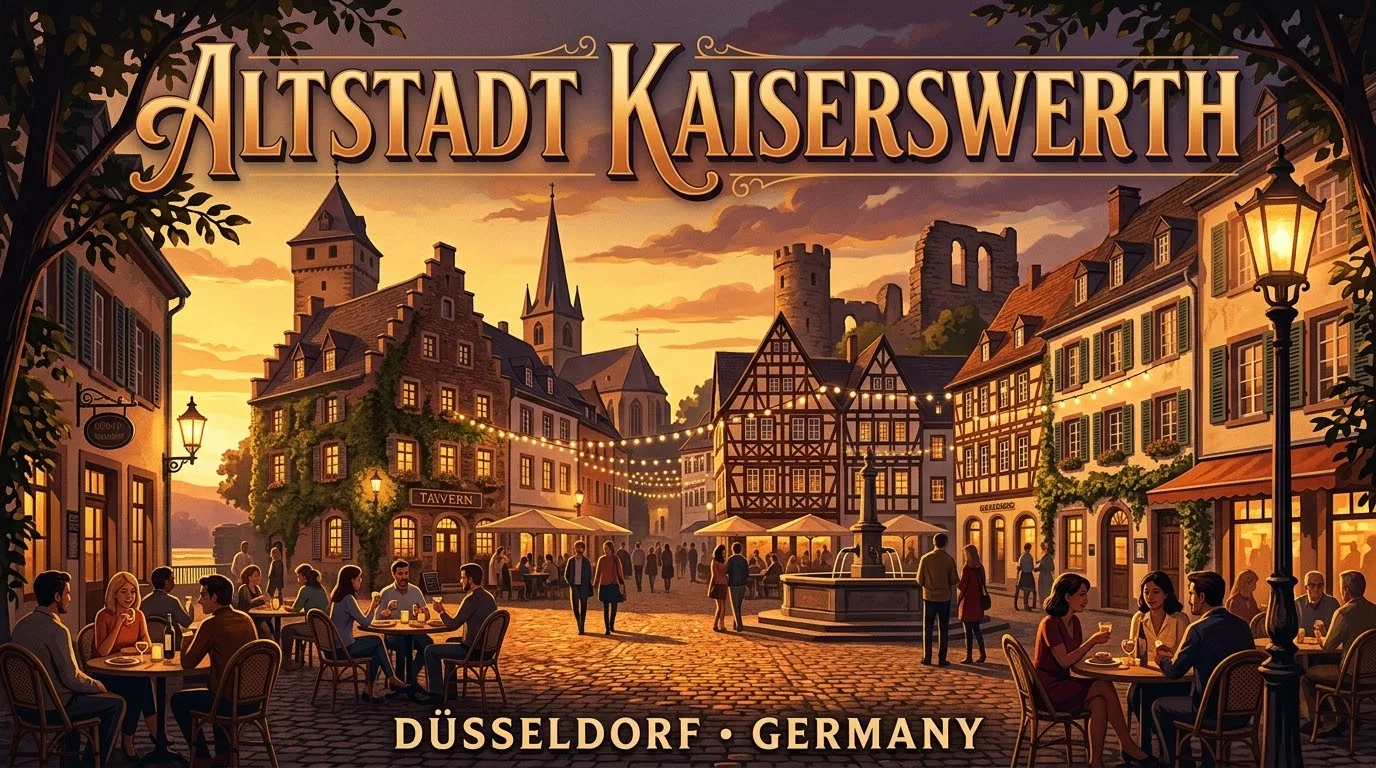
Kaiserswerth lies on the northern bank of the Rhine in Düsseldorf and is considered the oldest, and at the same time most distinctive, of the city's fifty districts. Altstadt Kaiserswerth differs noticeably from Düsseldorf's central Altstadt at first glance: instead of densely packed brewery lanes, visitors find narrow, cobblestone streets, low gabled houses, and an almost village-like calm reminiscent of a medieval small town. The settlement grew up around a monastery founded even before Düsseldorf itself existed, and it remained politically and economically independent for centuries before finally being incorporated into Düsseldorf in 1929. This long independence is still legible in the townscape today and makes Altstadt Kaiserswerth one of the historically richest places in the entire city of Düsseldorf.
History of Altstadt Kaiserswerth
The history of Kaiserswerth begins considerably earlier than that of Düsseldorf itself: between 695 and 700, the Anglo-Saxon monk Suitbert founded a Benedictine monastery on a Rhine island, which is why the settlement was initially called "Suitbertuswerth" - "Werth" meaning island in Middle High German. In 1045, Emperor Henry III had an imperial palace, the Kaiserpfalz, built here, which eventually gave the settlement its lasting name "Kaiserswerth," meaning "the Emperor's island." In 1145, King Conrad III granted the settlement the rights of a Reichsstadt, an imperial city, securing centuries of independent market and administrative privileges that are still traceable today in the tight, historically grown network of lanes at its center. Among the best-known events in the settlement's history is the so-called Coup of Kaiserswerth in 1062, when Archbishop Anno II of Cologne abducted the young King Henry IV from the palace in order to seize the regency for himself. Several sieges followed in the 13th century amid dynastic conflicts, before the settlement came under the control of the Archbishopric of Cologne in 1424. A particularly notable chapter in its more recent history is the Kaiserswerther Diakonie, founded in 1836 by pastor Theodor Fliedner as one of the first modern training institutions for nursing in Europe; in 1850, the later world-famous Florence Nightingale completed a multi-month training stay here before going on to shape modern nursing in England and far beyond. This connection gives Kaiserswerth a significance in the history of medicine that reaches well beyond the boundaries of Düsseldorf.
Highlights of Altstadt Kaiserswerth
The heart of Altstadt Kaiserswerth is the Suitbertus-Stiftsplatz, a small marketplace framed by historic gabled houses that still serves as the social center of the district today. From here, narrow, cobblestoned lanes such as Klosterstraße or Kaiserswerther Markt branch off, lined with small boutiques, wine bars, and long-established inns set within historic buildings. The low houses, often only two or three storeys high, with their rendered or brick-clad façades, create a townscape that deliberately contrasts with the dense, urban character of Düsseldorf's central Altstadt and instead preserves the feel of a grown Rhine riverside town. Along the Rhine, a quiet promenade invites visitors to stroll while watching passing cargo ships and looking across to the opposite bank, while numerous cafés and restaurants with terraces bring the river directly into everyday life. Especially in the summer months, the marketplace and the riverside promenade turn into lively meeting points without losing the characteristic calm that defines Kaiserswerth. Of particular architectural and historical interest is also the site of the Kaiserswerther Diakonie, with its 19th-century brick clinic and training buildings, which remains active today as a diaconal institution with a hospital, nursing schools, and social services, and which commemorates Florence Nightingale's training period here every year. Strolling through the lanes, visitors repeatedly come across small plaques and historic building inscriptions that keep alive the long history shaped by the monastery, the imperial palace, and the free imperial city. Altogether, Altstadt Kaiserswerth combines a medieval townscape, a riverside setting on the Rhine, and a chapter of European medical history within a very small area - a combination that makes it one of the most appealing historic districts in all of Düsseldorf.
Opening Hours, Tickets & How to Get to Altstadt Kaiserswerth
As a living residential and commercial district, Altstadt Kaiserswerth can be explored freely and without charge at any time of day or year, since it consists of public streets rather than an enclosed, ticketed site. Only individual facilities within the district, such as museums, churches, or private shops, keep their own opening hours, while the lanes, the Suitbertus-Stiftsplatz, and the Rhine promenade remain accessible around the clock. For a relaxed walk, the late morning and early afternoon hours are recommended, when shops and restaurants are open but the district is not yet too busy. By public transport, Kaiserswerth is well connected to central Düsseldorf via several Rheinbahn bus lines that run close to the historic center; the journey from downtown typically takes around 20 to 30 minutes. Drivers will find limited, mostly fee-based parking on the streets around the old town, with higher demand expected on weekends and in fine weather. Travelling by bicycle along the Rhine cycle path is also popular, since the route upstream from the city center is flat and well maintained. Because Altstadt Kaiserswerth is accessible year-round, a visit is worthwhile both in summer, when outdoor dining along the Rhine invites visitors to linger, and in winter, when the quiet lanes convey an atmospheric, tranquil impression of this historic district.
Attractions Near Altstadt Kaiserswerth
Right within the historic center lie the ruins of the Kaiserpfalz Kaiserswerth, once expanded by Emperor Frederick Barbarossa into one of the mightiest toll fortresses on the Rhine, and still an impressive monument to visit today despite its partial destruction in 1702. Just a few steps away stands the St. Suitbertus Basilika, built in the 13th century, which houses the shrine of the local patron saint and ranks among the most significant Romanesque-Gothic church buildings on the Lower Rhine. Along the Rhine promenade, there are lovely views across the river to the meadows on the opposite bank, making it an excellent spot for an extended walk or bike ride. Visitors with more time can continue on to the nearby district of Angermund, with Schloss Heltorf and its expansive landscape park, only a short trip away. Heading south, the Rhine cycle path leads directly toward downtown Düsseldorf and the Altstadt, making it easy to combine a visit to Kaiserswerth with a longer tour along the riverbank.
Where to stay in Dusseldorf, Germany
Compare current hotel prices and find the right place to stay.