Ackerstraße
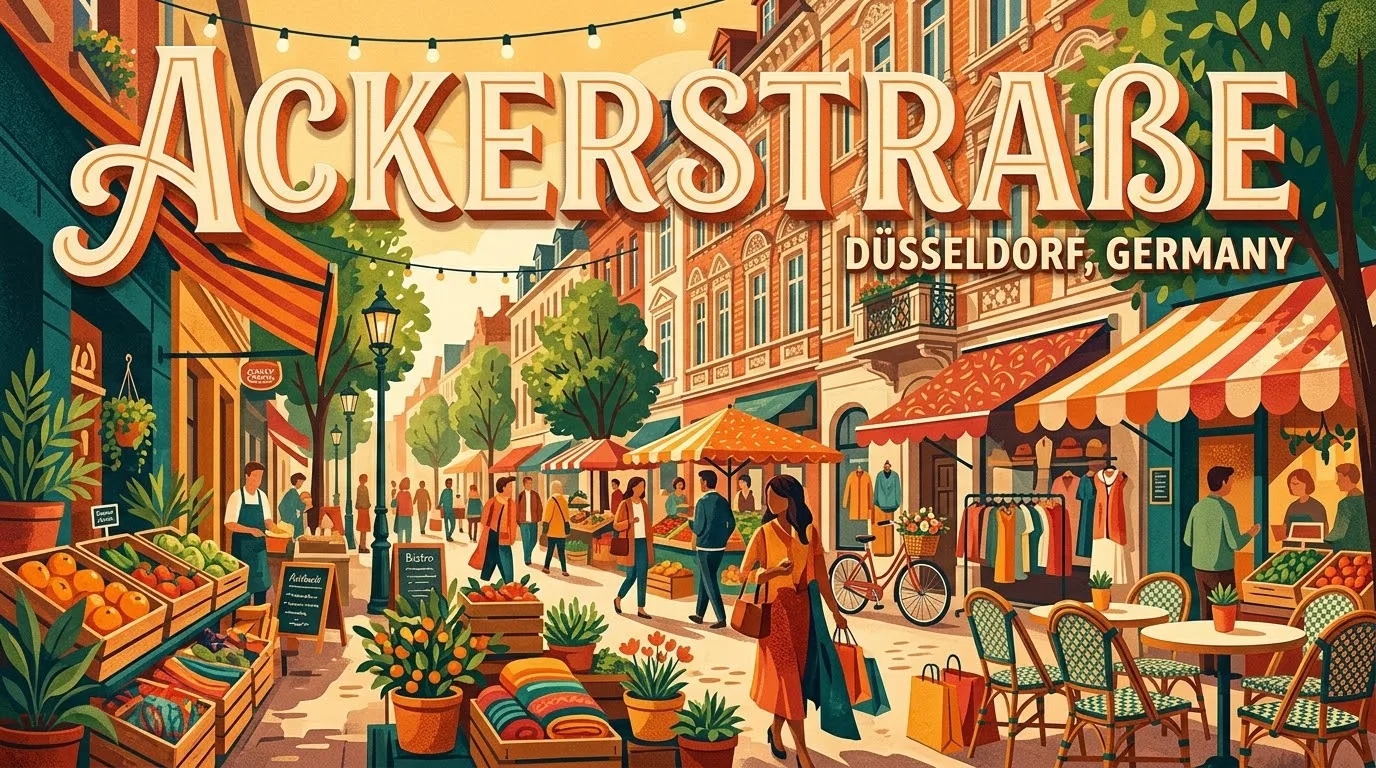
Ackerstraße is the beating heart of Flingern-Nord and one of Düsseldorf's most beloved addresses for anyone who prefers shopping away from the big chains. Rather than international flagship stores, the street is lined with independent boutiques, small local fashion labels, vintage and record shops and inventive concept stores, all framed by cafés, bars and restaurants that keep the street busy throughout the day. Ackerstraße is the most visible symbol of the transformation Flingern-Nord has undergone over the past two decades: from a down-to-earth working-class quarter into one of Düsseldorf's most creative and urban districts. Visiting Ackerstraße means experiencing genuine local character, meeting Düsseldorf designers, gallerists and restaurateurs who have built their own ideas from scratch, and getting a glimpse of the city far removed from the polished Königsallee. Because the street is dominated almost entirely by independently run shops, it rewards an unhurried, plan-free stroll from one shop window to the next. Compared with the nearby Kiefernstraße, known chiefly for its street art, or the elegant Königsallee in the city centre, Ackerstraße offers a distinctly different, more down-to-earth shopping experience: small-scale, personal, and clearly stamped with the character of each individual owner.
History of Ackerstraße
Ackerstraße lies in the district of Flingern-Nord, which historically grew as a down-to-earth working-class quarter just east of Düsseldorf's city centre. For many generations the area was shaped by small craft workshops, factory workers and simple tenement buildings, whose brick facades still define the streetscape today. As traditional industry and small manufacturing declined from the 1980s and 1990s onward, vacant shop units and affordable rents in Flingern-Nord gradually began attracting young creatives, artists and designers. Ackerstraße and the surrounding streets around Hermannplatz slowly evolved from a purely residential street into a lively hub for gastronomy, fashion and art. This transformation accelerated noticeably from the 2000s onward, as more and more independent fashion labels, second-hand and vintage shops and galleries moved into the affordable retail spaces, while younger, well-educated residents simultaneously moved into Flingern-Nord and reshaped the district for good. Urban researchers often describe this process as a classic case of gentrification, which on one hand brought Ackerstraße rising rents and noticeable structural change, but on the other hand also brought the cultural diversity and creative energy that define the district today. International galleries such as Sammlung Philara and Galerie Konrad Fischer, which established themselves in the immediate vicinity of Ackerstraße, turned Flingern-Nord into a recognised centre of the contemporary art trade, further sharpening the street's profile as a creative shopping destination.
Highlights of Ackerstraße
The biggest highlight of Ackerstraße is the sheer density of owner-run shops packed into a relatively short stretch. Instead of faceless chain stores, visitors find small fashion boutiques selling self-designed collections, carefully curated vintage and second-hand shops where genuine bargains occasionally turn up, and independent record stores stocking rarities and new releases across electronic music, indie and hip-hop for vinyl enthusiasts. In between sit original concept stores combining furniture, accessories, art prints and design objects from local makers under one roof, as well as small studios where jewellery or ceramics are crafted on site. The food and drink scene along the street is at least as varied as the retail offering: specialty coffee roasters, vegan cafés, small wine bars and international street-food spots make it easy to combine shopping with a relaxed break at any point. The mix of old and new is particularly appealing: modest late-19th-century buildings with historic facade details stand between the shops, while creative workshops and small galleries hide in the courtyards behind them. In the evening, Ackerstraße turns into a popular nightlife stretch as bars and pubs open their outdoor seating and the street fills with the relaxed, unpretentious energy typical of creative Flingern. Saturdays tend to be especially busy, as both locals and visitors from further afield fill the shops and cafés. Anyone hunting specifically for second-hand fashion or vinyl should allow some extra time, since many of the small shops have understated storefronts and their best pieces are often found only by browsing carefully.
Opening Hours, Tickets & How to Get to Ackerstraße
Ackerstraße is a public street, so visiting it is, in principle, free and possible at any time. The individual boutiques, shops and cafés, however, keep their own opening hours, which can vary considerably: most shops typically open around 10 or 11 a.m. and close in the early evening around 6 to 7 p.m., while cafés and bars often stay open well into the late evening. On Sundays, most shops remain closed due to Germany's statutory shop-closing regulations, although cafés and restaurants usually stay open as normal. A relaxed shopping stroll is therefore best planned for a weekday morning or afternoon between Tuesday and Saturday. Ackerstraße sits centrally in Flingern-Nord and is easily reached from Düsseldorf's city centre by public transport. Several Rheinbahn tram and bus lines serve the immediate area, including stops around Hermannplatz, from which Ackerstraße is just a short walk away. From Düsseldorf's main railway station, the tram journey usually takes only around ten minutes. Cycling from the city centre is also straightforward, taking roughly fifteen to twenty minutes, since Flingern-Nord borders the centre directly to the east. Visitors arriving by car will typically find parking in the surrounding residential streets, though spaces can be limited on weekends and in the evening.
Attractions Near Ackerstraße
Several further highlights of Flingern are an easy walk from Ackerstraße. Just a few minutes away lies Kiefernstraße, whose house facades are covered in striking street art for more than 200 metres and which ranks among the most unusual photo spots in the city. Nearby Hermannplatz is a popular meeting point with cafés and small restaurants that fill up especially on sunny days. Art lovers should visit the area's renowned galleries, including Sammlung Philara, which displays contemporary art inside a former public swimming pool, along with other established galleries that have made Flingern a recognised hub of the international art trade. The adjoining district of Düsseltal, with its well-kept late-19th-century streets and small boutiques, also invites a further stroll. Those wanting to experience classic big-city atmosphere afterward can reach Düsseldorf's city centre and the Königsallee from Ackerstraße in around fifteen to twenty minutes on foot, or within a few minutes by tram, making it easy to split a day between creative Flingern and the urban elegance of the city centre.
Where to stay in Dusseldorf, Germany
Compare current hotel prices and find the right place to stay.