Mahnmal für die Opfer des Nationalsozialismus
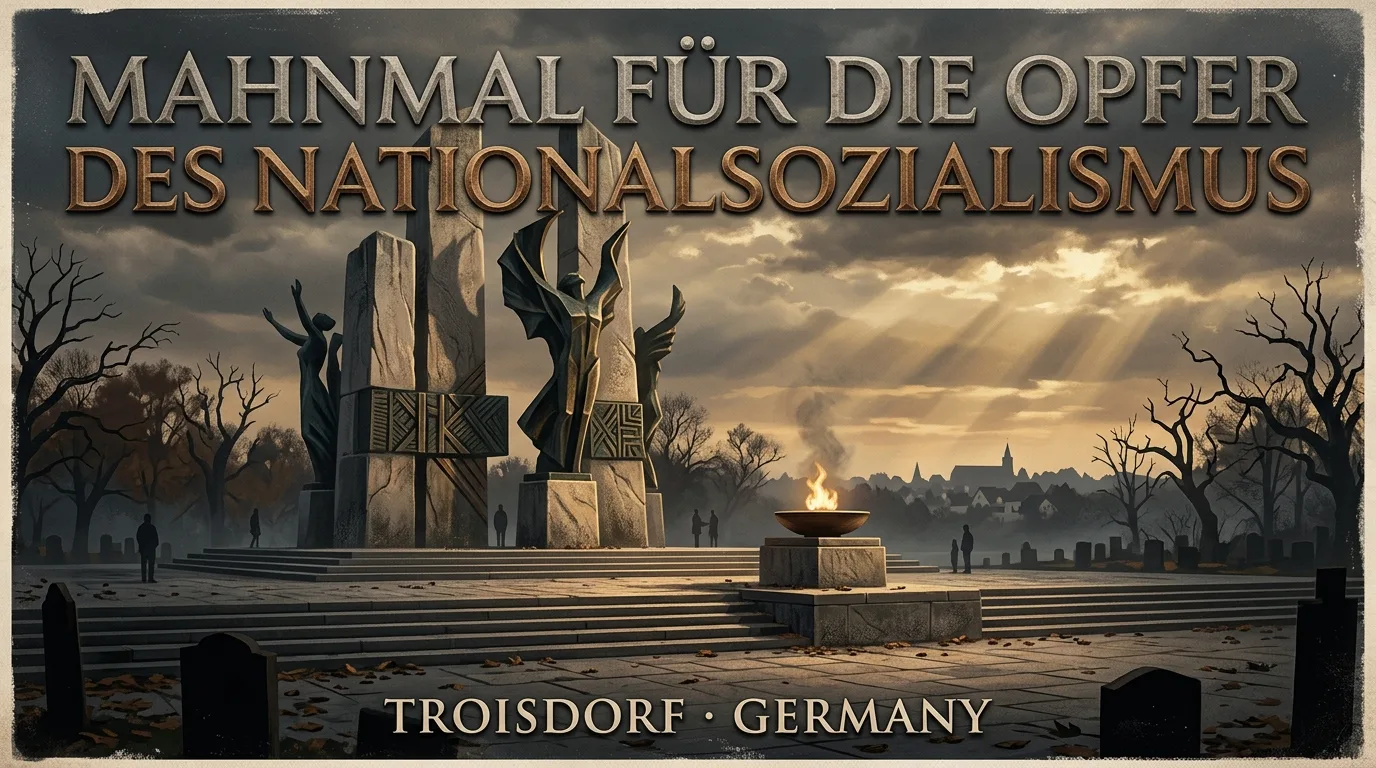
The Mahnmal für die Opfer des Nationalsozialismus on Jahnplatz in Troisdorf is a quiet yet powerful place of remembrance in the heart of the city. This memorial stele commemorates the people who were persecuted, disenfranchised and murdered under National Socialist rule between 1933 and 1945. In a town shaped by industry and migration, the memorial serves as an important anchor of local memory culture. Every year on 9 November, the anniversary of the November pogroms, citizens, politicians and representatives of Jewish communities gather here for wreath-laying ceremonies and speeches. The site invites quiet reflection and encourages visitors to consider the responsibilities of the present. Anyone visiting Troisdorf who wants to understand the region’s history should not miss this square – it connects local fates with the larger European tragedy of the twentieth century and underlines why remembrance remains essential today.
History of Mahnmal für die Opfer des Nationalsozialismus
The Mahnmal für die Opfer des Nationalsozialismus stands on Jahnplatz in Troisdorf-Mitte and bears the inscription “Den Opfern der nationalsozialistischen Gewaltherrschaft 1933–1945” (To the victims of National Socialist tyranny 1933–1945). It is a memorial stele dedicated to the systematic persecution and murder of people under the Nazi regime. Before 1933, Jewish families lived in Troisdorf and the later districts, including the names Cahn, Meier, Bernauer, Brünell, Jonas, Levy, Neumann, Pins, Sommer and Wolf. At least 54 women, men and children from the present-day municipal area were persecuted, fled abroad or were deported and murdered. The November pogrom of 9–10 November 1938 marked a decisive turning point here as well: synagogues and shops were destroyed, people were publicly humiliated, and the systematic annihilation of Jewish life began.
Remembrance culture in Troisdorf developed gradually after 1945. For a long time, economic reconstruction and industrial growth took centre stage. Only in later decades did the town engage more intensively with its Nazi past. The memorial on Jahnplatz became a central site of public commemoration. For many years the mayor has laid a wreath here on 9 November. At these ceremonies, representatives of the Jewish community of Bonn often speak, and prayers such as “El male rachamim” are recited. The city also supports projects such as the laying of Stolpersteine (stumbling stones) and the publication of brochures on Jewish life in Troisdorf. In this way the memorial forms part of a living culture of remembrance that honours the victims and stresses the responsibility of today’s society to oppose antisemitism, racism and threats to democracy.
Troisdorf’s industrial character also played a role: companies such as Dynamit Nobel employed forced labourers during the war. The memorial on Jahnplatz stands for all victim groups – Jewish citizens, political opponents, forced labourers and others – and keeps the memory of this dark chapter alive.
Highlights of Mahnmal für die Opfer des Nationalsozialismus
The Mahnmal für die Opfer des Nationalsozialismus is a simple, dignified stone stele. Its clear form and direct inscription make a strong impression without elaborate gestures and invite visitors to pause. Its location on Jahnplatz, opposite the music school and close to the town centre, makes the memorial part of everyday life and easily accessible. It is not a remote memorial site but a square that people pass every day – and that is precisely what gives it its power.
Especially moving are the annual commemorations on 9 November. Citizens gather, the mayor delivers a speech, and a cantor from the Jewish community of Bonn often accompanies the ceremony with a prayer. In some years Klezmer music or other musical contributions are included. The events are public and free of charge. They link local history with the broader remembrance of the Shoah and Nazi crimes.
Another highlight is the proximity to other memorial signs in Troisdorf. Nearby there are Stolpersteine that recall individual fates, as well as school projects that research Jewish families such as the Meiers in Sieglar. The memorial itself is deliberately restrained and avoids monumental forms. This very restraint makes it powerful: it does not demand spectacular staging but attention and respect. Visitors can read the inscription, pause and connect the town’s past with the present. The square is also suitable for quiet moments outside official commemorations and encourages reflection on the meaning of democracy and human rights.
Its central location makes it easy to include the memorial in a walk through the town centre. From here important municipal facilities are quickly reached, and the site itself remains accessible at all times. For historically interested visitors the combination of the memorial, the Stolpersteine and the city’s information materials is particularly valuable.
Opening Hours, Tickets & How to Get to Mahnmal für die Opfer des Nationalsozialismus
The Mahnmal für die Opfer des Nationalsozialismus stands in public space on Jahnplatz and is therefore freely accessible around the clock. There are no opening hours in the conventional sense and no admission fee. A visit is possible at any time and free of charge. A visit on 9 November is especially recommended, when the city holds its official commemorative event with wreath-laying and speeches that bring the place to life.
Getting there is straightforward. Troisdorf is located in the Rhein-Sieg district and is well connected to the transport network. By train one reaches Troisdorf station; from there Jahnplatz is about a 10- to 15-minute walk. Bus lines stop nearby, including at Römerstraße or Krankenhaus. By car Troisdorf is easily reached via the A59 and the B8. Parking is available in the town centre, though spaces can be limited at peak times. Cyclists will find bicycle racks in the vicinity.
As an open square the site is barrier-free. No tickets or advance booking are required. Groups or school classes may wish to contact the city of Troisdorf in advance for current commemorative dates or accompanying information materials. The city occasionally provides brochures on Jewish life in Troisdorf that usefully complement a visit. Jahnplatz lies centrally and can easily be combined with other sights in the town centre.
Attractions Near Mahnmal für die Opfer des Nationalsozialismus
Within a short walk of the Mahnmal für die Opfer des Nationalsozialismus lie several worthwhile destinations. Only a few minutes away is Burg Wissem with the Picture Book Museum, one of the few specialised museums of its kind in Germany. The castle itself and the coach house frequently serve as venues for lectures and commemorative events. The town hall and the municipal hall are also nearby and reflect the modern administrative and cultural history of the town.
The centre of Troisdorf with its pedestrian zone, Fischerplatz and further public artworks invites a longer stay. Those who wish to engage more deeply with local history can seek out the Stolpersteine in various districts that commemorate individual victims. The Carnival Museum and other cultural institutions are likewise within easy reach. For walks the area around the Prinzenwäldchen and Parkstraße with its historic villas is attractive. Troisdorf itself is a good starting point for excursions into the Rhein-Sieg district and to Bonn or Cologne, both easily reachable by public transport. In this way a visit to the memorial can be combined with a broader exploration of the town and the region.
Where to stay in Troisdorf, Germany
Compare current hotel prices and find the right place to stay.