Dicker Mann Skulpturu
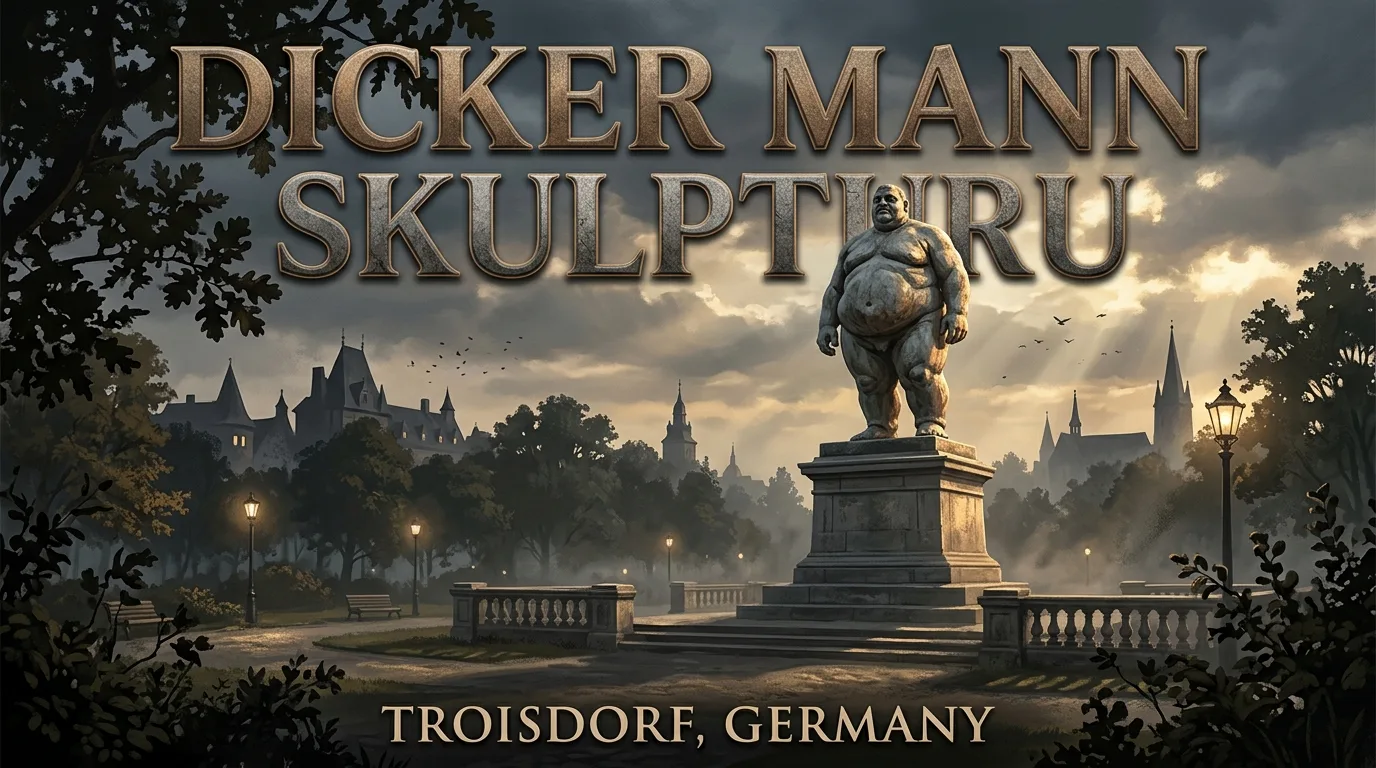
The Dicker Mann Skulpturu is one of the best-known and most debated bronze sculptures in the public space of Troisdorf. Created by Professor Karl-Henning Seemann, the life-size nude figure of a corpulent man has stood on Fischerplatz in the heart of the pedestrian zone since the late 1980s. With its sagging belly, drooping shoulders and almost caricature-like appearance, the sculpture polarised opinions from the very beginning. Today it is regarded as a firm artistic landmark of the city and a popular photo motif for locals and visitors alike. The figure challenges the viewer to engage with it and turns the square into a lively meeting place where art, everyday life and history intersect. Its deliberate imperfection and rejection of classical ideals of beauty make it a unique example of modern sculpture in an urban setting.
History of Dicker Mann Skulpturu
The Dicker Mann Skulpturu was created between 1967 and 1971 in the studio of Karl-Henning Seemann. Born in Wismar in 1934 and later a professor at the State Academy of Fine Arts in Stuttgart, the artist based the figure on a real model: a 35-year-old worker from Wolfsburg whose body had taken on its distinctive form through hunger, thirst and a back condition. Seemann never sought the idealised human form. Instead he focused on the everyday and the imperfect. His figures were intended to make the tensions and forces of the body visible and to provoke a dialogue with the viewer.
In 1987 or 1988 the bronze statue first arrived in Troisdorf as part of the “Troisdorfer Kunstgang”. Together with local gallery owners and the city administration, various works of art were presented throughout the city centre. The figure initially stood in a fountain next to the former civic centre, facing the railway station. Public reaction was intense. Critics called the naked, fat figure a disgrace to art. Others saw in it a courageous and honest representation of the human being. Gallery owner Giovanni Vetere suggested purchasing the sculpture permanently. A fundraising campaign raised 55,000 Deutschmarks within a few weeks. The city bought the work, and at Seemann’s request the figure was turned 180 degrees so that the belly now faces the passers-by. Since then the Dicker Mann Skulpturu has been inseparable from Fischerplatz and has transformed from a scandalous object into a beloved symbol of Troisdorf.
Highlights of Dicker Mann Skulpturu
The most striking feature of the Dicker Mann Skulpturu is its consistent rejection of classical beauty ideals. The bronze shows a man with a strongly protruding belly, drooping shoulders and a posture that expresses exhaustion and resignation. The physical tension present in many of Seemann’s other works is largely absent. It is precisely this slack, caricature-like appearance that makes the figure so memorable. It stands on a stone slab in front of the fountain by Wilhelm Valder and shares the square with other artworks, including the stone Life Column by Giovanni Vetere.
The sculpture invites people to linger and observe. Passers-by stop, take photographs, discuss or sit on the surrounding benches. On market days, especially on Thursdays during the weekly market and at the evening markets from May to October, the square comes alive. The figure then acts as a silent observer of urban life. Its materiality – the smooth, dark bronze – changes with the light and the weather. In sunshine it gleams; in rain it appears even heavier and more earthy. The Dicker Mann Skulpturu is not a classical monument but a constant dialogue partner. It challenges the viewer to confront their own body image, social norms and the role of art in public space. This is why it has remained relevant and fascinating for decades.
Opening Hours, Tickets & How to Get to Dicker Mann Skulpturu
The Dicker Mann Skulpturu is a freestanding work of art in public space and is therefore freely accessible around the clock. There are no opening hours and no admission fee. Fischerplatz lies in the middle of Troisdorf’s pedestrian zone and can be visited at any time. The sculpture is best seen during the day when the light reveals the details of the bronze, or in the evening when the square lighting creates a special atmosphere.
Getting there by public transport: Troisdorf railway station is only a few minutes’ walk away. From there the route leads through the pedestrian zone directly to Fischerplatz. Buses stop nearby, and the pedestrian zone is barrier-free. By car, Troisdorf is reached via the A59 or A3 motorways. Parking is available in the Kaufland/Cineplex multi-storey car park (Theodor-Heuss-Ring) or in the Galerie car park on Wilhelmstraße. The square itself is car-free. Cyclists can reach the site easily via the region’s well-developed cycle paths. The navigation address is Hippolytusstraße or Am Bürgerhaus, 53840 Troisdorf. The Dicker Mann Skulpturu is therefore one of the most easily accessible artworks in the city.
Attractions Near Dicker Mann Skulpturu
Right on Fischerplatz stands the Life Column by Giovanni Vetere, a stone stele that thematises the cycle of birth, life and death. A few metres away is the sculpture “Aufbruch” by Jörg Umrath with its blasted boulder. The entire pedestrian zone is rich in further artworks and fountains, including the water steps on Kölner Platz. Only a short walk away is Burg Wissem with Europe’s unique Picture Book Museum and the Museum of City and Industrial History. The Wahner Heide, one of the largest nature reserves in North Rhine-Westphalia, is easily reached by bicycle or bus and offers extensive hiking trails. The Siegaue wetlands and Rotter See are also within easy reach and complete a visit to the Dicker Mann Skulpturu into a varied day programme.
Where to stay in Troisdorf, Germany
Compare current hotel prices and find the right place to stay.