Schloss Arff
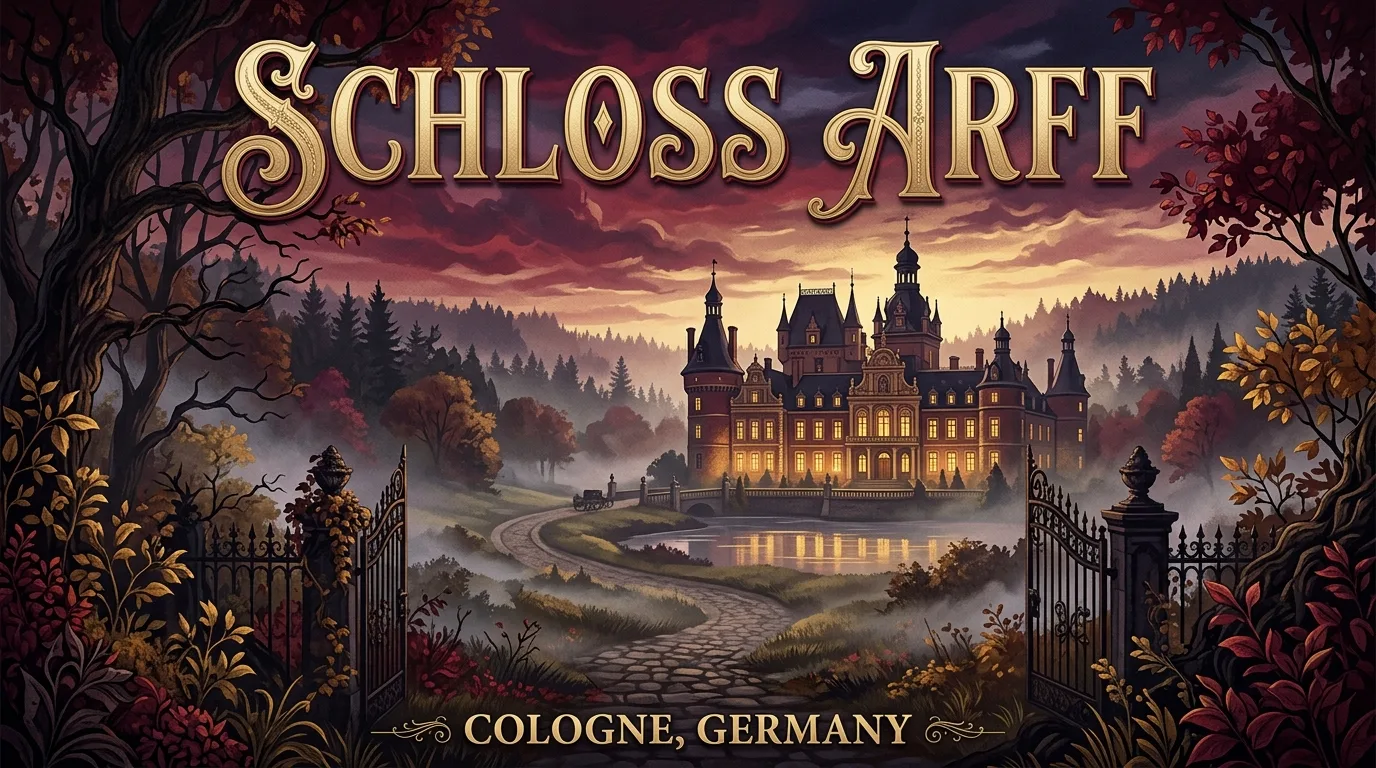
Set among gentle fields and old tree groves between Cologne and Dormagen, Schloss Arff is a Baroque manor house that officially belongs to Cologne's Roggendorf/Thenhoven district yet feels like a world of its own. Driving along the long approach through the park-like grounds, visitors quickly sense that centuries of history have settled into this place: the roots of the estate reach back to the Middle Ages, when a fortified noble residence stood on the site, while the current castle building took shape in its elegant, French-inspired form during the 18th century. Schloss Arff is one of the quieter yet architecturally remarkable noble estates in the countryside around Cologne, and today it is used primarily as a venue for weddings, celebrations, and film productions. For visitors interested in manor houses, rural nobility, and the history of the Rhineland, Schloss Arff is a rewarding destination that combines architecture, landscape, and nearly seven centuries of history in a compact and approachable setting.
History of Schloss Arff
The first documented mention of a noble residence on this site dates to 1362, when the knights "van der Arffe" are named as owners — a family to whom the estate owes its name to this day. Over the following two centuries, ownership remained within the orbit of Rhenish noble families, until in 1572 Albrecht von Baexen acquired the property through his marriage to Catharina von der Arffe. Like many fortified farmsteads and castles in the Rhineland, Schloss Arff did not escape the turmoil of the Cologne War (Truchsessischer Krieg) of the 1580s: the medieval predecessor building was destroyed during this conflict and had to be substantially rebuilt afterward. A decisive turning point in the building's history came in the 18th century: in 1750, Adam von Blittersdorf sold the estate to the von Buschmann family, who had the present castle built between 1750 and 1755. Responsible for the design was the French architect Michel Leveilly, who deliberately drew on the architectural language of Schloss Falkenlust near Brühl, creating a simplified but stylistically related "maison de plaisance" in the countryside near Cologne. In 1803, ownership passed to the noble von Geyr zu Schweppenburg family, who held the estate across several generations. Finally, in 2015, Caroline and Friedhelm von Landsberg-Velen inherited the property — a family that also operates the Schloss Dankern leisure park and has since invested in the careful upkeep and commercial use of Schloss Arff. This long chain of changing owners, from medieval knightly families to Baroque country nobility, makes Schloss Arff a vivid example of Rhenish property history.
Highlights of Schloss Arff
The present appearance of Schloss Arff is shaped by the Baroque complex built in the mid-18th century: a main residence, a forecourt building, and two parallel agricultural wings that together enclose a clearly structured courtyard. The entire estate was originally surrounded by water features that gave the manor house an additional, almost romantic defensive character; although these moats have largely dried up today, the layout of the former water castle can still be traced across the grounds. Particularly impressive is the expansive landscape park with its old stock of trees, which gives Schloss Arff an almost English, park-like character that contrasts beautifully with the strict, symmetrical architecture of the main building. The interior rooms, several of which are used for events, still show traces of Baroque decoration combined with modern event technology for weddings and celebrations. Schloss Arff is also a sought-after filming location: in 2019 the estate served as a backdrop for the feature film "Louis van Beethoven," which traces the composer's youth in the Rhineland, and in 2023 it was used as a filming location for the ZDF television series "Hameln." This cinematic presence has made Schloss Arff known well beyond the region and demonstrates how well its historic architecture lends itself to very different kinds of productions. Strolling through the park, visitors repeatedly discover small architectural details — portals, window axes, roof shapes — that point back to the original construction period and the influence of Michel Leveilly. Taken as a whole, the estate conveys a coherent picture of how Rhenish country nobility lived, worked, and represented themselves in the 18th century, without striving for the monumentality of the great electoral palaces of the region.
Opening Hours, Tickets & How to Get to Schloss Arff
Schloss Arff is privately owned and used primarily as an exclusive event venue for weddings, corporate functions, and private celebrations; there is no classic museum-style operation with fixed opening hours for individual visitors. Anyone wishing to visit the estate typically gains access to the park and parts of the building as part of a booked event, a guided tour arranged in advance, or occasional open dates; interested visitors should contact the castle's events department directly beforehand, as availability changes depending on the season and the booking calendar. The outdoor grounds and the landscape park can at least partly be viewed from the public approach road and the surrounding field paths without an appointment, which makes for a pleasant short photo stop. The address is Schloß-Arff-Straße 1e, 50769 Köln, in the Cologne district of Chorweiler, between the localities of Roggendorf and Thenhoven. By car, Schloss Arff can be reached within a few minutes via the A57 motorway and well-maintained country roads; the grounds usually offer sufficient parking for event guests. By public transport, the location in rural northern Cologne is somewhat more involved: from central Cologne, it is best to combine a light rail ride to Chorweiler or Dormagen with a connecting bus or taxi transfer into the villages of Roggendorf or Thenhoven. Travelers who want to stay flexible should allow extra time for this "last mile," since bus connections in this rural area are not very frequent.
Attractions Near Schloss Arff
The rural setting of Schloss Arff in northern Cologne opens up attractive excursion options in the surrounding area. Just a few kilometers away lies the Fühlinger See, a popular recreation and watersports area with a regatta course, bathing spots, and paths for walking and cycling, making it an ideal spot to unwind after a visit to the castle. Toward Dormagen, it is worth making a detour to Kloster Knechtsteden, with its striking Romanesque collegiate church, one of the most impressive sacred buildings in the region, which is also regularly used for concerts and cultural events. The Cologne district of Chorweiler itself, known for its distinctive high-rise skyline from the 1970s, offers an exciting architectural contrast to the tranquil Schloss Arff and showcases the full range of Cologne's urban development. Lovers of historic town fortifications will also enjoy a trip to the nearby, fully preserved medieval town wall of Zons, one of the most atmospheric spots on the left bank of the Lower Rhine. Finally, travelers wishing to return to central Cologne can reach Cologne Cathedral and the historic old town in around 20 to 25 minutes by car, rounding off the day with a visit to the city's famous landmarks.
Where to stay in Cologne, Germany
Compare current hotel prices and find the right place to stay.