Markthalle Belgisches Viertel
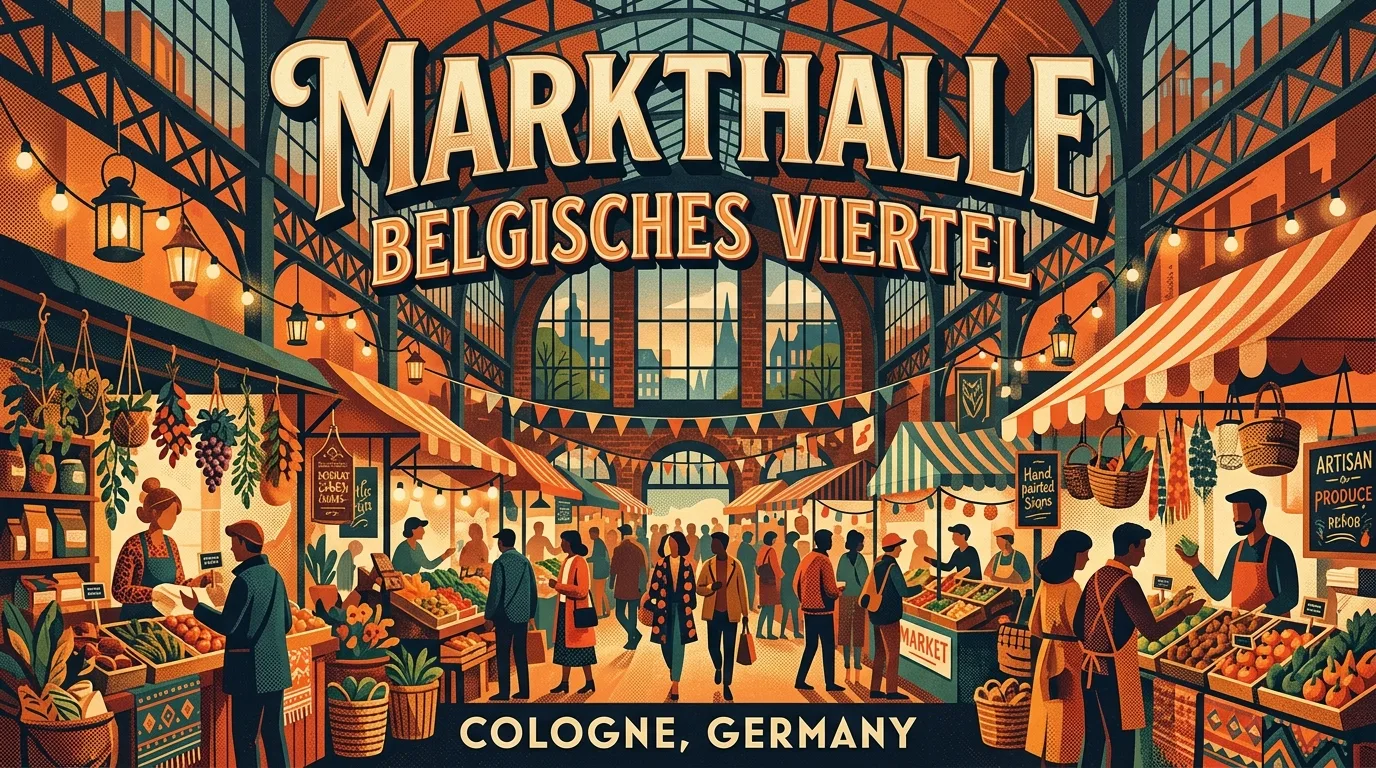
In the heart of Cologne's lively Belgian Quarter, just a short walk from Brüsseler Platz, stands the building once known as Markthalle Belgisches Viertel at Maastrichter Straße 45. Opened in 2018 inside a converted two-storey courtyard, the hall was designed as a gathering place for food lovers, neighbors and strollers: market stalls selling regional vegetables, cheese, sustainably sourced meat and fresh fish stood alongside small food counters and a coffee bar, all under one glass roof. For several years, Markthalle Belgisches Viertel was a fixture for anyone exploring the independent boutiques of Antwerpener Straße or relaxing on Brüsseler Platz. This guide summarizes the concept and history behind Markthalle Belgisches Viertel and, importantly, what visitors should check before planning a dedicated trip, since its current operating status has become uncertain according to the latest available sources, including local press coverage and independent business directories consulted for this guide.
History of Markthalle Belgisches Viertel
Markthalle Belgisches Viertel opened in spring 2018 inside a formerly underused commercial courtyard on Maastrichter Straße, right in the middle of the Belgian Quarter, one of Cologne's trendiest residential and nightlife districts between Rudolfplatz and Barbarossaplatz. The operators converted the two-level courtyard into a market hall with permanent stalls, allowing visitors to shop for groceries by day and eat and drink there in the evening. The timing matched a broader European trend: cities from Rotterdam to Berlin were opening similar market-hall concepts that blended the charm of a traditional farmers market with the buzz of a food court, and Markthalle Belgisches Viertel was among the first of its kind in Cologne. It quickly became popular with residents of the Belgian Quarter and with tourists looking for a break after browsing the boutiques on Antwerpener Straße or Brüsseler Platz. By autumn 2019, however, local media reported structural and safety issues in the basement rooms beneath the two-storey hall, which led to the temporary closure of parts of the building. In the years since, public information about continued operations has become noticeably scarce, and the history of the venue illustrates the broader challenge such food-hall concepts face when they are housed in older buildings.
Highlights of Markthalle Belgisches Viertel
What made Markthalle Belgisches Viertel stand out was the combination of a classic produce market and urban food-hall dining under a single roof. On the ground floor, permanent stalls sold regional vegetables and fruit, a curated selection of cheeses from the Eifel region and the Netherlands, sustainably raised meat, fresh fish, and freshly roasted coffee from a small espresso bar. The architecture was part of the appeal: a light-filled courtyard with a glass roof connected the lower market hall to an upper gallery level with small tables, offering a quieter contrast to the busy main streets of the Belgian Quarter just outside. Visitors particularly valued being able to sample a wide range of specialties in one place, from Mediterranean antipasti to classic Rhenish comfort food, all while watching the neighborhood's street life from inside the hall. The venue also served as a casual meeting point for a late lunch or an after-work snack for people working in the Südstadt or Cologne's city center. For photographers, the mix of exposed brick, steel beams, and colorful market stalls offered plenty of visual interest, quite different from the polished shopping streets of the downtown core. Anyone wanting to explore the Belgian Quarter's independent boutiques, cafés and design shops traditionally used Markthalle Belgisches Viertel as a convenient starting point, since the surrounding streets are all within easy walking distance. Local food bloggers who visited in the hall's early years frequently highlighted the relaxed, market-square atmosphere as a welcome alternative to Cologne's more conventional food courts. Whether this full range of offerings still exists today in the same form cannot currently be confirmed with certainty based on publicly available sources.
Opening Hours, Tickets & How to Get to Markthalle Belgisches Viertel
In the years following its opening, Markthalle Belgisches Viertel was typically open Monday to Saturday from around 10am to 8pm, with individual food stalls often keeping slightly different hours, commonly around noon to 7pm on weekdays and until 8pm on Fridays and Saturdays; the hall was usually closed on Sundays. There was never an admission fee, as it functioned as a freely accessible market and dining area. However, as described above, there is currently no reliable up-to-date confirmation that the venue still operates in this form: the original official website no longer displays the market's content, and independent directories flag the location as possibly permanently closed. Anyone planning a dedicated visit is strongly advised to check by phone or with a current city guide before heading to Maastrichter Straße 45. Regardless of its operating status, the address itself remains easy to reach: take Stadtbahn lines 1, 7 or 9 to Rudolfplatz or Zülpicher Platz and walk a few minutes into the Belgian Quarter, or, if driving, use one of the parking garages around Hohenzollernring, since the narrow residential streets of the quarter offer very limited parking. Travelers combining a Belgian Quarter walk with a visit to the Rudolfplatz cinema district or the shops on Hohenzollernring can easily fit a detour to Maastrichter Straße into the same afternoon, provided they first confirm whether the hall is still welcoming visitors.
Attractions Near Markthalle Belgisches Viertel
Regardless of its current operating status, the location of Markthalle Belgisches Viertel remains an excellent starting point for exploring the Belgian Quarter. A few minutes' walk away is Brüsseler Platz, a popular meeting spot with cafés, bars and the small St. Michael church, whose steps fill with locals picnicking on warm evenings. Antwerpener Straße and Brabanter Straße are lined with independent boutiques, vintage shops and delicatessens worth browsing. Heading west, it's about a ten-minute walk to Rudolfplatz, home to the striking Hahnentor gate tower and the starting point of the Ringe boulevards that lead toward Cologne's main shopping streets. A little further south lies Barbarossaplatz, a hub for buses and trains across the city, while Zülpicher Straße to the northeast connects to the lively student-bar scene near the university district. The Volksgarten, one of Cologne's most attractive historic parks with a pond, weeping willows and a beer garden, is also within walking distance for a relaxing break before heading back into the buzz of the Belgian Quarter.
Where to stay in Cologne, Germany
Compare current hotel prices and find the right place to stay.