Longerich Zentrum
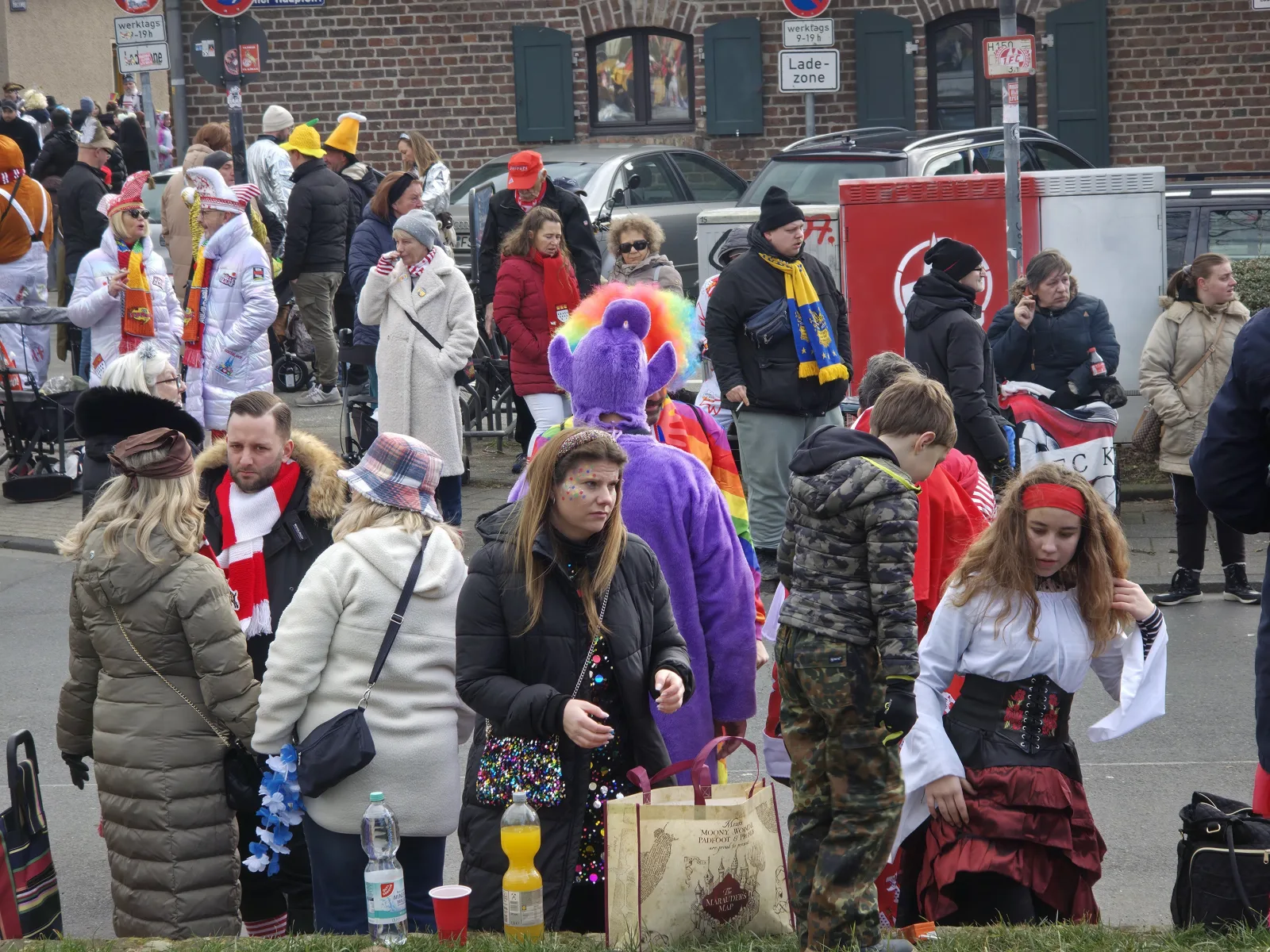
Longerich Zentrum forms the established heart of the Cologne district of the same name, part of the Nippes borough on the left bank of the Rhine in the northwest of the city. The place name likely derives from the Latin suffix '-iacum', suggesting a possible Roman-era origin for the settlement, long before Longerich was incorporated into the city of Cologne as an independent municipality in 1888. To this day, Longerich Zentrum is shaped above all by its strong club culture, the local dialect name 'Lunke', and the traditional Carnival cry 'Lunke Alaaf', which echoes through the streets of the Veedel during the Carnival season. Around the historic village church of St. Dionysius and several garden-city developments from the 1930s to 1950s, a center has emerged that combines rural roots with big-city development. For visitors wishing to experience authentic Cologne club culture and a slice of everyday life in the north of the city, Longerich Zentrum is a rewarding, largely untouristy destination. Here, visitors encounter a Cologne shaped less by postcard scenery than by long-established neighborhoods, club banners, and the yearly rhythm of the Veedel.
History of Longerich Zentrum
The name Longerich likely traces back linguistically to the Latin suffix '-iacum', which may point to a settlement dating from the Roman or Gallo-Roman era, placing the site among the potentially older settlement locations in the Cologne area. For many centuries, Longerich remained an independent, agriculturally shaped village on the left bank of the Rhine, until it was incorporated as an independent municipality into the city of Cologne on April 1, 1888, as part of the city's expansion. A decisive boost came as early as 1855 with the connection to the railway network, which linked Longerich early on to the growing industrial city of Cologne and set the first processes of urbanization in motion. During the 20th century, Longerich grew in several clearly distinguishable phases: alongside the historic village core of Alt-Longerich, three larger garden-city developments were built between 1936 and 1956, whose green streetscapes and small-scale housing forms still shape large parts of the district's appearance today. Alongside this, a lively church-based and club-driven community life developed, expressed among other things in the founding of several shooting clubs, volunteer fire brigades, and a dedicated carnival society that still organizes the traditional Veedelszug today. This historically grown club culture remains the social backbone of Longerich Zentrum, clearly distinguishing the district from the more densely built, more anonymous quarters of the city center. With around 13,800 residents across just over six square kilometers, Longerich also ranks among the more manageable, family-friendly districts in the north of Cologne.
Highlights of Longerich Zentrum
The center of Longerich thrives on the diversity of its religious and social institutions: no fewer than four parish communities shape the townscape, three Catholic ones centered on St. Dionysius, Christ König, and St. Bernhard, plus the Protestant Immanuelkirche, together sustaining an unusually dense church life for a district of this size. The historic parish church of St. Dionysius in the old village core, in particular, recalls Longerich's rural roots and remains a fixed point of local community life to this day. Around the three garden-city developments from the 1930s to 1950s stretch numerous green residential streets, giving the center a surprisingly calm, almost small-town character that stands in clear contrast to its immediate proximity to bustling central Cologne. The highlight of the social calendar is traditionally Cologne's Carnival season, when the local Veedelszug winds through the streets under the cry 'Lunke Alaaf', with clubs, schools, and neighbors celebrating together. Beyond Carnival, the local shooting clubs and volunteer fire brigades, with their traditional annual festivities, keep a lively club culture alive that connects generations. The Heilig-Geist Hospital and the Carl-von-Ossietzky comprehensive school round out the center's social infrastructure, helping Longerich be perceived as a self-contained, functioning district with short distances for everyday needs. For visitors interested in Cologne's customs, village-rooted urban development, and lived neighborhood culture, Longerich Zentrum therefore offers a rare, authentic glimpse into Cologne away from the tourist trail. The combination of a historic village core and several generations of housing development also makes the district a particularly instructive case study for anyone interested in urban history.
Opening Hours, Tickets & How to Get to Longerich Zentrum
Since Longerich Zentrum is a grown district core rather than a single attraction, there are no fixed opening hours or admission fees; the neighborhood can be visited free of charge at any time. Individual institutions such as the churches of St. Dionysius, Christ König, St. Bernhard, or the Immanuelkirche follow their own opening and service times, set according to the respective parish calendar and best checked in advance. The center is especially lively on weekdays during the day, when local shops are open, and particularly during the Carnival season between November and February, when the traditional Veedelszug under the cry 'Lunke Alaaf' and numerous accompanying club festivities take place. The easiest way to reach Longerich is by public transport, since the district is directly connected to Cologne's city center via suburban rail lines S6 and S11; the journey from the central station usually takes between ten and twenty minutes. Drivers can reach Longerich comfortably via the A57 motorway and several main roads in the north of Cologne, with generally sufficient parking available in the quieter residential streets of the garden-city developments. Those wishing to actively explore the district will find pleasant routes for a walk or a short bike ride along the green streetscapes of the garden-city developments.
Attractions Near Longerich Zentrum
Several other districts in the north of Cologne lie in the immediate vicinity of Longerich Zentrum and combine well into a joint outing. Just a few kilometers away is the neighboring district of Heimersdorf, with its own Radburn-planned center and a comparably active Veedel culture. Heading toward the Rhine, visitors reach the lively district of Nippes, known for its Nippes-Markt and the expansive Nordpark, a popular recreational area with a historic park landscape. Those interested in the industrial history of the north of Cologne can take a detour to the former railway facilities around Köln-Longerich station, which recall the district's early transport-driven development. Central Cologne, with its cathedral and the Hohenzollern Bridge, is also comfortably reachable by suburban rail in under twenty minutes, making it easy to combine a visit to Longerich with a trip to the city center.
Where to stay in Cologne, Germany
Compare current hotel prices and find the right place to stay.