Kölner Karnevalsmuseum
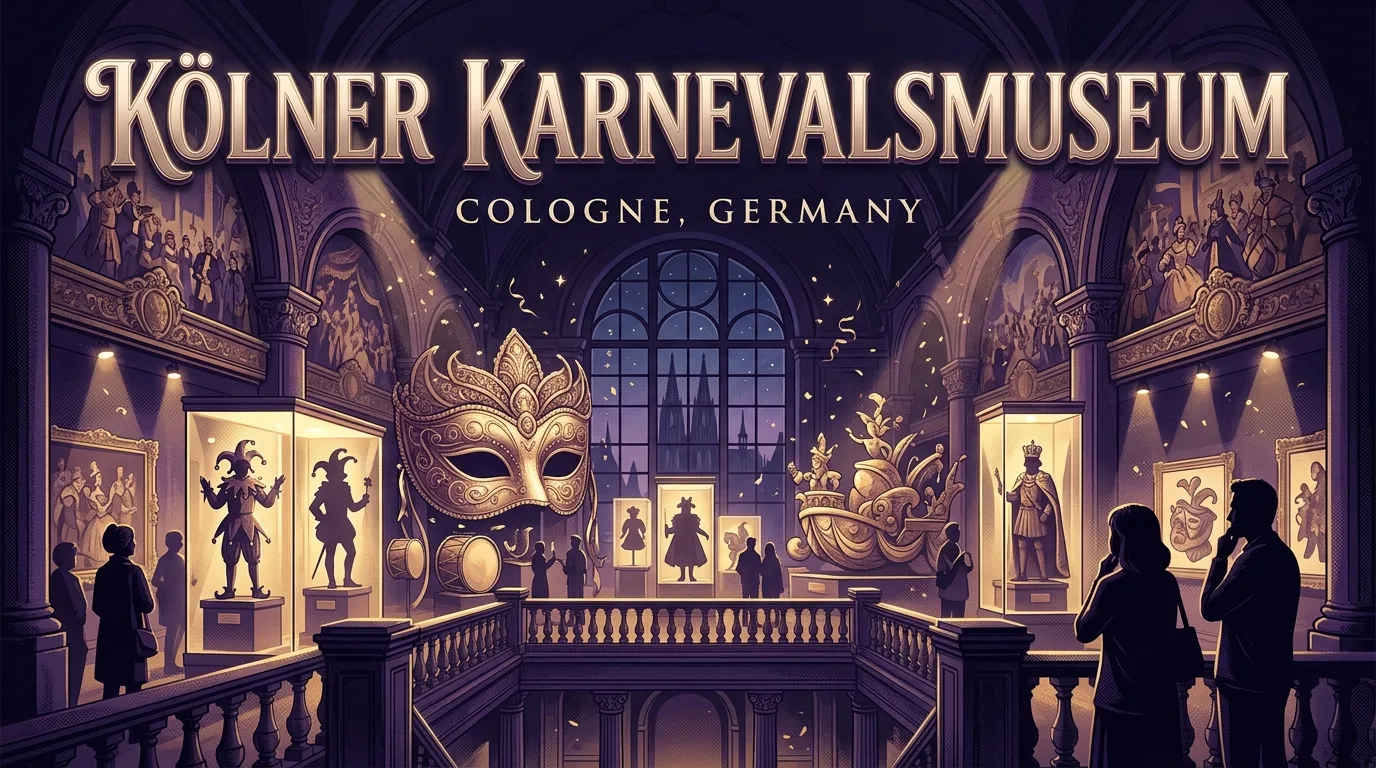
The Kölner Karnevalsmuseum, with more than 1,400 square meters of exhibition space, is the largest museum of its kind in Germany and is dedicated to the centuries-old history and culture of Cologne Carnival, one of Europe's most significant folk festivals. Located in the Cologne district of Ehrenfeld, near the border with Braunsfeld, the museum has displayed costumes, medals, historical documents, and objects from the long tradition of organized carnival since opening in June 2005; that organized tradition officially began in 1823 with the founding of the Festordnendes Comitee. The museum presents itself as a scholarly documentation center for a festival culture that draws more than a million people onto Cologne's streets every year for the Rosenmontagszug parade, and it addresses both local Cologne residents and international visitors seeking to understand customs such as the Dreigestirn trio, Weiberfastnacht, and the famous carnival cry "Kölle Alaaf".
History of Kölner Karnevalsmuseum
The roots of Cologne Carnival reach back to the Middle Ages, with the first written references to pre-Lenten customs in Cologne dating from 1220. However, the festival only took its modern organized form in 1823, when a group of Cologne citizens, including members of the Olympische Gesellschaft, founded the Festordnendes Comitee to bring order to what had previously often been a chaotic and occasionally violent street carnival. The first organized Rosenmontag parade took place on February 10, 1823, after twelve weeks of preparation, and was a resounding success still regarded today as the birth of modern Cologne Carnival. Prominent supporters of the early years included the Cologne collector and patron Ferdinand Franz Wallraf, and even Johann Wolfgang von Goethe attended the festivities as a guest in 1825, composing his poem "Der Köllner Mummenschanz" for the occasion. The Kölner Karnevalsmuseum was founded to systematically preserve and share this more than two-hundred-year-old history with the public; it is run by the Heimatmuseum Köln association in cooperation with the Landschaftsverband Rheinland and regional savings banks and private sponsors. On June 19, 2005, the museum opened its doors in Ehrenfeld for the first time and quickly became a fixture of Cologne's museum landscape, before having to close in August 2022 for renovation work required for fire safety reasons.
Highlights of Kölner Karnevalsmuseum
At the heart of the historical department is the original minute book of the Festordnendes Comitee from 1827, one of the oldest surviving documents of organized carnival history and a key record of the early rules and procedures governing the festival parade. Numerous historical costumes, medals, and insignia of the carnival societies document the evolution of festival culture over almost two centuries, from elaborately embroidered nineteenth-century uniforms to modern prince costumes. A dedicated section explains the history and meaning of the Dreigestirn, made up of the Maiden, the Prince, and the Farmer, who are traditionally proclaimed on November 11 and symbolically lead the festival until Ash Wednesday. Films, photographs, and audio recordings trace the development of the Rosenmontagszug, which today involves more than 10,000 participants, ranking it among the largest street parades in Europe, and draws over a million spectators every year. Additional exhibition areas are devoted to the musical history of the carnival and its well-known songs and performers, the role of the roughly 480 registered carnival societies, and customs such as Weiberfastnacht, traditionally opened at 11:11am on Alter Markt, and the widely used greeting "Kölle Alaaf." An interactive area in the museum's large hall allowed visitors, before the closure, to join guided tours in which they could themselves take on the roles of parade marshals or Büttenredner satirical speakers. Specially designed educational programs for families and school groups convey the history, music, and traditions of Cologne Carnival in a playful way, going well beyond a conventional display of objects.
Opening Hours, Tickets & How to Get to Kölner Karnevalsmuseum
Important note: the Kölner Karnevalsmuseum has been closed since August 2022 for extensive renovation work required for fire safety reasons, and no firm reopening date has been announced by the operators so far. Anyone planning a trip to Cologne should check the official website or the city's tourist information office for the latest status of the renovation before traveling, since the reopening timeline has reportedly shifted more than once in recent years. Before the closure, the museum offered regular opening hours on several days a week along with special tours for groups and school classes; a comparable offering can be expected once it reopens. The building is located in the Cologne district of Ehrenfeld, near the border with Braunsfeld, at Maarweg 134, just a few minutes from the Äußerer Grüngürtel green belt. By public transport, the site is easily reached via tram line 3 to the Melaten stop or various bus lines running along Maarweg; visitors arriving by car will find ample parking along the wide streets of the surrounding commercial district. Travelers visiting during Cologne Carnival itself should note that numerous streets in the city center are closed or extremely crowded during the peak days from Weiberfastnacht to Ash Wednesday, which can affect travel times.
Attractions Near Kölner Karnevalsmuseum
The location of the Kölner Karnevalsmuseum in the Ehrenfeld district sits a little outside the dense city center, but offers proximity to the sprawling Äußerer Grüngürtel green belt with its parks, sports facilities, and the Flora botanical garden, an excellent spot for a walk before or after the museum visit. The lively Ehrenfeld neighborhood around Venloer Straße attracts visitors with numerous cafés, restaurants, and small boutiques and ranks among Cologne's most popular nightlife districts for younger residents. By tram, the historic old town with Cologne Cathedral, the Römisch-Germanisches Museum, and Museum Ludwig can be reached in roughly fifteen to twenty minutes, making it easy to combine a visit here with a trip downtown. The Rheinpark and the Köln-Deutz trade fair district are also within reasonable travel time, offering further destinations for a full day out in Cologne. The Kölner Karnevalsmuseum also works closely with schools, local heritage associations, and the city's major carnival societies to collect photographs, costumes, and personal keepsakes from long-standing members, documenting a living festival culture that is passed down from generation to generation. Because Cologne Carnival depends so heavily on volunteer commitment and local club structures, this collecting work carries particular significance that goes well beyond the simple display of historical objects, making the museum an important site of collective memory for the city.
Where to stay in Cologne, Germany
Compare current hotel prices and find the right place to stay.