Aquazoo Löbbecke Museum
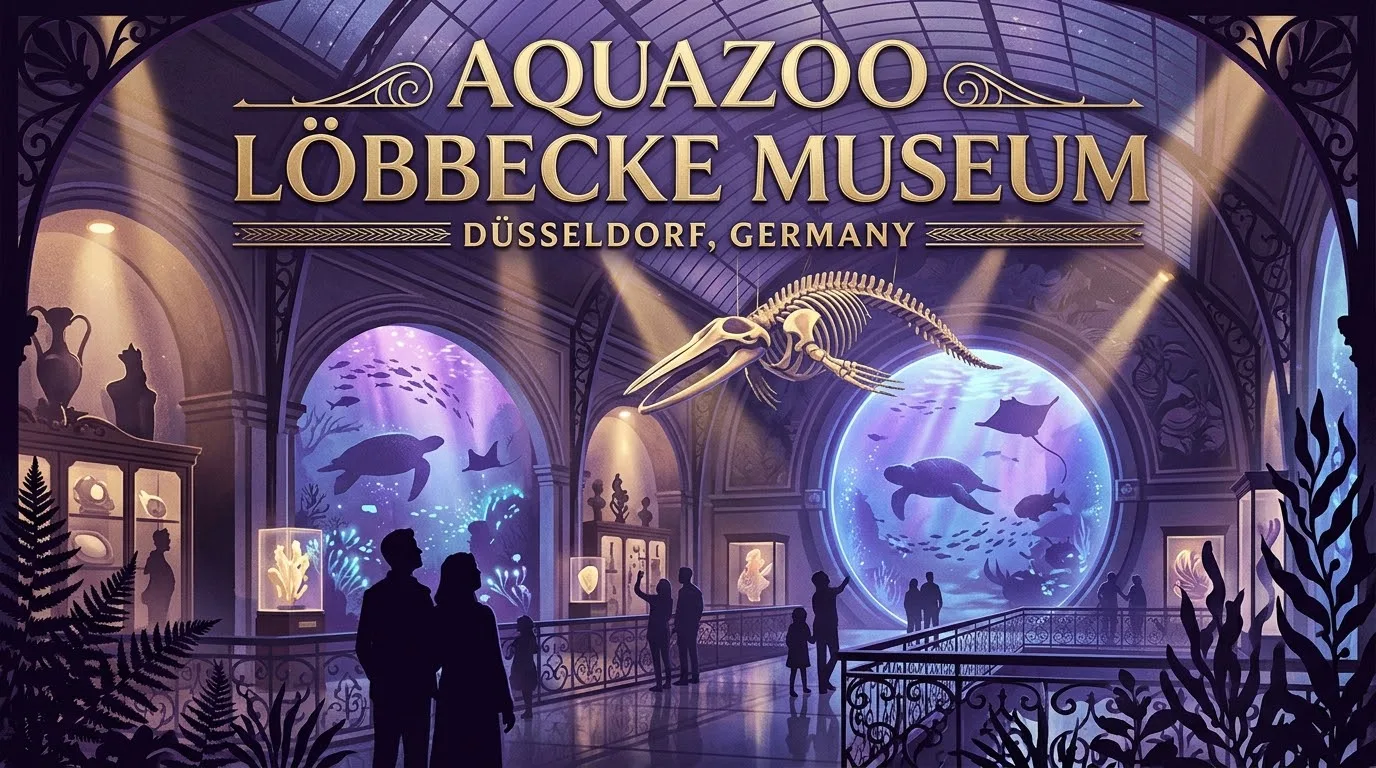
The Aquazoo Löbbecke Museum ranks among the most visited cultural institutions in the North Rhine-Westphalian state capital and sits within the sprawling Nordpark in the Stockum district, just a short walk from Schloss Jägerhof and the banks of the Rhine. As a municipal institution, the Aquazoo Löbbecke Museum uniquely combines three functions under one roof: a classic zoo with living animals, a large aquarium housing marine and freshwater species, and a natural history museum with scientific collections, taxidermy specimens and minerals. Welcoming around 400,000 visitors each year, the museum is by far the most heavily frequented cultural venue in the city of Düsseldorf, drawing families, school groups and nature enthusiasts from across the entire Rhineland region. Anyone planning a visit to the Aquazoo Löbbecke Museum should set aside several hours, since the sheer variety packed into 25 themed rooms across roughly 2,000 square meters of exhibition space is difficult to absorb in a hurried afternoon.
History of Aquazoo Löbbecke Museum
The roots of today's Aquazoo Löbbecke Museum stretch back more than a century and are closely tied to the turbulent history of Düsseldorf's zoo. A zoological garden already existed in the city during the 19th century, but its animal stock and natural history holdings were almost entirely destroyed by Allied bombing raids during the Second World War. In the difficult postwar years, the institution found an improvised yet remarkable new home: aquariums and terrariums were set up inside a former air-raid bunker on Brehmstraße, allowing the public continued access to the animal world despite the surrounding devastation. In parallel, a separate natural history collection had been taking shape since the 19th century, built around the extensive mollusk collection of the Düsseldorf merchant and passionate shell collector Theodor Löbbecke; his holdings, including numerous type specimens named in his honor such as Angaria loebbeckei, formed the scientific core of the later museum and ultimately gave it its name. It was not until the 1980s that the city of Düsseldorf was able to bring this institution, which had grown over decades in provisional quarters, together in a purpose-built modern structure in the Nordpark. The Aquazoo Löbbecke Museum opened under its current name in 1987, uniting a zoo, aquarium and natural history museum within a single architectural concept for the first time. The new building was deliberately designed so that natural habitats such as tropical rainforest, coral reef and mangrove zones could be recreated with striking authenticity, earning the institution recognition among professional colleagues across Germany. Since then the exhibition has been modernized and expanded on several occasions with new thematic sections, while never abandoning the original concept of closely linking living animals with museum-based education. Today the scientific collection comprises well over a thousand specimens, skeletons, minerals and other natural history objects that are used continuously for research and educational outreach. Under director Jochen Reiter, the institution continues its decades-long tradition as both an educational and research facility while also positioning itself as an important player in species and nature conservation, including through breeding programs for endangered animals and a voluntary conservation surcharge visitors can add when purchasing tickets.
Highlights of Aquazoo Löbbecke Museum
Inside the Aquazoo Löbbecke Museum, visitors embark on a journey through the world's habitats, spread across roughly 25 lovingly designed thematic stations. Among the most popular areas is the large tropical hall, where an artificially created rainforest climate with high humidity and temperatures around 25 degrees Celsius provides an authentic habitat for free-roaming birds, reptiles and lush vegetation. Right next to it, a large coral reef tank draws crowds with its vibrant display of tropical fish, while another section recreates the underwater world of mangrove forests, complete with mudskippers and other highly specialized amphibious fish. For many families, the crocodile enclosure is a must-see, featuring a glass tunnel that lets visitors walk directly beneath the water basin and observe the armored reptiles from an unusual vantage point below. The penguin enclosure, home to Humboldt penguins, is likewise a visitor favorite, as is the shark and ray aquarium, where the animals glide through a generously sized tank. In total, more than 6,000 animals from over 570 species live at the Aquazoo Löbbecke Museum, ranging from tiny poison dart frogs and exotic insects to larger mammals such as dwarf otters and meerkats. Beyond the living animals, the attached natural history museum offers a window into the evolution and diversity of life: taxidermy specimens, skeletons of large vertebrates, minerals and interactive hands-on stations vividly explain themes such as adaptation, habitat loss and biodiversity. Children in particular enjoy the numerous hands-on elements, including touch boxes, microscope stations and listening posts featuring animal calls that make scientific content accessible and fun. Regular special exhibitions and themed events, for instance on nocturnal animals or on the conservation of endangered species, ensure that even repeat visitors continually discover new perspectives on the museum. Visitors with extra time can also join guided tours or feeding sessions, during which keepers share background knowledge about the husbandry, diet and behavior of the respective species.
Opening Hours, Tickets & How to Get to Aquazoo Löbbecke Museum
As of the latest information, the Aquazoo Löbbecke Museum is open daily from 10 a.m. to 6 p.m., closing only on a handful of holidays such as January 1, Christmas Eve, Christmas Day and New Year's Eve. Admission for adults costs 11 euros at the box office or 12 euros when booked online in advance; children and teenagers under 18 pay 6 euros at the counter or 7 euros online. Families with up to two adults and their minor children can purchase a combination ticket for 22 euros at the box office or 24 euros online, while school classes and other groups pay a reduced rate of 5 or 6 euros per person. Children under six, visitors with a certified disability rating of 80 percent or more, and holders of certain municipal discount cards as well as members of the museum's support association enjoy free admission. When buying tickets, visitors can voluntarily add a small conservation surcharge of 1 euro, or 0.50 euros at the reduced rate, which benefits nature conservation projects, though this surcharge can also be deselected at checkout. Online tickets come with the added benefit of fast-lane access, letting visitors bypass the queues at the entrance, which is particularly advisable on weekends and during school holidays. The Aquazoo Löbbecke Museum enjoys a convenient location in the Nordpark at Kaiserswerther Straße 380 and is easily reached by public transport via tram lines U78 and U79 or bus line SB52 to the Nordpark/Aquazoo stop. Drivers will find paid parking available in the immediate vicinity, making arrival by car equally straightforward. Given the museum's popularity, booking tickets online in advance is especially recommended on sunny weekends and during holiday periods in order to avoid long waits and make the most of the visit.
Attractions Near Aquazoo Löbbecke Museum
The location in the Nordpark makes an ideal starting point for combining a visit to the Aquazoo Löbbecke Museum with other attractions in northern Düsseldorf. Just a short walk away stands the historic Schloss Jägerhof, a former 18th-century hunting lodge that today houses the Goethe-Museum, home to one of the most significant Goethe collections outside Weimar. The Nordpark itself invites visitors to a relaxing stroll after the museum visit, with its expansive green spaces, a Japanese Garden featuring ponds and traditional stone lanterns, and well-tended avenues that make for a particularly popular photo spot during cherry blossom season in spring. Those with extra time can also reach the nearby banks of the Rhine from here, offering scenic walking paths and views of passing river barges as a pleasant contrast to the bustle of the city. A little further south lies Düsseldorf's Altstadt, with its historic lanes, traditional brewery pubs and the Burgplatz, reachable by tram within just a few minutes. The Düsseldorf exhibition grounds (Messe Düsseldorf) are also nearby, regularly hosting international trade fairs and public events that can add an extra stop to a day trip depending on the calendar. Families spending a full day in northern Düsseldorf often combine the museum visit with a walk through the Nordpark followed by a stop along the Rhine promenade before taking the tram back into the city center.
Where to stay in Dusseldorf, Germany
Compare current hotel prices and find the right place to stay.